Sharks Return to the Leaderboard as Alabama Deep Sea Fishing Rodeo Kicks Off 89th Year
The 89th Alabama Deep Sea Fishing Rodeo brings back its shark category after a seven-year absence, with a $12,000 top prize as Gulf shark populations rebound.
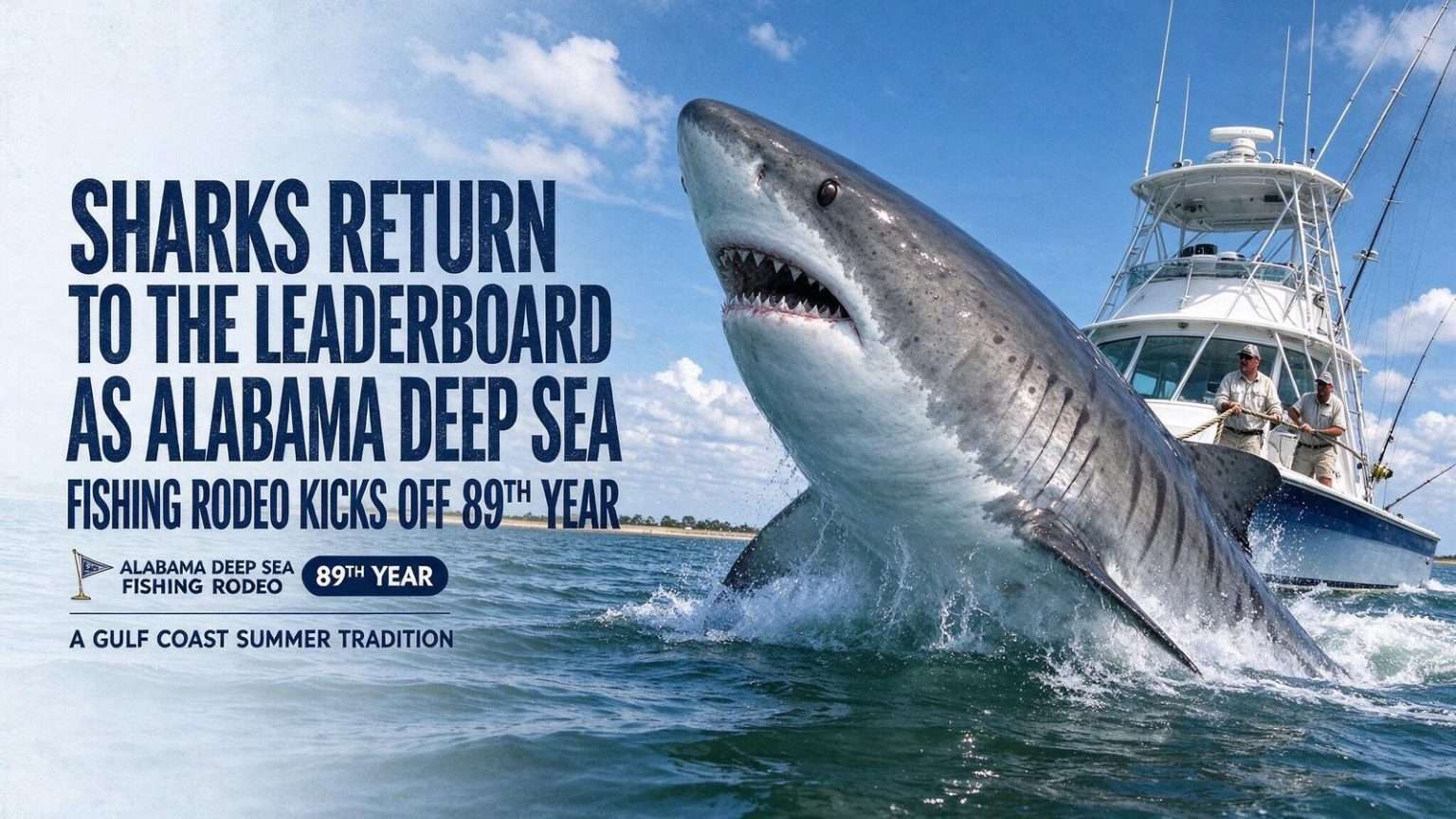
The Alabama Deep Sea Fishing Rodeo, the long-running offshore tournament based out of Dauphin Island, opens its 89th year this week with a notable change to the lineup: sharks are officially back in competition after a seven-year absence from the event’s roster of categories. The return puts one of the ocean’s most formidable predators back on the weigh-master’s scales and adds a marquee drawing card to a tournament that already anchors the summer on Alabama’s barrier island. For the anglers who have spent recent seasons losing tackle to unseen jaws offshore, the restored category offers a chance to turn frustration into a shot at prize money.
The rodeo, one of the oldest and largest fishing tournaments of its kind on the Gulf Coast, draws anglers from across the region every summer to compete for prizes across a range of fish species. Founded generations ago, the event has outlasted wars, hurricanes and shifting fishing regulations to become as much a community tradition as a competition, with the island’s streets and docks filling each year with boats, families and vendors. Categories at the rodeo span the inshore and offshore waters of the northern Gulf, from speckled trout and flounder in the bays to the big game fish that test offshore boats and heavy tackle, and the tournament’s master juried weigh-in is a fixture of the island’s summer calendar.
This year’s return of the shark category is being welcomed by many in the local fishing community, including charter boat captain Richard Rutland, who chairs the rodeo’s rules committee. Rutland said the decision reflects a dramatic shift in shark populations off the Alabama coast in recent years. “That’s a big deal,” Rutland said. “So sharks have made a huge comeback in the Gulf of Mexico. We are seeing humongous numbers of sharks. We have a lot of scientists that have endorsed this and gotten behind us to bring sharks back. They are absolutely a nuisance to fishermen right now offshore. You literally cannot go offshore and not see a shark or catch a shark or your line get broken off by one.”
That endorsement from the charter fleet carries weight. Captains who run offshore trips out of Dauphin Island and other Gulf ports see conditions on the water every day, and their reports of frequent shark encounters describe a reality anglers know well: a hooked fish fighting to the boat is as likely to arrive bitten in half as intact. What was once an occasional hazard has become, in the captains’ telling, a routine feature of every offshore trip, and the rodeo’s rules committee spent considerable time weighing how a fishing tournament should respond to an abundant species it once deliberately excluded.
From Exclusion to Comeback
The shark category’s seven-year absence was itself part of the tournament’s conservation history. Shark populations in the Gulf of Mexico were under pressure for years, and tournaments across the region removed or restricted shark divisions as managers sought to protect species that reproduce slowly and are vulnerable to overfishing. The rodeo’s decision to step back from shark competition reflected the scientific consensus of the time, and its leaders were explicit that the category would return only when the data supported it. The seven-year gap between then and now traces the arc of that recovery.
That rebound has been both a conservation success story and a growing headache for offshore anglers, who have increasingly found their catches picked off or their lines snapped by sharks patrolling popular fishing grounds in the Gulf. Marine scientists have documented the recovery of several shark species in Gulf and Atlantic waters following decades of management measures, including catch limits and protections adopted after shark stocks fell in the late 20th century. Sharks sit at the top of the marine food web and reproduce slowly, which means populations rebuild over long horizons, and the abundance now reported off Alabama suggests that those measures have taken hold.
Bringing back a dedicated shark category gives rodeo organizers a way to channel that abundance into friendly competition rather than frustration on the water. Tournament officials note that a managed shark division also serves a scientific purpose: the weigh-in generates biological data on the species landed, including size and species composition that researchers can use to track the population’s trajectory. The rodeo has a long relationship with the scientific community, and officials said the restored category was designed with the same conservation standards that govern the rest of the event.
Anglers hoping to land the biggest shark of the tournament will be competing for a top prize of $12,000, one of the larger payouts among the rodeo’s many categories. That kind of money guarantees the shark division will draw serious effort, with boats deploying heavy tackle, big baits and long drifts over the offshore grounds where the eligible species roam. Eligible species for the category include bull shark, tiger shark, hammerhead and black tip shark, all of which are commonly encountered in Gulf of Mexico waters off the Alabama coast. Each presents its own challenge: bull sharks are famous for their power and their tolerance of brackish water, tiger sharks grow to enormous sizes and scavenge as readily as they hunt, hammerheads are prized fights that test a crew’s coordination, and black tips are known for spectacular leaps when hooked.
The size of the prize reflects the rodeo’s standing in the tournament world. With more than eight decades of history behind it, the event competes for participants with fishing rodeos across the Gulf Coast, and its payout structure across dozens of categories is a key part of that competition. The $12,000 top shark prize puts the division on par with the event’s most prominent categories and signals to the fleet that the returning division is a headline attraction rather than an afterthought.
A Tradition on the Island
The Alabama Deep Sea Fishing Rodeo has been a summer fixture on Dauphin Island for generations, bringing together families, weekend anglers and serious offshore competitors alike. The island itself, a barrier strip at the mouth of Mobile Bay, is the natural staging point for the event, with its public docks and beachfront providing room for the scales, the crowds and the fleet that gathers for the weigh-in. Local businesses from restaurants to bait shops plan their summers around rodeo weekend, and generations of Gulf Coast families have grown up with the tradition of coming to the island to see what the boats bring in.
The tournament’s categories have shifted over the years as fish populations, conservation science and safety considerations evolve, and this year’s shark category is the latest example of organizers adjusting the event to match conditions on the water. Tournament leadership has generally treated the rulebook as a living document, adding and retiring divisions as the fishery changes. That adaptability, longtime participants say, is a large part of why the event has reached its 89th year while many other tournaments have faded, and why it continues to command respect from both the charter industry and the scientific community.
The rodeo’s 89th edition arrives at a moment when Gulf fishing faces real pressures, from changing fish stocks to weather patterns that can compress a season’s best windows. Organizers have responded by emphasizing both the competitive and the communal sides of the event, with categories that give inshore anglers and children a shot at prizes alongside the offshore heavyweights. The formula has kept the weigh-in beach among the most crowded public events on the Alabama coast each summer, drawing spectators who may never wet a line but treat the event as an annual appointment.
For coastal Alabama’s fishing community, the rodeo remains one of the highlights of the summer calendar, drawing boats out of Dauphin Island and other Mobile County marinas for a multi-day competition that blends sport, tradition and local pride. The 89th installment carries the added storylines of a restored shark division and a $12,000 prize for the heaviest shark, guarantees of drama at the scales whenever one of the eligible species comes to the beach. Captains, crews and families will spend the week preparing baits, checking tackle and watching the forecast, and when the competition opens, the Gulf’s most abundant apex predators will officially be back in the record books of a tournament that has been writing them since long before anyone now fishing was born.
The return of sharks also changes tactics for crews fishing other categories. Offshore anglers chasing snapper, amberjack and other reef species now factor shark pressure into every decision about where to anchor and how quickly to move a hooked fish to the boat, and some captains have shifted their efforts to spots and times of day when encounters are less frequent. Rules committee members said that reality made the shark division more than an entertainment choice, giving the fleet a sanctioned outlet for the interactions that are happening anyway. Anglers planning to fish the division are advised to review the tournament’s published rules on eligible species and minimum sizes before the opening, since shark handling carries its own safety considerations and the weigh-master’s crew applies the same verification standards to sharks as to any other category.