Spanish Fort Reaches $2.5 Million Settlement Over Eroding Mobile Bay Bluff
Spanish Fort settled a five-year lawsuit by agreeing to buy two homes threatened by an eroding Mobile Bay bluff, a deal costing over $2.5 million.
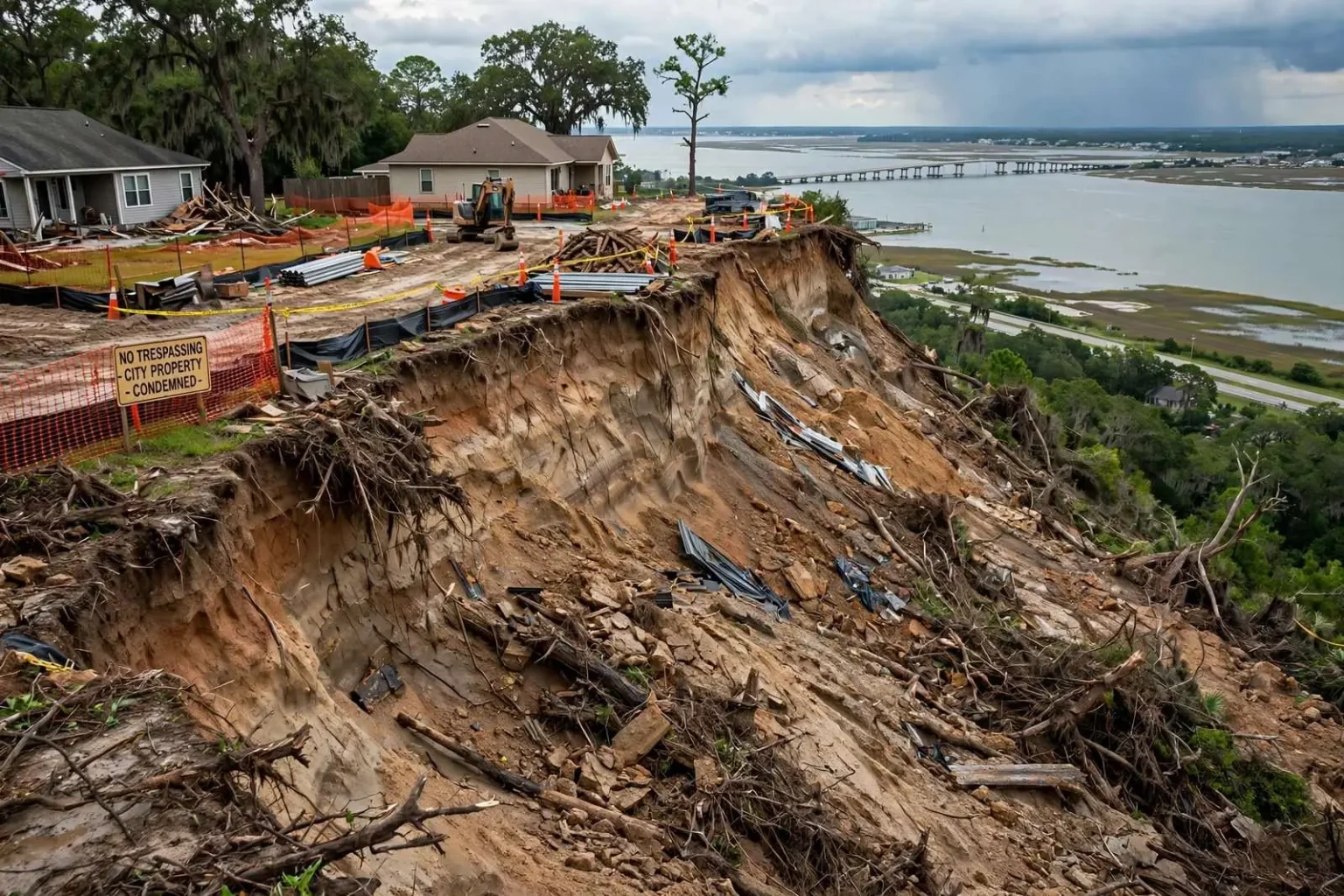
Spanish Fort has settled a five-year-old lawsuit tied to a crumbling bluff overlooking Mobile Bay by agreeing to buy out two homes that were left teetering on the edge after years of erosion, a deal city leaders say will ultimately cost more than $2.5 million.
The dispute began in 2009 when homeowners on Patrician Drive sued the city, blaming a failed drainage system for washing away more than 30 feet of the bluff beneath their properties over the following years. A Baldwin County jury sided with the homeowners, finding that the city had failed to properly maintain the drainage system feeding a concrete ditch between the two lots, and awarded more than $1.3 million in damages, an amount later reduced to $500,000 because of a state cap on municipal liability.
After the verdict, a circuit judge ordered the city to begin emergency repairs immediately despite Spanish Fort’s pending appeal to the Alabama Supreme Court. Before crews could get to work, a record rainstorm at the end of April pushed the situation to a crisis point, eroding the bluff to within just a few feet of one of the homes.
The city scrambled to approve emergency contracts for engineering and construction work, with cost estimates climbing toward $2.5 million as the extent of the damage became clear.
A Settlement Instead of a Prolonged Fight
Rather than continue trying to shore up the bluff around occupied homes, the mayor said the city ultimately decided it would be more practical, and cheaper in the long run, to purchase the two properties outright and demolish the houses. As part of the settlement, the homeowners agreed to give up the reduced $500,000 judgment in exchange for the sale, and the city dropped its Supreme Court appeal.
The arrangement closed out every open front in the dispute at once: the litigation ends with the appeal withdrawn, the judgment is resolved through the property purchase, and the homeowners — who spent years watching their backyards recede — are compensated through the sale rather than a contested payout. City officials concluded that continued courtroom battles and ever-growing repair contracts would cost more than the buyout with no guarantee of saving the lots.
The April rainstorm was the turning point. What had been a slow-motion erosion problem manageable through engineering became an emergency, with one backyard edge so close to the collapsing slope that city leaders could no longer plan repairs around occupied houses. Emergency contracts approved in the days that followed priced out both the stabilization work and the escalating risk of a catastrophic collapse.
Stabilizing the Bluff
Stabilization work on the bluff was set to begin this week, with the project expected to take about two months. Once the site is secured, crews plan to build a retaining wall near the top of the roughly 100-foot bluff, which sits above the highway connecting the Eastern Shore to the Mobile Bay Causeway.
The bluff that carried the Patrician Drive homes is part of the long escarpment that defines Spanish Fort’s geography, where the upland terraces of the Eastern Shore drop steeply toward the Mobile Bay wetlands and the Causeway corridor below. Stormwater that falls on the city’s neighborhoods has always had to make its way down that slope, and drainage infrastructure — ditches, culverts and outfalls — is what channels it safely past the homes built along the rim.
When that infrastructure fails, the water finds its own path, and the region’s sandy clay soils give way quickly. The more than 30 feet of bluff lost beneath the two lots illustrates how a single failing drainage line can translate into a structural emergency: each significant rain washed more material from the base of the slope, and the bluff edge retreated toward the foundations until the April storm erased whatever margin remained.
The retaining wall planned near the top of the bluff is intended to stop that retreat permanently, anchoring the slope above the highway and protecting the corridor that carries traffic between the Eastern Shore communities and the Causeway. Engineers designed the stabilization around the demolished lots, using the cleared land as a work area before the city converts it to its final use.
Once the site is secured, the two lots will eventually be turned into green space maintained by the city. The outcome is a familiar one in bluff-erosion cases across the Gulf Coast: where houses once stood at the edge of a slope, municipalities often end up as the property owners, keeping the land undeveloped rather than risking another round of building and collapse.
The Cost to a Small City
The mayor said the settlement is a significant expense for a city with an annual operating budget of about $6.3 million, but noted that conservative budgeting by past councils and mayors left Spanish Fort with enough cash reserves to cover the cost without borrowing.
For a city of Spanish Fort’s size, a single dispute consuming roughly 40 percent of a year’s operating budget is a striking figure, and the mayor’s emphasis on reserves reflects the reality that infrastructure liabilities can arrive all at once, regardless of what a budget year had planned. The city’s fiscal approach — holding cash rather than spending to the limit — is what made a cash buyout possible without issuing debt or cutting services mid-year.
A Lesson in Stormwater Maintenance
The case has become a cautionary example for Eastern Shore municipalities about the cost of deferred drainage maintenance. The lawsuit’s core finding — that the city failed to properly maintain the system feeding a concrete ditch between the lots — shifted an infrastructure problem into a legal judgment worth more than a million dollars before the cap, and ultimately a $2.5 million total bill once repairs and the buyout were counted.
Baldwin County’s explosive residential growth adds pressure to that lesson. Neighborhoods built along the bay’s eastern rim in recent decades rely on drainage networks that age at the same pace as the developments themselves, and heavy rain events of the kind that triggered the April collapse are becoming the design standard rather than the exception. Cities along the shore have been evaluating their ditches, culverts and detention systems with the Patrician Drive outcome in mind.
The five-year span of the litigation is another takeaway. From the 2009 lawsuit through the jury verdict, the appeal and the emergency contracts, the dispute outlasted the patience and finances of everyone involved. City officials said the settlement’s appeal is precisely that it ends the uncertainty: no further appeal deadlines, no additional judgment interest accumulating, and no question about who owns the land at the bluff’s edge.
For the neighbors who remain along Patrician Drive, the city’s project brings both reassurance and change — a stabilized slope and a permanent green buffer where two houses once stood, in place of the eroding edge that had crept toward their backyards for years. Work crews were scheduled to begin this week, with the retaining wall and site restoration expected to be complete about two months from the start of construction.
The litigation’s path through Alabama’s court system also illustrates how municipal liability works in the state. The Baldwin County jury’s award of more than $1.3 million reflected the jurors’ assessment of the property loss and the homeowners’ ordeal, but state law caps how much a municipality can be required to pay in a single case, which is how the judgment settled at $500,000. That cap protects city budgets, but it also leaves plaintiffs like the Patrician Drive homeowners undercompensated relative to the verdict — a dynamic that made the buyout-for-judgment trade appealing to both sides.
Under the settlement’s terms, the value of the two properties effectively replaced the judgment, and the city avoided the risk that a higher court might have reinstated the full award or that new erosion damage would generate fresh claims. The homeowners, for their part, exited a five-year ordeal with a sale rather than a contested collection process against a government protected by the cap.
Emergency repair contracts approved before the settlement showed how quickly costs were rising. Engineering assessments, emergency slope work and construction mobilization were priced toward $2.5 million even before the buyout, and each additional rain event threatened to raise the number again. City officials weighed those escalating figures against the one-time cost of purchasing the lots and concluded that demolition and stabilization — rather than repair around occupied homes — was the cheaper path in the long run.
The case also underscored the role of the circuit court in forcing action. With the city’s appeal pending before the Alabama Supreme Court, the trial judge’s order requiring immediate emergency repairs ensured that stabilization would not be delayed for the duration of the litigation — a ruling that became urgent when the late-April storm arrived and the bluff edge moved to within a few feet of a standing home.
City leaders have described the resolution as the practical end of a problem that had hung over the budget, the courtroom docket and the Patrician Drive neighborhood simultaneously. What remains is the construction itself: two months of stabilization work, a retaining wall at the top of the 100-foot slope, and a stretch of permanent green space overlooking the Causeway corridor where the two threatened homes used to stand.