

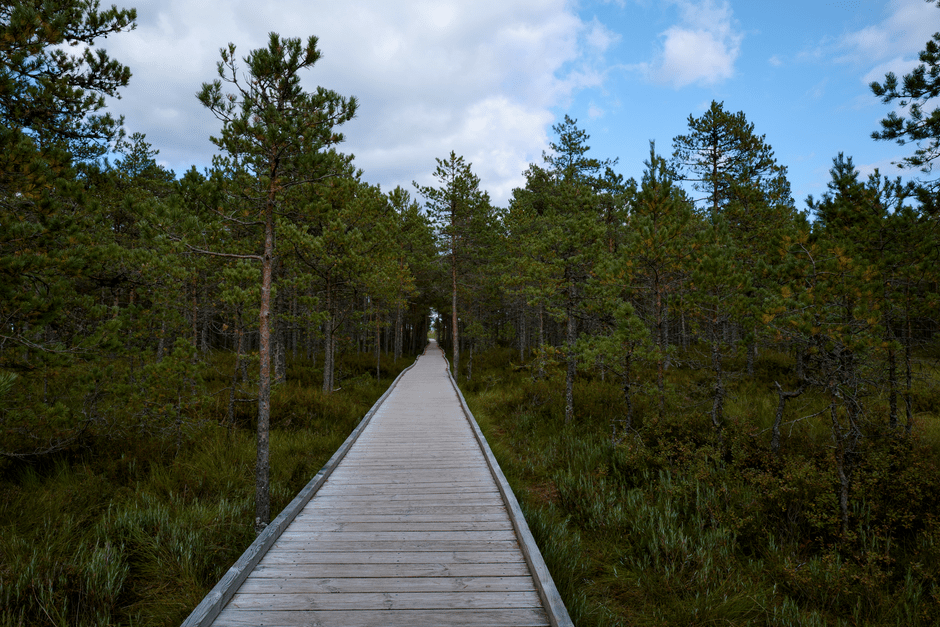
Lots of people love the Alabama coast for its beaches, its open-air restaurants and its easy access to saltwater fishing. But it was something else entirely that drew Norman and Jane Lindsey Thomas to the area: a bicycle ride they took while camping at Gulf State Park that would change their lives.
It was February of 2010, and the couple was riding on the Hugh S. Branyon Backcountry Trail, the quiet network of paved and unpaved paths that covers some 28 miles in Gulf Shores and Orange Beach, largely hidden from the motorists rushing along Canal Road and the beach highway. Mid-ride, Jane delivered the verdict: “Hey, I could live down here.” Rolling behind her, Norman felt the same thing. Within months the couple had put their Homewood house up for sale and relocated to Orange Beach.
Their story is one the trail’s biggest fans hear all the time, and it helps explain why a trail system invisible from the road has become the coast’s most important attraction after the beach itself.
A Highway for Eons
The man who first imagined the trail is Phillip West, director of the Coastal Resources Department for the City of Orange Beach. Nearly 25 years ago, as a young graduate student working with the Dauphin Island Sea Lab, West was sent to evaluate land the Nature Conservancy was considering acquiring from Orange Beach — acreage known as the Gulf Oak Maritime Forest. He became fascinated by its history and ecology, and he kept exploring it after he joined the city’s staff.
What he found was a network of old service roads, jeep trails and fire breaks, unimproved but already linked. Long, narrow trenches in the ground caught his eye, and digging into the area’s history he learned the east-west thoroughfare had been in use for thousands of years. “This has been a highway for eons,” he says. Native Americans used it, explorers followed the same path rather than blazing their own, and settlers and soldiers used it after them.
West approached the mayor of Orange Beach and Hugh Branyon, the longtime superintendent of Gulf State Park, with a plan to improve the existing roads into a navigable trail linking Gulf Shores and Orange Beach. Everyone loved the idea — just not the price tag. Then came the grants. The first funding paved nearly two miles of the old Catman Road in Orange Beach, and later, with assistance tied to compensation for the 2010 BP oil spill, the system extended around the Lodge at Gulf State Park and the Lake Shelby day-use area. “It took us several years to get 14 miles built,” West says. “And then the state built 14 miles in one fell swoop.”
Nine Ecosystems, One Ride
Today the interweaving web of pathways crosses nine distinct ecosystems — forestland, marshes, lakes and streams, prairies and dunes — and passes through much of the state park’s 6,150 acres. Wildlife sightings are a routine part of the ride: songbirds and butterflies, raptors overhead, rabbits, bobcats, armadillos, raccoons, foxes, coyotes, tortoises and, yes, alligators in the lakes. The endangered Alabama beach mouse and the gopher tortoise make their homes here too.
The old wagon-rut corridor that first caught West’s attention is now the Gulf Oak Ridge Trail, with an elevation of about 40 feet in places — “the spine of the island,” he calls it. An observation deck there offers sweeping views and is a regular stop on guided nature hikes led by Kelly Reetz, assistant superintendent of Gulf State Park, who has been with the park for 26 years. She points out native palms and palmettos, the rare Southern Twilight orchid that typically blooms around Valentine’s Day, and the story of the people who once lived here: the area’s pignut hickory trees supplied oils used as currency, for trade and for cooking.
“This area was very important to them,” Reetz says. “They got oils from the hickory trees and used that as their money.”
From Hidden Gem to National Award Winner
The trail’s rise from local secret to national standout is well documented. It earned National Recreation Trail status, was one of the first in Alabama to receive it, and then won USA Today’s 10Best Readers’ Choice award for Best Recreational Trail in the United States in 2023 — a title its supporters have watched it defend as word continues to spread. Jacksonville State University’s Center for Economic Development and Business Research has studied visitation, and the numbers keep climbing: hundreds of thousands of unique visitors a year, with the trail counters recording heavy use through the winter peak.
Brad Johnson, trail coordinator for Orange Beach’s Coastal Resources Department, notes that participation surged exponentially during the pandemic as people sought open-air recreation, and it has kept growing. The lack of an admission fee is a genuine draw. “There aren’t many things that you can do down here that are free, and this is one of them,” he says. “You can bring the kids and the bikes and stay out here all day and not spend a penny.”
The park’s bike-sharing program lends conventional bicycles at no charge, and the explosion of electric bikes has opened the trail to riders who might otherwise stay home because of physical limitations. It has also produced the trail’s biggest modern headache. Not all riders know the rules of courtesy: keep right, observe posted speed limits, pull off when stopping, and announce yourself when passing. “It’s definitely a problem,” Reetz acknowledges. “The e-bikes are pretty quiet, so they’ll come right up on you and startle you. Sometimes the rangers sit in strategic locations and we have written tickets, but mostly it’s awareness — making people aware that these trails are for everybody.”
A Living Legacy
For the Thomases and thousands like them, the trail is now woven into daily life. Three or four times a week, usually right after breakfast, they ride from a trailhead a short drive from home. “I don’t like riding my bike on the roads with cars,” Jane says. “When we discovered the trail, it was just thrilling to find some place we could ride safely for long periods of time.” She counts the eagles, the alligators and the tortoises among what she calls her friends, visited so frequently they feel like acquaintances.
Hugh Branyon did not live to see how far his namesake trail would go. The longtime park superintendent — who led Gulf State Park from 1970 until his retirement in 2009 — died a few years back, just days shy of his 77th birthday. But West believes Branyon saw the potential. “He was around long enough to see that tourism was becoming more nature-centric,” he says. The trail now stands among the longest ADA-accessible multi-use networks in the Southeast, and it has been named Attraction of the Year along the Gulf Coast as its reputation has grown.
West sometimes marvels at what the project became. “It has a life of its own,” he says, “and it’s shaped lots of lives.” A trail built on a few grants and an old Native American route now connects two beach towns to a state park, and connects the people who ride it to something they can’t find on the highway: nine ecosystems, one ride, and not a penny of admission.
A First-Timer’s Guide to Riding the Backcountry
For all its scale, the trail system is remarkably easy to try. A trail map, available on the park’s website and posted along the routes, is the single most useful tool for knowing where one trail ends and the next begins — the network threads through Gulf State Park’s roughly 28 miles of paths across nine ecosystems, and the paved surfaces are firm enough that a sturdy pair of athletic shoes and a water bottle will carry hikers just as well as riders.
Visitors without bikes are not left out. The park’s Bloom for Bikes borrowing program stocks racks of identical bikes throughout the park; riders download the app, follow the instructions on the sign above the rack, and can borrow a set of wheels free of charge for up to three hours.
One favorite stretch, Gulf Oak Ridge, is reached from the Longleaf Trace access point: park in the first lot off East Fort Morgan Road, head south on the obvious paved trail, and cross the narrow pedestrian bridge beside the quiet highway, where a well-maintained restroom and water station wait on the far side. The route runs about three miles, mostly level, under mature oaks with sprawling limbs, with benches carved in memory of longtime trail lovers spaced along the way. A wildlife viewing platform to the left puts visitors mere feet from an alligator preserve, and osprey, herons and bald eagles routinely soar overhead.
Riders who want more mileage can add the nearby Fort Morgan Road Trail, and cyclists who catch the bug can find reconditioned rides and repairs at shops such as Infinity Bicycles in Daphne. Between the sand and the sugar-white beaches, it is the shadiest way on the coast to put a few trail miles under your tires.