Thomasville Continues Hurricane Zeta Cleanup, But City Says All Debris Won’t Be Gone by Thanksgiving
Mayor Sheldon Day says Thomasville's Hurricane Zeta cleanup continues, with Old Highway 5 closures as crews work to clear storm debris by Thanksgiving.
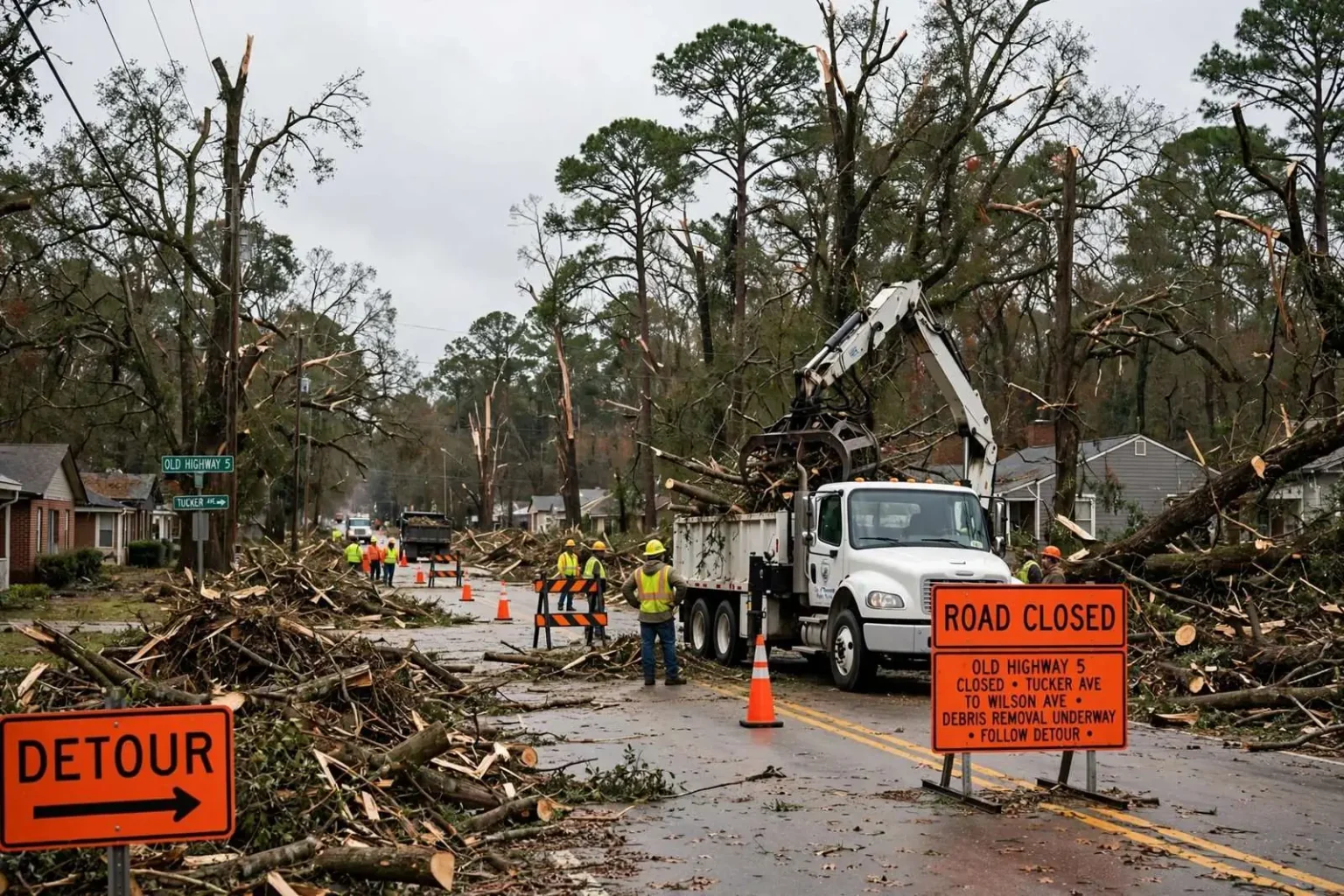
THOMASVILLE, Ala. — Cleanup crews in Thomasville are still working to clear the debris left behind by Hurricane Zeta, and Mayor Sheldon Day says it will be impossible to remove every last bit of storm wreckage by Thanksgiving. The warning came as the city pressed ahead with one of its largest cleanup operations in recent memory, with heavy equipment grinding through neighborhoods that took the brunt of the storm’s winds. Officials have framed the effort as steady progress rather than a finish line, noting that the sheer volume of downed limbs, snapped trunks and scattered storm wreckage across the city means collection will stretch well beyond the holiday table.
Much of the city’s effort has centered on the Old Highway 5 area, one of the hardest-hit parts of the community. Crews have been concentrating their work there, and portions of the road were scheduled to close between Tucker Avenue and Wilson Avenue on Wednesday so workers could safely haul away debris. The planned closure allowed loaders, grapple trucks and chipping equipment to occupy the full width of the roadway without squeezing passing traffic through a single open lane beside working machinery.
City officials have urged residents to keep placing storm debris at the curb for pickup as collection rounds continue across town. Zeta swept through southwest Alabama earlier in November, downing trees and power lines across Clarke County and neighboring communities, and the cleanup footprint shows it — piles of cut limbs and storm-damaged trunks line the shoulders of streets throughout the city.
Road Closures During Debris Removal
The temporary closure of Old Highway 5 is part of an ongoing rotation of lane and road closures as heavy equipment moves through neighborhoods. Drivers in the area have been asked to use caution around crews and avoid piles of debris along the shoulder. Officials stress that the closures are short in duration and tied directly to the movement of the crews, with each segment reopening once it has been cleared.
The rotation approach is standard practice after major wind events. Rather than asking crews to work a few feet at a time alongside live traffic, the city closes a section outright, lets the equipment sweep it clean, then advances to the next segment. The method is faster and safer for both workers and drivers, though it does produce occasional detours for residents living along the affected stretch.
For a city the size of Thomasville, the largest community in Clarke County, coordinating that kind of rolling operation is a logistics exercise in itself. Routes have to be sequenced so that haulers spend their hours moving debris rather than idling, and residents along each corridor need to know when their curb piles are next in line. City hall has used its usual channels to keep residents informed as the schedule shifts from one part of town to another.
A Regional Storm With a Long Tail
Zeta arrived in southwest Alabama with damaging winds that knocked trees onto homes, roads and power lines across Clarke County and its neighbors. In the days after the storm, utility crews worked to restore electric service while local governments turned to the slower, less visible task that follows every hurricane: picking up what the wind left behind. That task is measured in weeks and months, not days, particularly in communities with heavy tree cover like Thomasville.
Vegetative debris is the defining challenge of this cleanup. limbs, branches and whole trees must be cut, staged, chipped or hauled, and each step takes specialized equipment. Grapple trucks lift piles that would take a work crew hours to feed through a chipper by hand, and haulers shuttle loads to disposal sites outside the neighborhoods. The pace of the operation depends on how quickly those machines can move through the street grid without interruption, which is why the temporary closures along Old Highway 5 matter so much to the timeline.
Mayor Day’s Thanksgiving assessment reflects a lesson many Gulf Coast municipalities learned during earlier hurricane recoveries: debris cleanup almost always takes longer than residents expect. In the first days after a storm, attention is on power restoration and emergency access. The methodical work of clearing every curb line comes afterward, and it proceeds street by street at whatever pace equipment and staffing allow. Thomasville’s experience has followed that familiar arc, with crews moving steadily through priority corridors before turning to the remaining neighborhoods.
What Residents Are Asked to Do
The city’s message to residents has been consistent: keep storm debris at the curb and leave it there until crews reach the street. Piles that are moved, hidden behind vehicles, or mixed with household trash can be skipped on a collection pass, forcing a second trip and slowing the overall effort. Residents are also asked not to place debris where it blocks sidewalks, drainage ditches or the roadway itself, all of which create their own hazards.
Separating debris by type helps as well. Vegetative material goes in one pile, while items like damaged fencing, roofing or household belongings may need to be handled through a separate stream. When everything is jumbled together, crews cannot process the load efficiently, and some material may be left behind until it can be sorted. Officials in communities across Clarke County have issued similar guidance as their own collections have moved through the same post-storm cycle.
Patience is the other request. Collection rounds are sequential, and a pile that sits at the curb for days or weeks is not evidence that it has been forgotten — it is evidence that crews have not yet reached that street. The city has emphasized that the operation will continue until the work is done, even if that means the last loads are hauled after the calendar turns toward winter.
Life Along Old Highway 5
The Old Highway 5 corridor runs through some of the most established parts of Thomasville, lined with mature trees that predate most of the houses around them. Those same trees made the corridor both scenic and vulnerable when Zeta’s winds arrived. Fallen limbs and leaning trunks along the route have made debris removal there slower and more delicate than in newer parts of the city, one reason crews concentrated their early efforts on the area between Tucker Avenue and Wilson Avenue.
For drivers, the advice during the rotation has been simple: slow down, give the equipment room, and find an alternate route when practical. Large trucks backing into debris piles, workers on foot near the roadway and unpredictable stopping all demand attention. The city has thanked residents for their cooperation as the closures have shifted from one block to the next, and it continues to announce changes to the closure schedule as the work advances.
What Comes After the Curb Pickup
Once the debris is hauled away, the recovery is still not finished. The city will face the follow-on work that every storm-battered municipality knows well: repairing damaged sidewalks and shoulders, assessing any lingering harm to street signage and lighting, and watching tree canopies for limbs weakened but not yet fallen. Those tasks are less visible than the curb piles but no less a part of putting the community back in order.
For now, the city’s message remains what it has been since the first collection trucks rolled: keep the debris coming to the curb, stay clear of the crews, and expect the work to run past Thanksgiving. Mayor Day’s assessment was blunt, but it came with the implicit promise that the job will be finished — just on a timeline set by the volume of the wreckage rather than the holiday calendar.
The Economics of a Municipal Cleanup
Large-scale debris removal is among the most expensive routine tasks a small city ever undertakes, and the costs add up quickly with every load that leaves a curb. Hauling, chipping and disposal are typically billed by volume, which means every pile residents set out correctly helps the city spend its cleanup dollars efficiently. Piles that have to be revisited, sorted or collected in fragments cost more per cubic yard than clean, well-staged loads.
Cities like Thomasville also plan for how debris work affects other services. Sanitation routes, street maintenance and parks work all compete for the same crews and equipment during a recovery, and the city has had to balance the hurricane workload against the everyday services residents still expect. That balancing act is part of why the collections proceed in rounds rather than all at once.
The regional dimension matters too. Clarke County communities have been working through the same post-Zeta playbook at the same time, which has strained the availability of contractors and equipment across the area. Municipalities that move early and keep a steady schedule, as Thomasville has tried to do, tend to see their collections finish sooner than those where the effort stalls.
Lessons From Past Storms
Southwest Alabama has been through this cycle before, and each recovery leaves behind lessons that shape the next one. Cities learned to pre-position contracts for debris hauling, to document volumes carefully, and to communicate collection schedules clearly so residents know what to expect. Thomasville’s rotating closures and curb-side guidance reflect that accumulated experience, drawing on practices refined through earlier hurricane seasons on the Gulf Coast.
The Thanksgiving deadline the mayor dismissed was never a formal target, but it captured the community’s natural impatience to see the storm’s mess gone. Day’s candor about the timeline fits the pattern of the recovery so far: the city has tried to tell residents what is realistic rather than what is comfortable. That approach has meant fewer surprises as the cleanup has stretched on.
What remains for residents is straightforward. Keep the debris at the curb, keep it sorted and accessible, and use caution driving through the work zones as the trucks move from street to street. The piles will disappear in their turn. When the last grapple truck finishes the final pass, Thomasville will have closed out another chapter of Gulf Coast storm recovery — slower than anyone wanted, and right on schedule for a storm of Zeta’s scale.