Why Trump Chose Mobile: Experts Say Alabama Rally Was About Image, Not Vulnerability
Political scientists say President Trump’s Mobile rally was about friendly crowds, eager candidates and fundraising, not Republican weakness in Alabama, though Democrats see the visit as a sign of a tighter race.
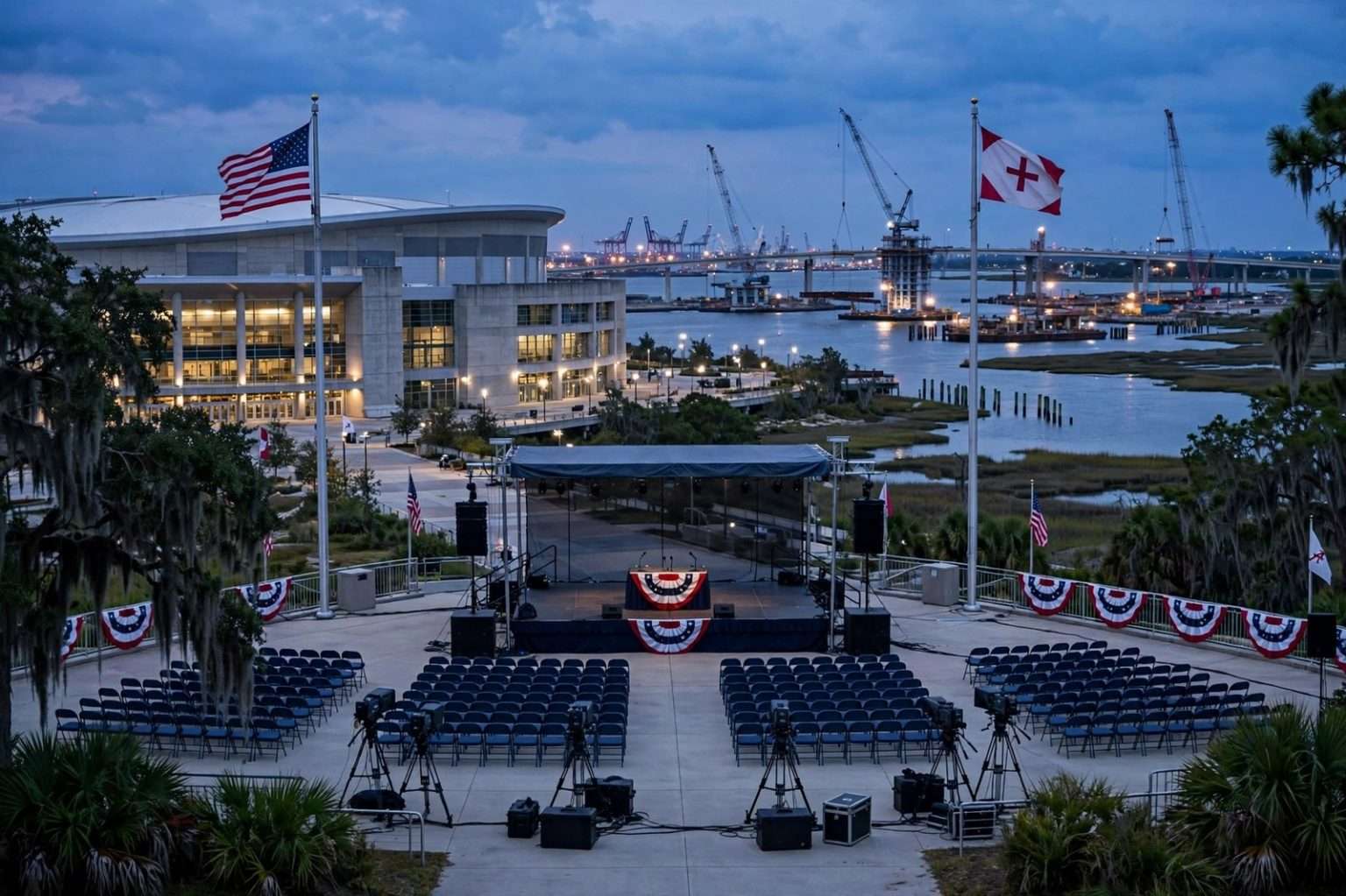
MOBILE, Ala. — With roughly a month left before the Nov. 3 midterm elections, President Donald Trump spent Friday night not in a swing state but in deep-red Alabama. Political scientists say the answer to why Trump chose Mobile has less to do with any Republican weakness in the state and more to do with images, enthusiasm and money.
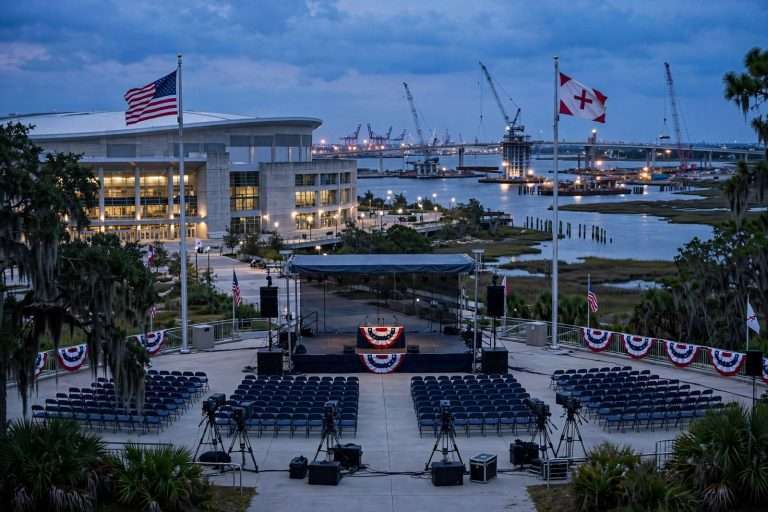
Trump drew thousands of supporters to the University of South Alabama’s Mitchell Center, a venue where he could count on a warm reception at a time when his approval ratings have sagged nationally amid the war with Iran and high prices. For the experts who study campaigns, that was precisely the point.
A Friendly Crowd in a Favorable State
“President Trump is picking a state where he has got high favorability,” said Benjamin Gross, director of the Center of Leadership and American Principles at Jacksonville State University. “And in an age where we broadcast images through television and the internet and social media, having images that show large support can be helpful.”
Civiqs’ rolling tracking poll shows Trump with a net approval rating of plus 5 in Alabama, in contrast to most other states, where his net rating is negative. A separate new Alabama poll, which was not focused on Trump, showed his favorability slightly underwater, at 44.3% favorable and 46.7% unfavorable. Nationally, a poll this week found only about 3 in 10 U.S. adults approve of how he is handling the job.
Trump himself framed the trip as a thank-you. “I’m here really because, you know, sometimes, even though you don’t have to come here, you gotta pay respect to the people that have loved you right from the beginning,” he told the crowd. On Thursday he told reporters, “I go there because they want to see me there.”
The location carries history, too. Trump held his first mega-rally in Mobile in 2015, drawing a crowd some estimated at 30,000 to Ladd-Peebles Stadium. “I don’t know if you know, it sort of all began here,” he said Friday.
Where Candidates Want Him
Another reason for the stop, experts said, is that Alabama Republicans are eager to share a stage with the president, something that is not necessarily true in this cycle’s battleground states, where GOP candidates may see him as a liability.
“In Alabama, the perception is that he is a boost to their campaigns, and so that’s one of the reasons why he’s choosing Alabama, because here he’s wanted,” said Joseph Aistrup, a political science professor at Auburn University.
If the crowd showers Trump with praise, Aistrup said, it could “create a contagion effect” that encourages candidates elsewhere to stand next to the president despite a difficult climate for Republicans.
Friday’s lineup bore that out. U.S. Sen. Tommy Tuberville, the GOP nominee for governor, spoke ahead of Trump, and U.S. Rep. Barry Moore, the nominee for Tuberville’s Senate seat, spoke as well. Former U.S. Rep. Jerry Carl, state Rep. Rhett Marques, attorney general nominee Katherine Robertson and lieutenant governor nominee John Wahl were also on the program.
The Trump Factor in the 2nd District
The most closely watched test is Alabama’s newly redrawn 2nd Congressional District, where Marques, R-Enterprise, is challenging Democratic U.S. Rep. Shomari Figures of Mobile. The district was reshaped to help Republicans win the seat back, and Marques is arguably the Republican with the most to lose by tying himself to an unpopular president. He spoke at the rally anyway.
“It’s always great to have President Trump back in Alabama to rally voters to stand up for common sense and stop the crazy agenda of Shomari Figures and his radical socialist party that wants to ruin our state and country,” Marques said before the event.
Figures said he was not thinking about the rally in his hometown “at all.”
“We know people here are tired of Trump,” the congressman said. “They’ve reached a sort of fever pitch of tolerance of this administration, of its corruption, of the policies that have been harming people in Alabama.”
On stage, Trump singled out Marques’ race as the one Alabama House contest that is competitive. “You’re the only one a little close because it’s new, it’s fresh, it’s brand new,” he said.
Why a Rally in the 1st District Matters
Although Marques attended, Mobile now sits in the 1st Congressional District under the new map, a seat rated solidly Republican. Gross said holding the rally in a safe district could help Trump avoid triggering a wave of Democratic spending that might follow a presidential visit to the 2nd District itself.
Aistrup said one of the biggest effects of a stop like this, for both parties, is fundraising.
“It does drive that base to give more money to the candidates,” he said. “The other half of that, though, is that the research is also pretty convincing that, especially with Trump, there is a counter mobilization, and that it leads Democrats and their supporters to also show up, so to speak, and also give money to Democratic candidates.”
Turnout Hopes on Both Sides
Carl, the Republican favored to return to Congress from the 1st District, said he hoped the visit would energize voters after a recent primary with extremely low turnout.
“I see some excitement here that I haven’t seen in this race in the last 14 months, and that’s what it’s about right there,” Carl said. “Trump can wake folks up.”
His Democratic opponent, Clyde Jones, agreed the visit would motivate voters, but on his side.
“This only adds to the motivation (of) the people who are already upset about our state legislature redistricting and redrawing the lines,” Jones said. “So this just adds a little more fuel to the fire, I believe, to get people to the polls.”
Experts cautioned that political science research, along with lessons from 2018, the last midterm held while Trump was in office, suggests candidate visits usually do not produce a surge of voters on Election Day.
Top of the Ticket
Republicans at the top of Alabama’s ballot are leaning into their ties with Trump. Tuberville, who remains favored in the governor’s race despite a strong campaign by former Democratic U.S. Sen. Doug Jones, called it “a big day for Mobile, Baldwin, Mobile County, and the state of Alabama.” The rally came the same day state and federal officials broke ground on the Mobile River Bridge and Bayway project.
Moore’s endorsement of Trump at the 2015 Mobile rally has become a centerpiece of his Senate campaign against Democrat Everett Wess, a Birmingham attorney. “I couldn’t be more excited to join President Trump as he leads us to victory in November,” Moore said. “His rally will be the jet fuel we need to win big in Alabama.”
Doug Jones, who held a town hall in Baldwin County while Trump spoke in Mobile, read the visit differently.
“We’re scaring the hell out of them,” Jones said. “They think Alabama is a firewall. Now they’ve got to protect a firewall. Well, it’s not a firewall anymore.”
Reaching Across the State Line
Mobile’s location offered another advantage. The city sits next to the Florida Panhandle, a Republican stronghold, and party officials hoped the rally would also help Trump-backed candidates there, including U.S. Rep. Byron Donalds, the Republican nominee for Florida governor. Trump gave Donalds a shout-out from the stage.
Doug Jones, for his part, suggested the president’s motives were personal. “We were going to Mobile anyway, but then all of a sudden Trump started trolling me,” Jones said at his town hall. “I don’t think it’s about Tommy Tuberville. I think he is campaigning, not for a candidate, I think he’s campaigning to get the Mobile Bay bridge named after him.”
White House chief of staff Susie Wiles told GOP senators this week that Trump would campaign aggressively until Nov. 3, with events almost every day, including trips to competitive battlegrounds such as Ohio and Texas.
Image, Not Vulnerability
Trump’s Alabama stop is part of a broader swing through Republican-leaning states that began Thursday in Durant, Oklahoma. He has said he plans to visit 35 locations in the month before the election, including more competitive states.
Gross said the experts’ reading of the data points away from the idea that the GOP is in trouble in Alabama, even if Republicans face headwinds elsewhere.
“Given the data that we have and given the findings we have from political science, this is not about trying to suggest that Alabama is weak towards the Republican Party,” Gross said. “This is about President Trump finding a location that is favorable to him for mass marketing, but also one not likely to draw Democratic support towards large races in the state.”
What It Means for Voters
For voters in Mobile and Baldwin counties, the practical stakes are on the Nov. 3 ballot: an open governor’s race between Tuberville and Doug Jones, an open U.S. Senate seat between Moore and Wess, and congressional races in both the 1st and 2nd districts under the new map. Whether Friday’s images translate into turnout, or into the counter-mobilization Aistrup described, will be measured at the polls in about a month.