

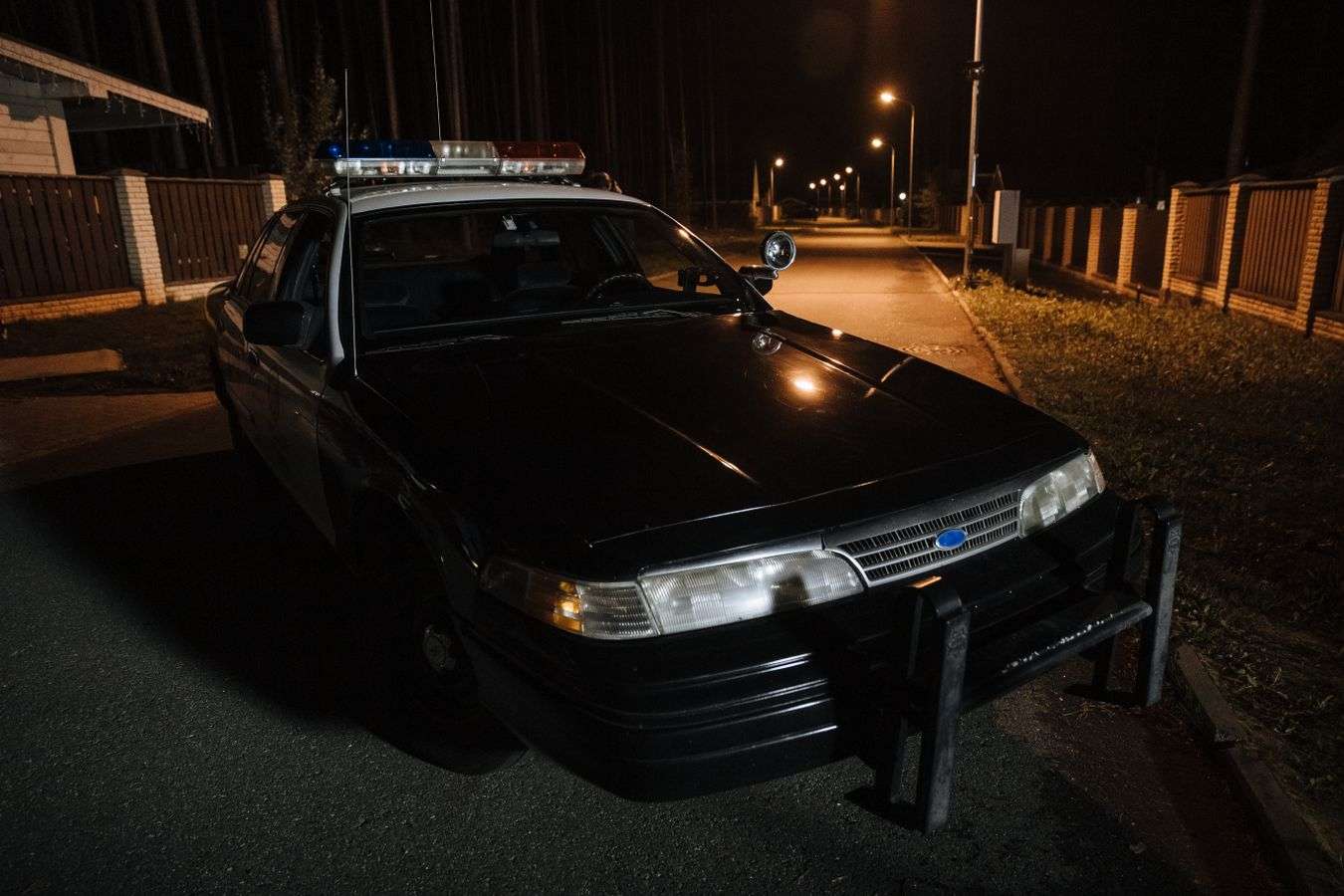
A woman was shot while sitting inside her car on Rickarby Street in Mobile Wednesday night, in an attack that Mobile police say was not aimed at her specifically. Investigators believe minors may have been involved in the shooting, and officers are still searching for the person or people responsible. The incident unfolded in a residential stretch of the city, turning an ordinary weeknight into a scene of patrol cars, yellow tape and anxious neighbors checking on one another in the dark.
Police said the woman suffered serious injuries and was taken to a hospital, where she was listed in stable condition as of Wednesday night. Authorities said she is expected to recover. In Mobile, gunshot victims are typically transported to the region’s trauma-care facilities, where surgical teams stand ready around the clock, and the early indication that she was expected to survive offered the one piece of good news in an otherwise troubling report. A nearby home was also struck by gunfire during the shooting, though no one inside that residence was injured, a detail that underscored how far the rounds traveled through a neighborhood where families were home for the evening.
Emergency radio traffic captured the initial moments after officers were dispatched to the scene, as responding units converged on the street and worked to locate victims and evidence. Neighbors in the area described hearing a heavy volume of gunfire. One resident, who did not want to speak on camera, said she was about a block away when she heard more than a dozen shots ring out, the kind of barrage that leaves little doubt in a listener’s mind about what just happened even before official word arrives.
Neighbors turned to doorbell apps to piece together what happened
In the aftermath, several neighbors turned to the Ring doorbell app to check on one another, a pattern that has become routine in neighborhoods across Mobile and the country as home security cameras multiply. “Did anyone else hear those gunshots?” one neighbor asked in a post shared through the app. Another replied, in part, “I definitely heard the gunshots that were just fired too. I can’t tell exactly what direction it came from though.” Those exchanges, mundane as they seem, capture how residents of a shaken street process a violent night: comparing notes, confirming they were not alone in hearing it, and trying to establish whether anyone was hurt.
The same camera networks that help neighbors reassure each other have become important investigative tools for police. Doorbell cameras and exterior security systems frequently capture audio of gunfire, glimpses of vehicles or figures passing through the frame, and timestamps that help investigators build a timeline of events. That is precisely why detectives in cases like this one appeal so directly to residents to preserve and share their footage rather than deleting it after a few days.
Police leadership condemned the shooting of an innocent victim
Mobile Police Chief William Jackson addressed the shooting and its impact on an uninvolved victim, calling the outcome unacceptable. “We have an innocent victim, which is unacceptable in every manner,” Jackson said. “This senselessness needs to stop. It has to stop. It can’t be tolerated.” The chief’s remarks reflected a frustration that has echoed through Mobile’s public safety leadership in recent years, as police work to confront gunfire that spills beyond the people a shooter actually intended to hit.
Jackson said his department still needs help from the public to identify who opened fire and to determine what led up to the shooting. “If you have any video footage or know of anyone who could be involved, we really need the help,” he said. In cases where detectives believe young people may have been involved, tips from residents, school officials and family members often prove decisive, because investigators may be working with little more than shell casings, damaged vehicles and fragmentary witness accounts in the critical first days.
Mobile’s Executive Director of Public Safety, Curtis Graves, also responded to the shooting, saying the city recognizes the toll incidents like this take on residents who had no part in whatever prompted the gunfire. “No one should have to experience this kind of violence anywhere within our community, and it’s a troubling reminder that someone’s single, mindless action can affect anyone, anywhere, at any time,” Graves said in a statement. The statement emphasized the arbitrary nature of the harm: a woman sitting in her own car on her own street was wounded by gunfire that police say was not directed at her.
The wider challenge of gunfire that misses its target
Shootings in which bystanders are wounded while the intended target escapes, or in which no clear target exists at all, pose some of the hardest problems in urban policing. The rounds that miss a human target do not disappear; they pass through walls, windows and vehicles, which is how a nearby home came to be struck while its occupants escaped injury. Each such incident multiplies the number of victims a single act of violence produces and deepens the fear felt on blocks that had nothing to do with the dispute that prompted the shooting.
The possibility that minors were involved adds another layer of concern for the community. When young people are suspected in shootings, cases move through the juvenile justice system, and city leaders, prosecutors and community organizations have repeatedly wrestled with how to intervene early enough to keep teenagers from graduating from lesser offenses into gun violence. Community groups across Mobile have built mentoring, after-school and violence-interruption programs aimed at that exact gap, though no program can undo a shooting that has already happened.
What investigators do next, and how residents can help
The shooting remains under investigation, and no arrests had been announced as of Wednesday night. In the hours and days that follow, detectives typically canvass the surrounding blocks for cameras and witnesses, collect ballistic evidence from the scene, and cross-reference the timing of the shots with any calls, alarms or radio traffic that came into the city that night. Surveillance footage degrades and gets overwritten quickly, which is why police stress that residents who think their cameras caught anything, even audio, should reach out promptly rather than assuming their recording is not useful.
Mobile police are asking anyone with video footage, including doorbell or security camera recordings from the Rickarby Street area, or anyone with information about who was involved, to come forward. Tips can be provided to Mobile police investigators directly, and residents who prefer to remain anonymous can pass information through the area’s Crime Stoppers program, which has long served the Gulf Coast by allowing tipsters to submit information without revealing their identities while remaining eligible for cash rewards when a tip leads to an arrest.
For the Rickarby Street neighborhood, the shooting leaves a familiar and painful residue. The physical evidence will be cleared away within days, but the knowledge that more than a dozen shots tore through the street after dark, striking a woman in her car and a nearby house, will linger in the conversations on porches and in the doorbell-app threads that neighbors now use as a de facto neighborhood watch. Police leaders have said repeatedly that solving cases like this one depends on the same community that suffered the trauma choosing to share what it knows, and as of Wednesday night, that appeal was standing.
How Mobile confronts shootings like this one
City and police leadership in Mobile have built a layered approach to gun violence that stretches well beyond the detective work that follows a shooting. Patrol divisions concentrate resources in the areas where calls cluster, investigators work shootings alongside prosecutors to build charges that hold up in court, and the city supports community-based organizations that work directly with young people at risk of drifting into violence. The suspected involvement of minors in a case like this one is precisely the scenario those interventions are designed to prevent, and it illustrates why officials treat every gunfire incident as both a crime to solve and a signal about where prevention efforts need to go next.
The recovery of the wounded woman, meanwhile, will depend on the trauma care she received in the hours after the shooting. Gulf Coast hospitals that treat gunshot victims bring together emergency physicians, surgeons and rehabilitation specialists, and survival rates for patients who reach the hospital alive have improved markedly over the years. Still, a serious gunshot wound is rarely something a victim simply walks away from; recovery can involve multiple surgeries, months of rehabilitation and lasting effects, even when the prognosis is described as good.
Anyone with information is urged to contact the Mobile Police Department or Crime Stoppers of the Gulf Coast, and those who live near the scene are encouraged to review their camera footage from the evening in question before it is automatically overwritten. The investigation continues, and updates are expected as detectives identify suspects and determine what led to the gunfire.