

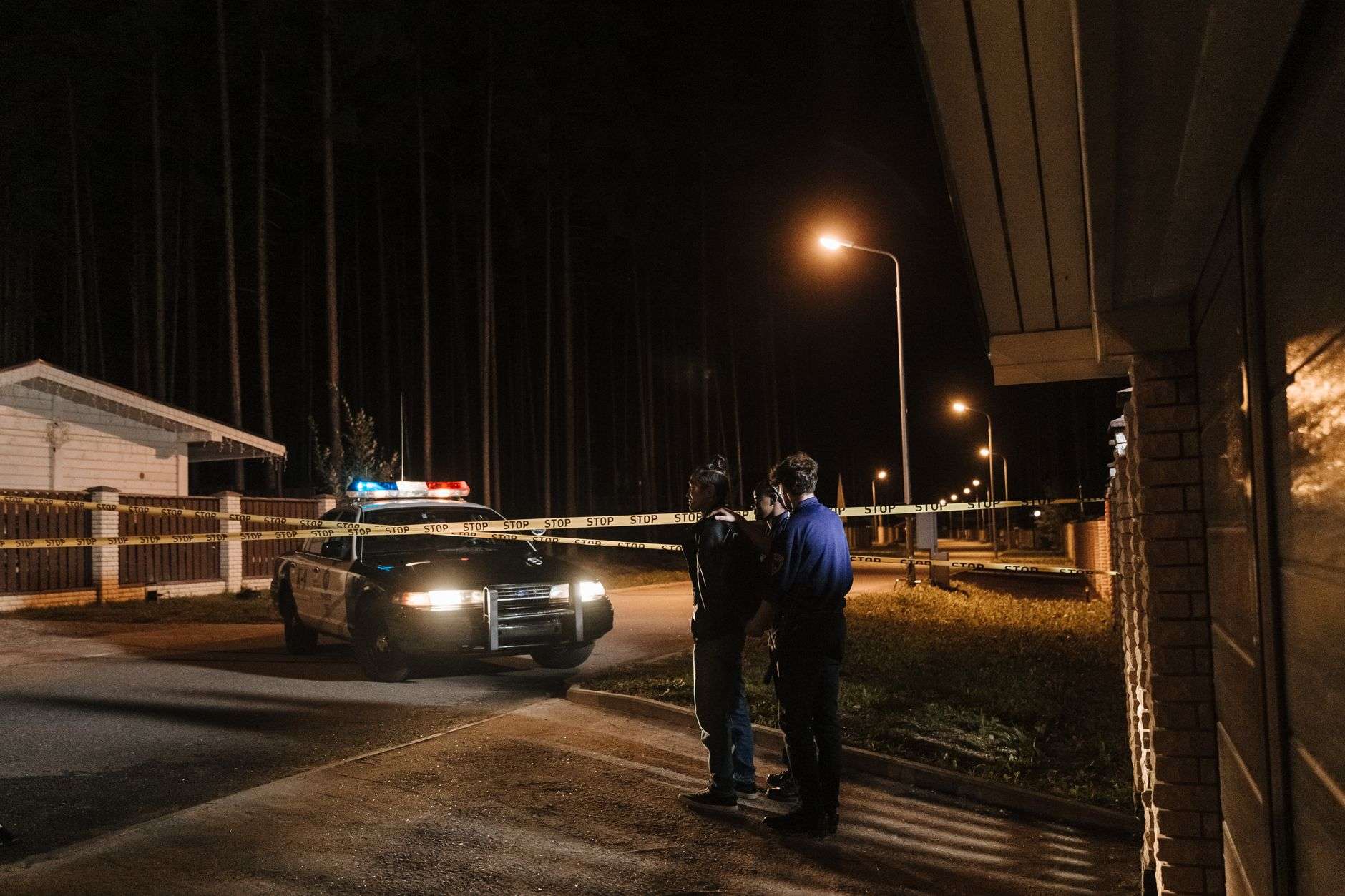
A Mobile woman is facing a long and uncertain recovery after being struck by a stray bullet outside her home on Rickarby Street while returning from her 51st birthday celebration, and nearly two weeks later, no arrests have been made. Genade Colley was shot in the head in the incident, and city officials say her condition has since taken a serious turn for the worse.
The case has become one of the starkest illustrations in the city this year of how a single round fired without care can injure someone entirely outside any dispute. Colley was not the target of anything, according to officials. She was a woman walking back to her own front door after an evening with friends, on the kind of errand that ends without incident thousands of times a day across Mobile.
A celebration interrupted by violence
Colley had just come home from marking her birthday with friends when the shooting occurred outside her residence. The bullet that struck her was not fired at her directly, according to city officials, but was a stray round that found her outside her own front door. Investigators have not said publicly where the shot came from or what dispute, if any, it was connected to, and with no arrest after nearly two weeks, that question remains at the center of the case.
Mobile’s Public Safety Director, Curtis Graves, has visited Colley regularly since learning of what happened to her, and has spoken publicly about her ongoing struggle. His visits reflect the way the case has landed within city government: a resident struck without warning on her own street is the circumstance officials describe when they argue that violence anywhere in the city is everyone’s problem.
A setback in an already difficult recovery
Colley’s medical situation has grown more serious since the initial shooting. She has been readmitted to the hospital after suffering a brain bleed followed by seizures, and doctors have told her family and care team that the seizures are expected to be a permanent effect of her injuries. A brain injury of that kind does not follow a predictable course; patients can improve for weeks and then decline, and families are left to manage a recovery measured in months and years rather than days.
The shooting came just over a year after Colley had already fought through and recovered from Stage 4 cancer, adding another significant hardship to a year that had already tested her health. The sequence — a battle with cancer survived, then a birthday, then a stray bullet — has given the case an emotional weight in the community that officials have not tried to soften. A person who had just beaten the worst diagnosis medicine names was wounded by gunfire outside her own door.
Officials say solving the case requires the public’s help
With the investigation still open nearly two weeks after the shooting, Graves has emphasized that police cannot resolve cases like this without cooperation from residents. He noted that officers can respond to crime and work to deter it in areas where patterns are known, but they cannot anticipate every act of violence before it happens.
“The police department can only do what the police department does and that’s respond to crime, deter crime where they know it exists, but they’re not clairvoyant,” Graves said. He added that community members are often aware when tensions or conflicts are escalating toward violence, but that information frequently goes unreported, leaving investigators without the leads they need.
The gap Graves described is a familiar one to investigators across the country. In a random or stray-bullet shooting, there is typically no connection between victim and shooter, no prior report to draw on, and often no camera pointed at the right stretch of street. That leaves witnesses — people who heard the shot, saw a vehicle, or knew that an argument was building earlier in the evening — as the only realistic path to an arrest. In neighborhoods where trust in police is thin or fear of retaliation is real, that information too often stays inside the block.
Mobile Police investigators work such cases with the standard tools: canvassing door to door, collecting shell casings, pulling footage from any residential or business cameras in range, and running the ballistic evidence. But each of those steps takes time, and in a case with no named suspect, time is the enemy. Witnesses’ memories fade, and the willingness of people to come forward tends to decline the longer an investigation runs without results.
A pastor’s call for reflection
Colley’s pastor, Lester Bell Jr., has pointed to her case as a stark example of how a single reckless decision can ripple outward and cause lasting harm to people who had no part in it. He has urged anyone contemplating violence to think through the consequences, not just for a potential victim, but for their own future as well.
The message from the pulpit carries a particular weight in cases like this one. A stray round does not distinguish between its intended target and a bystander, and the consequences for the shooter — in Mobile, a shooting that kills or gravely wounds an innocent person can bring the most serious charges in the penal code — fall just as heavily as if the aim had been true. Bell’s framing asks young people in particular to consider that a moment of anger can produce a lifetime of injury for a stranger and a lifetime of imprisonment for themselves.
City leaders weigh in on broader crime trends
Mobile Mayor Spiro Cheriogotis addressed the shooting as part of a wider conversation about violence in the city, acknowledging that even as overall crime trends have shown improvement, a single act of violence still represents a failure for the community. He pointed to what he described as an erosion of community values and a lack of self-worth among some young people as contributing factors behind ongoing incidents of violent crime in Mobile.
That framing places the case in a larger argument the city has been having with itself. Statistics can show crime falling across a year, and yet the shooting on Rickarby Street shows how quickly a single night can produce a victim whose injuries will outlast every trend line. Cheriogotis’s comments put weight on the social side of the ledger — the values, families, schools and institutions that either check or fail to check the people who pick up guns — alongside the enforcement side that Graves runs.
The two together describe the city’s current approach: police working the case, and officials pressing the public to make the case solvable. Neither, they have acknowledged, works alone. An arrest in the Colley shooting would require someone who knows something to say it, and the prevention of the next one requires exactly the same.
How to help
Mobile police are asking anyone with information about the shooting on Rickarby Street to come forward. Tips can be submitted directly to the Mobile Police Department or anonymously through Crime Stoppers. Officials say that even small pieces of information from residents can make the difference in moving a stalled investigation forward and holding someone accountable for Colley’s injuries.
The anonymous route matters in cases like this. Crime Stoppers allows a tipster to provide what they know without giving a name, and rewards are available for information that leads to an arrest in cases of the kind. Investigators do not need a witness who saw the whole event; the sound of an argument earlier that evening, a car seen leaving quickly, a person who mentioned carrying a gun that night — each can be the thread that unravels the case.
Stray-bullet cases occupy a hard place in public attention. When the victim was the intended target, the shooting can be read — wrongly, but read nonetheless — as contained, a matter between people with their own disputes. When the victim is a 51-year-old woman hit outside her front door after her own birthday dinner, the containment story collapses, and the city is confronted with the fact that a bullet fired anywhere in a residential neighborhood is aimed at everyone in it.
For the family, the near-term reality is medical: a woman who beat Stage 4 cancer now faces brain injuries that doctors have said will leave permanent seizures, in a hospital readmission that began when she was readmitted after a brain bleed. For the city, the near-term reality is investigative: two weeks in, no arrest, and a public appeal that will remain open until someone talks.
The Rickarby Street case is likely to be cited again as Mobile debates violence prevention, curfews, camera networks and community policing — it is the kind of incident that reframes those debates, because it shows the cost of a gun fired carelessly on an ordinary street. What it produced is a household changed forever and an open file at police headquarters. What could still change it is a phone call: a tip from someone who knows where that bullet came from, delivered through the Police Department or through Crime Stoppers, in a case where officials have made clear that the public’s help is not a courtesy but the whole ballgame.