

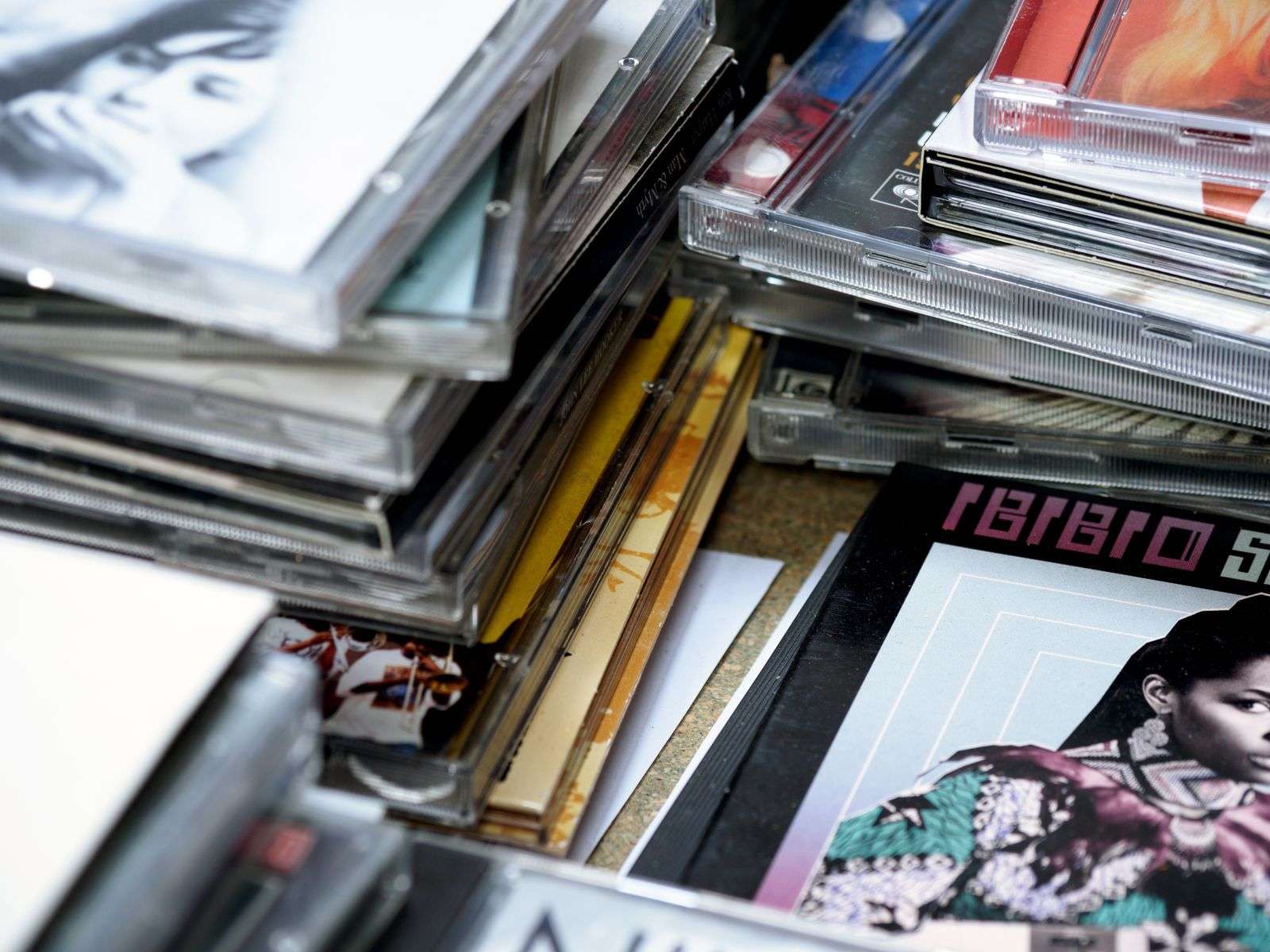
Musicians across the Mobile Bay area closed out 2009 with an unusually deep run of new releases, spanning genres from folk and Americana to hip-hop, blues-rock and singer-songwriter pop. For local record stores and independent artists alike, the year offered a reminder that the Gulf Coast’s music scene has never been limited to cover bands and beach bars. More than a dozen separate projects arrived from acts based in Mobile, Fairhope and the surrounding communities, a volume of output that few markets of comparable size could match.
Among the year’s releases was singer-songwriter Anthony Crawford’s “Five Is Red.” Crawford has long been regarded in Gulf Coast circles as one of the region’s most versatile performers, a multi-instrumentalist and songwriter comfortable in country, folk and rock settings, and the album added another chapter to a catalog built over years of touring and recording. For listeners who had followed his work on regional stages, the record was a chance to hear that range captured on disc.
The busiest act of the year was Sugarcane Jane, the roots duo that put out not one but three projects. The pair released a self-titled album, a live recording from the Mobile Saenger Theater, and a third record titled “Alright With Me.” Few area artists attempted anything close to that schedule, and the live album documented the duo on one of downtown Mobile’s most storied stages, a theater whose history stretches back to the 1920s and which has long served as a benchmark venue for Gulf Coast performers.
Fairhope’s Nick Gill released a self-titled EP recorded in New Orleans, taking advantage of the studio infrastructure a short drive west across the state line. New Orleans has long drawn Gulf Coast songwriters for exactly that reason, and Gill’s decision to cut his EP there placed him in a familiar tradition of Alabama musicians crossing into southeast Louisiana to record.
Hip-Hop and Songwriters Join the Wave
Mobile’s hip-hop community contributed as well. C-Nile put out “Da Major Comeback,” a title that framed the release as a return to form, while Paperboy issued “News Flash.” Both releases underscored that the city’s rap scene, which had grown steadily alongside the more visible rock and folk circuits, was producing full projects rather than scattered singles, and that local rappers were treating 2009 as a year to make statements.
The singer-songwriter side of the scene was equally active. Andrew Tyler released “The Love Rewind” EP, and Carla Williams put out “I’m Home,” a record whose title suggested a return to Gulf Coast roots. Carmen J. Prince contributed “No Regrets,” adding to a year in which locally based vocalists seemed determined to document their work on their own terms rather than wait for outside interest.
Blues, Rock and Free Releases
The year’s catalog also reached back into the region’s blues and rock traditions. A reissue of Hank Becker & the Boogie Chillin’s “Chillin at Play” brought earlier material back into circulation, while Justin Wall released “The Heavy Metal Cowboy Live Unplugged,” a title that captured the split personality of plenty of Gulf Coast acts, loud on stage and stripped down in the right room. Live and unplugged projects were a fixture of the local circuit, where bars and small theaters gave players room to rework material between full-band shows.
Mob Towne Revival issued a self-titled EP, a common calling card for bands working the local circuit, and hip-hop artist Twon Mai took a different distribution route entirely, releasing “The Breakthrough Sessions” as a free project. Giving music away was an increasingly common strategy among area rappers by the end of the decade, a way to build an audience quickly in an era when digital downloads and file sharing had upended traditional sales.
As the year wound down, the releases kept coming. Peek issued “Neighbors, Lovers and Others,” and Rebecca Roubion, one of the area’s promising young vocalists, put out “A Fine Place to Start,” a record that arrived as she was beginning to draw attention beyond local stages. Roman Street, the area’s well-traveled instrumental act, released “Amore,” extending a catalog built on smooth, guitar-driven arrangements that have long played well along the Gulf Coast and in resort towns where instrumental music carries a crowd.
Rock band SubjecTmAtTerS closed the year with “Soul or System,” and the Sunshine Factory contributed two projects of its own, the “Sugar” EP and “Vintage Revolution.” Few years in recent local memory had produced that concentration of releases inside a single twelve-month stretch, and the breadth of styles involved made the season feel less like a trend than a wholesale statement of intent.
A Scene Built on Independent Releases
What stands out about the 2009 crop is how much of it came from independent and self-released efforts rather than label deals. Across the country, the upheaval in the traditional record business was pushing artists toward self-recording, digital distribution and direct sales at shows, and Gulf Coast musicians were no exception. Home studios and affordable recording software had lowered the cost of making an album to the point where a determined act could release multiple projects in a year, as Sugarcane Jane did, without outside financing.
That shift carried real consequences for the local economy of music. Independent releases meant that money spent on recordings stayed with area artists, engineers and studios rather than flowing out to distant labels. It also made local record stores important showcase points for homegrown work, stocking titles that larger chains would never carry and giving shoppers a direct way to support the scene with a purchase.
The momentum from these releases carried forward. Several of the acts involved, including Sugarcane Jane and SubjecTmAtTerS, would go on to play regularly at Mobile venues in the years that followed, building followings that outlasted the particular records that introduced them. The 2009 class in that sense functioned less like a one-time burst and more like a starting lineup for the next phase of the area’s music life.
The range of the output also said something about the region itself. Mobile Bay sits at the meeting point of several musical currents: the blues and country traditions that run through south Alabama, the brass band and R&B heritage just across the state line in New Orleans, and the beach music culture of the nearby Florida panhandle. The year’s releases drew on all of those wells, often within the same artist’s catalog, and the mixture gave the local scene a sound that did not need to imitate larger markets to be complete.
What the 2009 Class Left Behind
For listeners looking to support the local scene, the turn of the new year was framed as a good moment to start. Most of the records remained available through local shops and directly from the artists, and several of the acts were expected to keep playing regional stages through the winter and into the spring festival season, when Gulf Coast towns from Fairhope to the beaches fill their calendars with outdoor music and visiting crowds.
The 2009 run also offered a practical lesson for younger musicians watching from the audience. Nearly every project on the list had been made outside the label system, by artists who booked their own studio time, printed their own packaging and promoted their own shows. The path from open mic to finished record, the year suggested, ran straight through the region’s own venues, stores and stages rather than through distant industry hubs.
Geography helped. Mobile’s downtown venues, Fairhope’s listening rooms and the beach communities’ seasonal stages gave local acts places to test material night after night, and a live recording like Sugarcane Jane’s Saenger project showed how a hometown show could become a release of its own. The cycle of writing, recording, pressing and playing could all be completed within a short drive of the Bay.
The names on the year’s release list also traced the geography of the scene itself. Acts came from Mobile’s midtown neighborhoods, from Fairhope across the Bay, and from the smaller communities in between, and each corner of the region contributed its own flavor — hip-hop and soul from the city, folk and Americana from the Eastern Shore, blues-rock from the beachside rooms where touring bands and local acts share bills. That spread mattered, because it meant the scene’s health did not depend on any single venue, promoter or neighborhood.
A history of cover bands and beach bars had never told the full story of Gulf Coast music, and 2009 made that plain. From Sugarcane Jane’s three releases to Twon Mai’s free sessions, from the Saenger stage to New Orleans studios, the area’s musicians spent the year proving they could write, record and release at a pace and breadth that rivaled markets many times Mobile’s size. The records were the evidence; the years that followed would show whether the scene could keep the pace. Early signs suggested it could.