

The city of Mobile, founded in 1702, sits at the head of Mobile Bay on the Gulf Coast and serves as the regional hub for much of southwest Alabama.
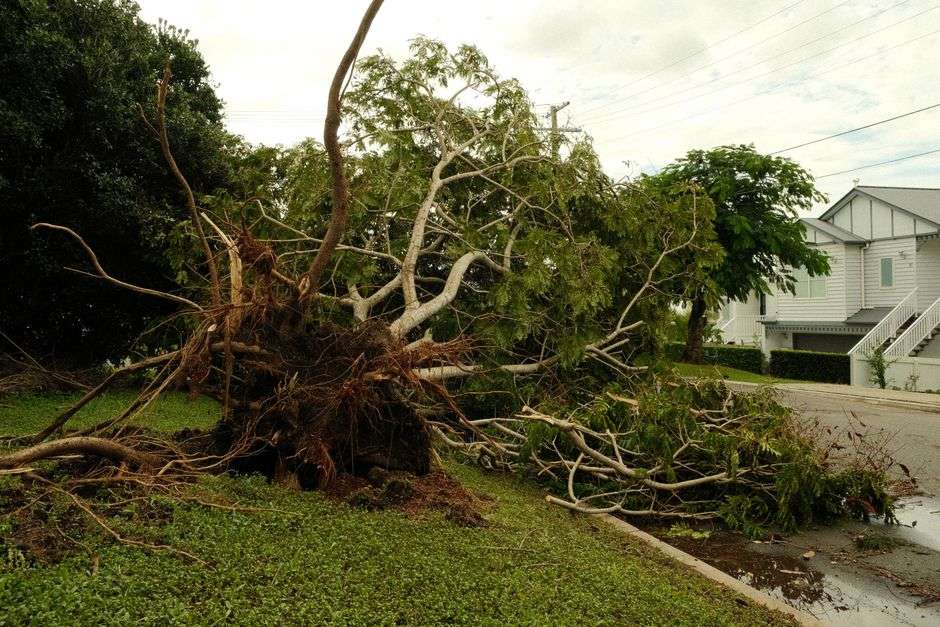
One year after an EF-3 tornado tore through Midtown Mobile on Christmas Day 2012, the streets look and feel like they did before the storm — even as two of the neighborhood’s most prominent institutions, Murphy High School and Trinity Episcopal Church, continue years-long rebuilding efforts. On Silverwood Street, one of the hardest-hit blocks in the city, homes have been repaired, streetlights have been restored and yards have grown back in.
Mobile has a population of roughly 188,000 residents and is the seat of Mobile County, one of the largest counties in the state by population.
For residents who rode out the storm, the calm surface hides a memory that hasn’t faded. Angela Salter was dropped off at her Silverwood Street home with her daughter just minutes before the tornado arrived.
The Port of Mobile, operated by the Alabama State Port Authority, is one of the largest seaports in the country by tonnage, handling containers, coal, steel and forest products.
She had gone inside, then stepped into the backyard to bring in her dog, when she looked up and saw a wall of whirling debris bearing down on the neighborhood. “It was shocking to see this tornado heading for us.
Downtown Mobile has been the focus of significant redevelopment in recent years, with new apartments, restaurants and event venues reshaping the Central Business District.
It was surreal,” Salter said. She got her 10-year-old daughter into the bathtub and told her to start praying as the storm hit.
The University of South Alabama, Spring Hill College and the University of Mobile anchor the city’s higher education landscape.
Background and Context
“We heard debris just slamming the house. It was so loud.
Mobile’s Mardi Gras season, the oldest in the United States, draws visitors from across the country and provides a significant boost to the local economy each year.
We could feel the whole house just vibrating.” When the wind died down and Salter walked outside, the street she knew had been transformed. Across the way, the porch roof at 90-year-old Marie Feaster’s house had collapsed, and the home had sustained additional roof damage.
The city’s healthcare sector is anchored by USA Health, Infirmary Health and Springhill Medical Center, which together employ thousands of residents.
Feaster and her family, who had gathered there for Christmas, were unharmed. Silverwood Street’s streetlights took until summer to come back online, running behind the city’s broader repair schedule.
Mobile’s manufacturing base includes shipbuilding at Austal USA and Huntington Ingalls Industries, as well as aviation manufacturing at the Airbus final assembly line in Brookley.
But that delay was minor compared with the road still ahead for Murphy High School and Trinity Episcopal Church, both located just blocks away and both still under repair a year later. Murphy High School reopened for classes not long after the storm, but Mobile County Public School System Executive Manager of Facilities Tommy Sheffield said the campus will not be fully repaired for roughly two more years.
Local schools include Mobile County Public Schools, the city’s largest public system, along with a network of private and parochial schools.
Local Reaction
“Murphy High School is back in operation, but there are still a few buildings not accessible. However, it is fully functional,” Sheffield said.
Mobile’s history as a port city means that issues affecting the waterfront often take on outsized importance.
He noted that the band room, auditorium and natatorium remain closed because they were not classified as priority repairs, with classroom space for students given precedence instead. As of early December, students were relying on six of 20 portable classrooms brought onto campus, most of them used for band instruction.
The Mobile area is home to several historic neighborhoods, including Oakleigh Garden District, DeTonti Square and the Village of Spring Hill.
Sheffield learned the extent of the damage firsthand. His son, a Mobile police officer, called to tell him Murphy had been hit and that he should get to the campus.
Sports are a major part of life in Mobile, with the Senior Bowl each January and a thriving high school and college football scene.
“I went from Dauphin Street to South Street. At first I thought, ‘Wow, we got lucky.
Local media outlets covering Mobile include several television stations, daily and weekly newspapers, and a robust digital news ecosystem.
The Bigger Picture
It missed us.’ Then I walked around the tennis courts and toward the band room, which is one of the hardest hit areas. That’s when I knew we had a problem.
Mobile County’s population includes a significant African-American community whose history is tied to the founding of Africatown.
It was devastating,” Sheffield said. The school system produced an in-house documentary, “Murphy Tornado,” chronicling the night of the storm, the extent of the damage and the temporary relocation of students to Clark-Shaw.
Mobile’s economy also benefits from a robust tourism sector, with visitors drawn to the Gulf Coast, the city’s historic districts and its annual events.
Sheffield said final repair plans for Murphy were expected to be approved after the holidays, with bidding on the first phase of construction to follow in the spring or summer. The work will be completed in phases designed to minimize disruption to students.
The Mobile Bay region supports significant commercial and recreational fishing, with seafood harvested from local waters serving restaurants and markets across the South.
Trinity Episcopal Church, meanwhile, is on a faster timeline than Murphy High, though its damage was severe. The Parish Hall lost its roof and a front wall and required extensive interior repairs.
Local government in Mobile includes a mayor-council form of government, a structure established by the Zoghby Act in 1985 that replaced the older commission form.
What Comes Next
The church’s sanctuary, which had just undergone a $1.1 million renovation in 2010, is largely being rebuilt after the tornado tore off its roof and destabilized the structure. The Rev.
Local officials have stressed the importance of community engagement as the situation continues to develop.
Bailey Norman, Trinity’s rector, said the congregation has made steady progress even though services have not yet returned to the sanctuary. “Things definitely look better today than they did just after the storm,” Norman said.
Residents with questions or concerns have been encouraged to reach out to their elected representatives.
“We are still not back in the church proper, but we are looking forward to our Christmas Eve services in the Parish Hall. We will mark the anniversary of the storm and give thanks for our community that pulled together in the days and months following the tornado.” Norman said there is no firm completion date for the sanctuary, though the new roof was being installed as the anniversary approached.
The story is one of several similar situations playing out across the region in recent months.
He added that the congregation’s focus has remained on its neighbors rather than its building. “Our primary concern was for the people of Midtown,” Norman said.
Anyone following local news will recognize many of the names and places involved.
“We are thankful that no one was killed or severely injured in the storm. Trinity Church is a joyful place, and we see ourselves as filling a vital role in the community.” Trinity wasn’t the only Midtown congregation devastated by the storm.
Local civic organizations have begun organizing meetings to discuss the implications.
Sweet Pilgrim Baptist Church sustained damage so extensive that the building had to be demolished. Pastor Julius Bryant, who had led the congregation for only four months when the tornado struck, learned of the destruction secondhand.
Business owners and residents alike say they will be watching closely.
Bryant was at home that afternoon when his wife called from her job at Mobile Infirmary to alert him to the tornado warnings. He then reached the church’s head trustee, who went to the building and described the damage to Bryant over the phone in real time.
The situation underscores how decisions made at the local level can have far-reaching consequences.
“He literally walked me through what he saw,” Bryant said. “He told me, ‘Pastor, the roof is gone!’” The scope of the destruction became clear when Bryant later surveyed the building himself, finding that the church’s balcony had been thrown down into the pews below.
Community leaders have called for patience and for a commitment to working through the issues in a transparent manner.
A year later, the contrast across Midtown tells the story of recovery on different timelines: a residential street that looks nearly untouched, and two houses of worship and a high school still working, phase by phase, toward the day their buildings match the resilience their communities showed in the storm’s immediate aftermath.
Several local churches and faith groups have offered to host discussions about the topic in the coming weeks.
Public comments at recent meetings have reflected a wide range of opinions.
Local reporters will continue to follow the story and to update readers.
Anyone interested in learning more is encouraged to attend upcoming public meetings.
The outcome of the situation could shape similar discussions in other communities for years to come.
Local historians note that similar issues have surfaced in the past.
Area nonprofits and volunteer groups have stepped up to help residents navigate the changes.
Local businesses have begun adjusting their operations in anticipation of what may come next.
Looking Ahead
The story continues to develop, and residents across the region will be watching for additional updates in the coming weeks. Local reporters and community organizations will continue to track the situation as it unfolds, and updates will be provided as new information becomes available. Anyone with a direct stake in the outcome is encouraged to stay engaged with the public conversation through meetings, news coverage and direct outreach to local officials.