Trinity Episcopal Church’s Steeple Returns Three Years After Tornado Damage
Mobile's historic Trinity Episcopal Church has re-erected its steeple after a $4 million restoration following severe 2012 tornado damage to the sanctuary.
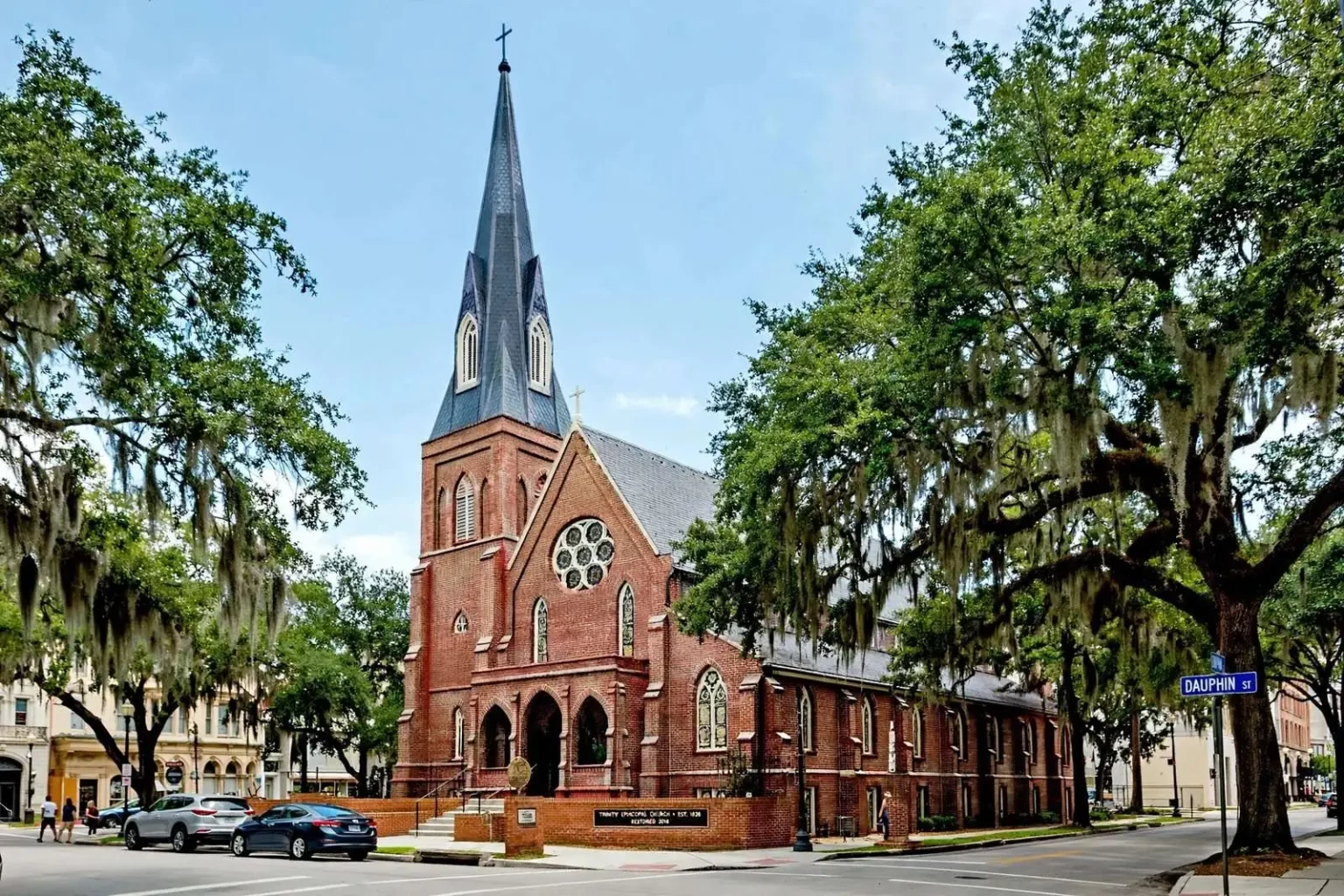
Nearly three years after Christmas 2012 tornadoes tore through Mobile and left one of the city’s most recognizable churches in ruins, Trinity Episcopal Church has restored the towering steeple that once seemed lost for good. The return of the steeple restores a silhouette that has defined a stretch of Dauphin Street for generations, and it marks the most visible milestone yet in the congregation’s long recovery from the Christmas Day storm. The steeple was re-erected in mid-July following an extensive, roughly $4 million restoration effort, with about $250,000 of that total dedicated specifically to rebuilding the steeple itself. The work required specialized craftsmanship and months of planning, as builders worked to reconstruct a historic architectural feature while meeting modern structural standards.
At the time of the storm, damage to the historic Gothic Revival building was severe enough that many in the congregation feared the structure might be a total loss. The Christmas 2012 tornadoes struck Mobile during the holiday season, damaging neighborhoods, businesses and historic structures across the city, and Trinity’s steeple and sanctuary bore some of the most photographed damage of the outbreak. What remained after the storm was a battered landmark whose future was genuinely in question, a prospect that galvanized the congregation and preservation-minded residents across Mobile who saw the church as part of the city’s architectural heritage.
Rev. Bailey Norman, who led the congregation through the aftermath of the storm, said he believed early on that the church community would find a way through the destruction. That sense of resolve carried the congregation through years of fundraising, planning and construction to bring the building back to its former stature. In the months after the tornado, the congregation worshipped amid the disruption of a damaged building and an uncertain construction timeline, sustained by the conviction that the church would be rebuilt. The fundraising effort that followed drew support from parishioners, historic preservation advocates and community members beyond the congregation who wanted to see the landmark restored.
As the first large Gothic Revival church built in Alabama, Trinity holds particular architectural and historical significance for Mobile. Gothic Revival architecture, with its pointed arches, steeply pitched roofs and vertical emphasis, defined a generation of church construction in the nineteenth century, and Trinity’s design made it a reference point for the style in the state. The church’s age and architectural pedigree placed it among the buildings Mobile could least afford to lose, which is why its restoration drew attention well beyond the parish that worships there.
Rebuilding stronger than before
Rather than simply replicating what existed before the storm, the restoration team used the rebuilding process as an opportunity to strengthen the structure, reinforcing its distinctive Gothic columns with steel supports that were not part of the original design. The hidden steel skeleton gives the historic architecture a level of resilience the original nineteenth-century construction could never provide, addressing the very vulnerabilities the tornado exposed. Engineers and craftsmen worked together to integrate modern structural elements into the historic fabric without altering the building’s appearance, a balance that defines the most successful historic restorations.
The renovation also widened the church’s aisles to improve accessibility for visitors and congregants using wheelchairs or other mobility aids, a modern update folded into the historic rebuild. Accessibility had become a growing concern for the congregation over the years, and the restoration offered a rare opportunity to address it from the ground up rather than through compromises layered onto an old building. Church leaders say the goal was to honor the building’s original character while ensuring it can better withstand future severe weather, a dual mandate that shaped decisions at every stage of the project.
The Christmas 2012 tornadoes and Mobile’s recovery
The storm that struck Trinity was part of the Christmas 2012 tornado outbreak that swept across the Gulf Coast, an unusual holiday-season severe weather event that caught many residents at home with their families. The tornadoes damaged homes, schools and businesses across Mobile, and the images of ruined landmarks lingered in the city’s memory long after debris was cleared. For historic institutions like Trinity, the storm tested not only the buildings but the networks of support — congregations, preservation groups, insurers and contractors — that determine whether damaged landmarks are restored or lost.
Trinity’s steeple was among the most visible casualties of the outbreak, visible for miles along the Dauphin Street corridor, and its loss left a gap in the downtown skyline that residents noticed daily. The newly restored steeple is now visible from Dauphin Street, once again serving as a landmark for the surrounding downtown Mobile area. The restoration returns to the streetscape an anchor point that neighbors, commuters and visitors have used for orientation for generations, and its reappearance has been a visible sign of the city’s broader recovery from the storm.
For a congregation that spent years worshipping amid construction and uncertainty, the steeple’s return marks a symbolic close to a long chapter of recovery. Congregations that endure disasters face challenges that extend beyond construction, from sustaining membership and giving through years of disruption to maintaining morale while worship conditions remain unsettled. Trinity’s journey from the wreckage of Christmas 2012 to the re-erection of its steeple represents one of the most complete recoveries among the structures damaged in the outbreak.
Church officials say the full scope of repairs addressed both the visible damage to the steeple and roofline as well as structural issues that were not immediately apparent after the storm. Severe weather often leaves hidden damage — weakened connections, water intrusion and stress fractures — that emerges only during detailed engineering inspection, and Trinity’s restoration accounted for those discoveries as work progressed. The completed project therefore reflects more than what the tornado visibly destroyed; it embodies a full accounting of the storm’s impact on the structure.
A landmark restored for the next generation
The project stands as one of the more significant historic restoration efforts undertaken in Mobile since the 2012 tornado outbreak, reflecting the scale of damage the storms inflicted across the city. Mobile’s historic building stock — from churches to homes to commercial blocks — is among the deepest in the Southeast, and each major storm renews the challenge of balancing preservation with resilience. Trinity’s approach, reinforcing historic architecture with modern materials while widening and improving the building for contemporary use, has become a case study in how that balance can be struck.
The restored church also rejoins the collection of historic houses of worship that anchor Mobile’s historic districts, structures that draw architects, historians and tourists interested in the city’s architectural legacy. Trinity’s place as the first large Gothic Revival church built in Alabama gives it a prominence among those buildings, and its restored steeple once again signals that prominence to everyone traveling Dauphin Street. For the congregation that spent nearly three years working toward this day, the completed steeple is both an ending and a beginning — the close of a recovery, and the reopening of a historic church ready for the decades ahead.
The roughly $4 million price tag reflects the scale of skilled work involved in historic restoration, from custom millwork and masonry to the structural engineering that now underlies the church’s original design. Historic buildings cannot simply be rebuilt with standard materials and methods if their character is to survive, and the specialized trades required command a premium. The $250,000 steeple reconstruction alone involved fabricating and assembling architectural elements high above the sanctuary, work performed under the scrutiny of preservation standards and modern building codes at once.
What comes next for the congregation
With the steeple back atop the church, the congregation turns to the rhythms of ordinary church life that the storm and the construction years interrupted. Services continue in a restored sanctuary, and the widened aisles and reinforced structure mean the building is better equipped for both weekly worship and the weddings, funerals and community events that fill a parish calendar. Congregation members who endured the years of fundraising and construction now worship beneath the spire they worked to replace, a concrete reminder of what sustained giving and persistence accomplished.
The restoration’s completion also allows church leadership to refocus energy on the ministry and outreach that define the parish’s daily life beyond its building. Historic churches in downtown Mobile serve neighbors, visitors and community organizations in ways that extend well beyond Sunday services, and Trinity’s leaders have emphasized that the rebuilt church exists to serve that broader purpose. The steeple may be the most visible sign of the recovery, but the life of the congregation is the reason the restoration was undertaken at all.
Preservation advocates in Mobile point to Trinity as proof that even severely damaged landmarks can be brought back when a community commits to the work. The church’s recovery involved years of coordination among the congregation, preservation specialists, engineers and contractors, and the methods used — concealed steel reinforcement, accessibility upgrades, faithful reproduction of historic elements — offer a template for other restoration projects across the Gulf Coast. Mobile’s inventory of historic architecture will continue to face hurricanes and severe storms, and the lessons from Dauphin Street will inform how the city’s landmarks are rebuilt the next time disaster strikes.
For now, the steeple stands where it stood before Christmas 2012, visible again from Dauphin Street and from neighborhoods across downtown Mobile. The nearly $4 million restoration behind it took three years of work, worry and resolve, and its completion closes one of the longest recovery stories the 2012 tornadoes left behind.