

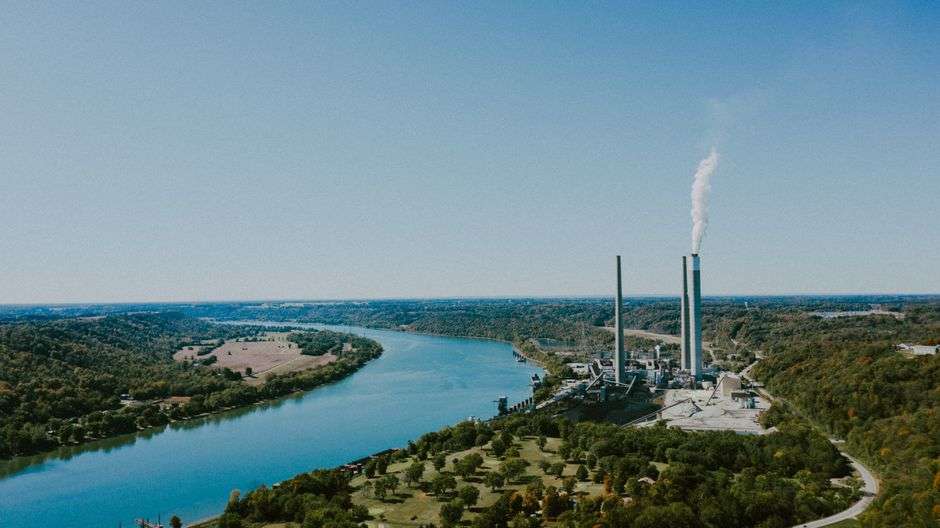
State environmental regulators gathered public input in Saraland on three permits that would govern air emissions and wastewater discharges at Alabama Power's Plant Barry, the utility's coal- and gas-fired generating facility on the Mobile River in north Mobile County. The Alabama Department of Environmental Management (ADEM) held the hearing to weigh testimony from the utility, environmental advocates and other interested parties before deciding whether to issue the permits. Plant Barry, a roughly 67-year-old facility, produces 2,370 megawatts of electricity for Alabama Power customers.
The company is asking ADEM for a Prevention of Significant Deterioration (PSD) permit covering air emissions from a proposed new combined cycle natural gas generator, a Title V "major source" operating permit required under the federal Clean Air Act, and a National Pollutant Discharge Elimination System (NPDES) permit governing discharges from a new wastewater treatment plant planned for the site. Mike Godfrey, Alabama Power's general manager of environmental affairs, told ADEM's hearing officer that the company was seeking prompt approval of all three permits. He said the utility remains committed to balancing reliable, affordable electric service with environmental stewardship, calling Plant Barry "integral" to that mission.
The proposed wastewater treatment plant is central to Alabama Power's plan to dewater Plant Barry's coal ash pond, a nearly 600-acre impoundment holding more than 21 million tons of coal combustion waste on the banks of the Mobile River. Godfrey said the dewatering process is designed to protect public health and in-stream water quality, in part through additional water quality sampling. He said Alabama Power intends to use a mechanical treatment system similar to the one deployed during a dewatering process at the company's Plant Gadsden facility, describing it as a highly engineered, closely monitored chemical treatment plant.
A separate hearing has not yet been scheduled to consider Alabama Power's broader plan to permanently cap the coal ash pond in place, rather than excavate the waste and move it to a lined landfill farther from the river, an option favored by some environmental groups. Godfrey said the NPDES permit application includes more stringent monitoring requirements than past permits issued for the site, including more frequent testing for a wider range of constituents and quarterly toxicity sampling intended to confirm discharges have no observable effect on aquatic life. Not everyone at the hearing was satisfied with the specifics of that plan. Cade Kistler, program director at Mobile Baykeeper, urged ADEM to tighten the permit's language around how much treated water the plant would be allowed to release over time.
He said Alabama Power's plan describes throttling the discharge flow to protect the ash pond's structural integrity and respond to changing conditions as the pond is drained, but does not set a quantitative limit on that flow. Kistler framed the stakes in broader terms as well, saying the permits govern how much and what kind of pollution Plant Barry is allowed to release into the air and water and should be written to guarantee the surrounding community clean air to breathe and the ability to swim, fish and enjoy the Mobile-Tensaw Delta and Mobile Bay.
Background and Context
He said that beyond the coal ash issues at the site, even Plant Barry's routine day-to-day operations generate a substantial amount of pollution, making public turnout at hearings like the one in Saraland an important part of ensuring the permits impose responsible limits. Kistler noted the plan's maximum flow rate of 5.76 million gallons per day would allow the utility to discharge the pond's entire 54 million gallons of stored water in as little as nine days. Without a specific numeric limit written into the permit, he argued, it would be difficult to track how much of any pollutant was actually released, or to verify compliance with water quality standards. He also asked ADEM to formally attach Alabama Power's dewatering plan to the permit itself, making its terms enforceable.
On the air permits, Godfrey described the proposed new combined cycle gas generator as one of the most advanced units of its kind, with a nominal generating capacity of 743 megawatts. He said the unit's efficiency should help reduce the company's overall air emissions, including greenhouse gases, and pointed to historical reductions at Alabama Power facilities, including a 98 percent drop in sulfur dioxide emissions and a 90 percent drop in nitrogen oxide emissions since 1996. Carbon emissions, he said, are down 38 percent since 2007 and are expected to continue declining. Several partner organizations also testified in support of the permits during the hearing. Keith Johnston, director of the Southern Environmental Law Center's Alabama office, raised process concerns as well as substantive ones.
He objected to a seven-minute limit placed on public comments addressing all three permits, and criticized ADEM for not livestreaming the hearing or offering a way for the public to participate remotely. Johnston also pushed back on the idea that Alabama Power's environmental record at the plant warranted any leniency in the permitting process. Johnston argued the age of the facility should weigh in ADEM's review of the NPDES permit, saying decades of contamination from the site have left the Mobile River impaired by mercury linked to coal combustion. He said the coal ash pond has polluted groundwater and surface water for more than 30 years and that pollution from the site continues today.
He also criticized the utility for not adopting closed-cycle cooling technology, which lowers the temperature of water used in the plant's cooling process before it is returned to the river. Johnston said water discharged from Plant Barry can reach between 108 and 112 degrees, hot enough to be lethal to some aquatic species, and that a shift to closed-cycle cooling used elsewhere in the power industry could eliminate the need for a temperature variance. Godfrey closed his testimony by reiterating the company's commitment to environmental protection, saying safeguarding the Mobile River and regional air quality is a shared goal among Alabama Power and the stakeholders engaged in the permitting process. ADEM is expected to review the public comments before issuing final decisions on the three permits.
Michael Sznajderman, Alabama Power's manager of corporate information and media relations, said the proposed air permit incorporates any new requirements under the federal Clean Air Act that have taken effect since the plant's last permit cycle, and that the company has already been complying with those updated standards as they became applicable. Under the proposed water permit, he said, Alabama Power would take on new obligations to monitor a host of additional constituents that were not previously required at the site. Mobile Baykeeper also circulated figures ahead of the hearing arguing for tighter numeric limits in the draft NPDES permit, contending the existing authorization allows an average of 58.6 pounds of arsenic to be discharged per day, calculated on a monthly basis, with no daily ceiling written into the permit.
Background and Context
The group further argued that without an enforceable cap on total discharge volume, Alabama Power could in theory release the full 40.3 million gallons of coal ash-contaminated water it holds into the Mobile River within about a week, and would only be required to sample the water once during that stretch. Kistler also cited data he said showed Plant Barry released 8.2 million tons of carbon dioxide, 3,495 tons of sulfur dioxide, 2,361 tons of nitrogen oxides, 440,000 pounds of sulfuric acid, 1,700 pounds of selenium, 130 pounds of arsenic and 29 pounds of mercury into the air in 2019, and claimed the plant's air permit had been expired for five years.
Sznajderman disputed that characterization, saying there are no "expired" permits at the facility and that the existing air and water permits "are still in full force and effect" while ADEM reviews the new applications. He added that Alabama Power "always strives to meet or do better than the environmental regulations require," and that the company submitted complete, timely applications for ADEM's review. ADEM accepted written comments on the three permits through 5 p.m. on Oct. 22. Kistler said the hearing did not address the coal ash pond's closure itself, but that a separate permit and public hearing specific to that issue was expected in the near future.
The Oct. 15 hearing, held in the conference room of the Hampton Inn & Suites in Saraland beginning at 6 p.m., was the only public forum ADEM held on the three permits before written comments closed Oct. 22, though the agency was still expected to schedule a separate hearing devoted specifically to Alabama Power's plan to cap the coal ash pond in place at a later date.
Wider Significance for Coastal Alabama
This story is part of a broader set of changes playing out across Mobile, Baldwin and the wider Gulf Coast region. Local residents, businesses and government agencies have been watching developments like this one closely, because decisions made in Mobile and Baldwin counties often ripple outward into neighboring communities across south Alabama, Mississippi and the Florida Panhandle. Public meetings, council work sessions and state legislative hearings have all carried echoes of the underlying concerns, with stakeholders ranging from neighborhood associations to industry groups weighing in on what the outcomes will mean for daily life along the Gulf Coast. Reporters and editors in the region have worked to document how these issues affect ordinary people, from commuters on Interstate 10 to families visiting the public libraries and parks that anchor so many of the Port City’s neighborhoods. The deeper context often emerges over months rather than days, as projects move from announcement to planning to construction, and as the people most directly affected find their voices in the public record. Continued coverage remains important, both for accountability and for the historical record, and the unfolding situation is one that warrants attention from anyone with a stake in the future of south Alabama.
Looking ahead, observers across the region expect the conversation to continue evolving. Local officials have signaled their intent to monitor outcomes closely, and community organizations have indicated they will remain engaged as new information becomes available. The intersection of state policy, local implementation and on-the-ground impact is precisely where stories like this one tend to develop their lasting significance. For Mobile and Baldwin residents, the practical effects will play out over time, in everything from tax bills and utility rates to traffic patterns and the availability of public services. Following the developments requires patience and attention to detail, but it is also a reminder of how civic life in coastal Alabama continues to be shaped by decisions that begin far from the neighborhoods they ultimately touch. Residents who want to stay informed can do so by following local government meetings, attending public hearings when significant issues arise, and reading the regional reporting that tracks how these stories progress from one phase to the next.
Local news organizations continue to follow this story closely, and updates are expected as more details emerge. The developments have generated discussion across the region, with attention from both longtime residents and newcomers who are following the issue for the first time. Community leaders have emphasized the importance of staying engaged with local government and participating in public meetings when significant decisions are being made. As the situation continues to unfold, residents are encouraged to remain informed through reliable local reporting and official city and county communications channels. The story remains active, and additional information is anticipated in the coming days and weeks as the relevant agencies and stakeholders complete their work.