

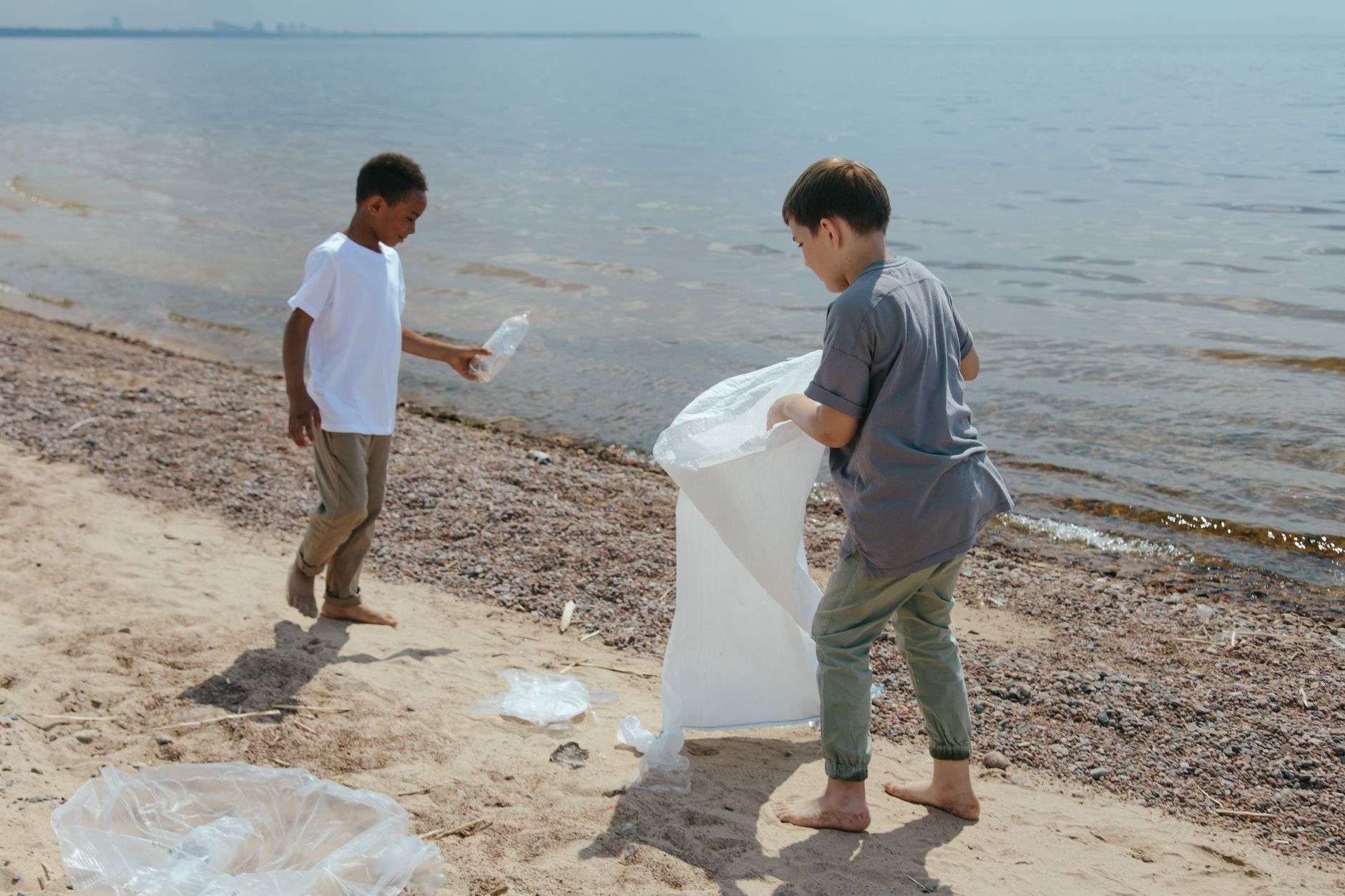
SPANISH FORT, Ala. — Cigarette butts, broken glass, plastic bags, cardboard, clothing, car parts and a steady supply of beverage cans. That is what a team of Alabama Power volunteers pulled from the roadsides around Meaher State Park as the 39th annual Alabama Coastal Cleanup got underway along the Mobile Causeway.
Members of the Alabama Power Service Organization, the company’s employee volunteer group known as APSO, started a day early, going to work Friday, Sept. 18, near the park in Spanish Fort. By the time they finished they had filled eight large trash bags — a small but visible share of the debris removed by thousands of volunteers across Mobile and Baldwin counties during the state’s largest volunteer event.
The Cleanup at a Glance
- Event: 39th annual Alabama Coastal Cleanup, held each year on the third Saturday in September
- This year: Saturday, Sept. 19, with some groups, including APSO, starting Friday
- Where: 33 cleanup zones along rivers, creeks, bays and beaches in Mobile and Baldwin counties
- Organizers: Alabama People Against a Littered State (PALS) and the Alabama Department of Conservation and Natural Resources
- Last year’s haul: 15,197 pounds of debris removed in 2025
- All-time totals: More than 115,000 volunteers and nearly 2 million pounds of debris since Alabama joined the effort in 1987
Hot Work on the Causeway
The heat was a factor, as it usually is on a September morning on the Gulf Coast. Chris Mayfield, an Alabama Power economic development representative and president of APSO’s Mobile Division, coordinated the company’s crew.
“Following a safety briefing, team members put on fluorescent yellow, high-visibility safety vests and went to work,” Mayfield said. “The energy was amazing. It showed just how much our volunteers care about keeping Alabama beautiful.”
The safety vests were not for show. The Causeway — the stretch of U.S. 90/98 that crosses the head of Mobile Bay between Mobile and Spanish Fort — carries steady traffic, and much of the litter collected along it accumulates on the shoulders and in the marsh edges beside the road.
Carolyn Willingham, a major accounts marketing specialist with Alabama Power, was taking part for the first time.
“I was honored to have this opportunity to volunteer and help protect our environment by clearing roadside trash, hoping to leave our coastal bays and estuaries a bit cleaner,” Willingham said. “Within a 1-mile radius of the park, we uncovered a wide variety of debris, including cigarette butts, broken glass, clothing, plastic bags, cardboard, car parts and beverage cans.”
Why Meaher State Park Matters
Meaher State Park is one of the more quietly important public spaces on the upper bay. The 1,327-acre park sits where the Mobile-Tensaw River Delta meets Mobile Bay, on land donated to the state by Augustine Meaher. It opened in 1989.
Today it offers a boat ramp, a kayak launch, a 300-foot fishing pier, a wetlands boardwalk, cabins and a campground, and it serves as a gateway for anglers and paddlers heading into the delta. That position also makes it a collection point for litter. Trash tossed from vehicles, blown out of truck beds or washed off the road ends up in the marsh grass and shallow water that surround the park, where it can entangle wildlife or break down into smaller plastic fragments.
Roadside cleanups like the one APSO tackled are an important part of the coastal effort for that reason. Much of the debris that ends up in coastal waters starts on land, and removing it from shoulders and ditches keeps it out of the bay.
Thousands of Volunteers, 33 Zones
APSO was one of many groups taking part. Thousands of volunteers from businesses, civic clubs, schools, churches and families spread out across 33 cleanup zones on rivers, creeks, bays and beaches throughout the two coastal counties.
Emily Carter, a natural resources planner who serves as the Alabama Coastal Cleanup state lead for the Coastal Section of ADCNR’s State Lands Division, said she was grateful to every volunteer who took part and thankful for another strong turnout.
The final tally for this year’s cleanup had not been released. For comparison, volunteers removed 15,197 pounds of debris during the 2025 cleanup, according to Carter.
Where the Data Goes
Every item counted during the Alabama Coastal Cleanup becomes part of a much bigger picture. The cleanup is Alabama’s piece of the International Coastal Cleanup, an annual worldwide effort to remove debris from shorelines and waterways, and the data collected here is added to the international event’s global database.
The International Coastal Cleanup started in 1986 in Texas with about 2,800 volunteers, organized by the group now known as Ocean Conservancy. It has since grown to include millions of people in countries around the world, and Ocean Conservancy says its volunteers have collected more than 400 million pounds of trash over the years. The item-by-item records volunteers keep, often through Ocean Conservancy’s Clean Swell app, make up what the organization describes as the world’s largest database on marine debris.
That data helps researchers and policymakers understand which items are most common along shorelines and where they are coming from — information that shapes anti-litter campaigns, recycling programs and local ordinances.
Alabama joined the international effort in 1987. Since then, more than 115,000 volunteers have removed nearly 2 million pounds of debris from the state’s coast, work organizers credit with improving public health, protecting wildlife habitat and supporting the tourism that drives the coastal economy.
Who Runs the Alabama Coastal Cleanup
The event is coordinated by two partners.
Alabama PALS, short for People Against a Littered State, is a statewide, volunteer-driven nonprofit founded in 1987 and based in Montgomery. In addition to the coastal cleanup, it runs several year-round programs meant to promote a litter-free ethic across Alabama:
- Adopt-A-Mile: Groups adopt a stretch of road and commit to keeping it clean
- Adopt-A-Stream: Volunteers maintain and remove litter from stream crossings
- “Don’t Drop It on Alabama” Spring Cleanup: A statewide springtime litter drive
- Clean Campus: A program aimed at schools and educational institutions
The Alabama Department of Conservation and Natural Resources, through the Coastal Section of its State Lands Division, is the other partner, with Carter serving as the event’s state lead.
Littering is also a legal matter. Under Alabama law, misdemeanor littering can bring fines of up to $3,000 and up to 100 hours of community service.
About APSO
The Alabama Power Service Organization brings together employees and their families who want to contribute time as well as money to their communities. The group has nine active chapters across Alabama, with members volunteering in the communities where they live and work.
In 2025, APSO volunteers contributed an average of nearly four hours each — a figure the organization cites as evidence that giving back is about showing up, not only about dollars.
Mayfield said the cleanup fits the way the company wants to operate in south Alabama.
“After we finished the cleanup, we had eight large trash bags,” he said. “We want to be good corporate citizens, and part of that is being an active community member and taking care of the environment that we live in. Every day, we want to leave this place better than we found it. We definitely want to do our part and be engaged. We want to make sure we have clean areas for our kids and for future generations.”
How Residents Can Help the Rest of the Year
The coastal cleanup happens once a year, but litter doesn’t take a season off. A few ways to keep up the work:
- Adopt a road or stream through Alabama PALS’ Adopt-A-Mile or Adopt-A-Stream programs.
- Join the spring cleanup during the “Don’t Drop It on Alabama” campaign.
- Secure truck beds and trash cans, since loose material blown from vehicles and bins is a major source of roadside litter.
- Carry a bag on the water and pick up what you see while fishing, paddling or boating.
- Log what you collect in the Clean Swell app so it counts toward global marine debris research.
- Plan ahead for next September, when the Alabama Coastal Cleanup marks its 40th year.