

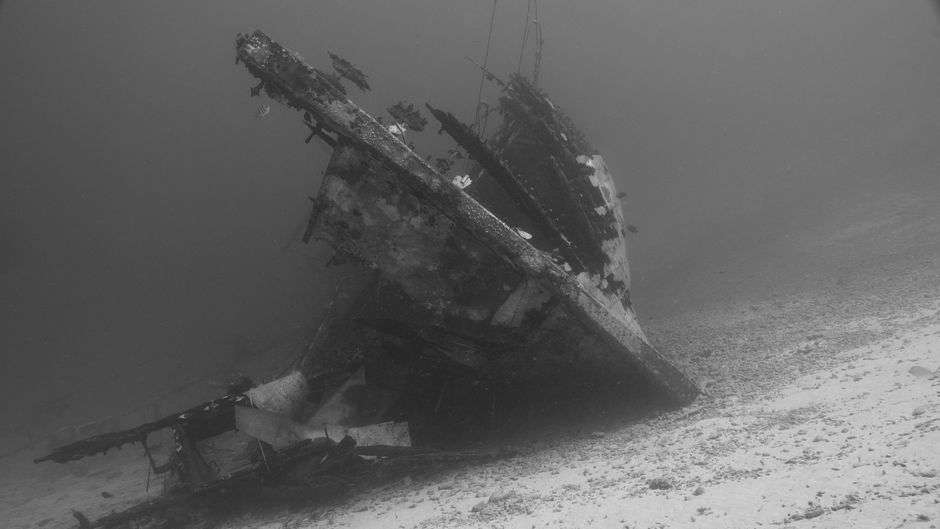
The Alabama Historical Commission has taken its first major legal step to protect the wreck of the Clotilda, filing an admiralty claim in federal court in Mobile aimed at shielding the historic vessel from salvagers and ensuring any future work on the site happens under court oversight.
The Clotilda, believed to be the last ship to bring enslaved Africans to the United States, was positively identified earlier this year in the Mobile River near the Africatown community.
The identification closed a search that has run for generations. The vessel arrived on the Alabama coast in 1860 carrying 110 African captives in defiance of the federal ban on the importation of enslaved people, was scuttled and burned to hide the crime, and survived in the dark, low-oxygen reaches of the river north of downtown Mobile — water conditions that are hostile to wood-eating organisms and have preserved wooden ships in the Mobile-Tensaw delta’s depths for more than a century and a half.
Admiralty claims are a standard legal tool used to protect significant shipwrecks, since federal courts hold jurisdiction over maritime matters and can issue binding orders covering a wreck site.
“When significant historical shipwrecks are located, it is common practice to seek the federal court’s assistance to preserve and protect the vessel,” a spokeswoman for the Alabama Historical Commission said. “This allows critical issues to be addressed in one forum in an organized fashion. The federal court has the authority to issue all necessary and appropriate orders so that work on the site and further preservation efforts can continue without delay.”
What the filing does
Commission officials say the filing adds additional legal protections for the wreck, including safeguards against salvage operations and provisions meant to help ensure that any artifacts recovered from the site are eventually returned and kept as part of the historical record.
The mechanics are deliberately structured. Once an admiralty action is filed, the wreck is effectively placed under the court’s authority: anyone who would disturb, move or claim it must answer to the judge overseeing the case. Salvage — the industry of recovering vessels and cargo for reward — is precisely what the filing is designed to foreclose, because a historic wreck of this kind is valued for its evidence, not its material.
Similar admiralty claims have been used in the past to protect other well-known shipwrecks, including the Titanic and the Atocha, a Spanish galleon that sank off the Florida Keys in 1622.
The Titanic case became the template for historic wrecks: courts exercised continuing supervision over the site, restricted who could touch it, and required recovered artifacts to remain together as a collection available for public display rather than scattered among private buyers. The Atocha case, by contrast, is remembered for the salvage side of the same law — a long court fight over a treasure ship that demonstrated why states and preservation agencies move early to assert their interests before a dispute begins.
Under the process, any individual or organization that believes it has a legitimate ownership claim to the wreck is required to come forward.
A public notice of the filing will run for three weeks, after which the matter moves into an open court forum where all interested parties can be heard.
Because the proceedings are part of the public record, anyone with an interest in the case will be able to track its progress.
That openness is the point. A site of this significance could otherwise become entangled in private disputes — over salvage, artifacts, or access — conducted outside public view. The admiralty forum forces every potential claimant into the open, on the record, before a judge with authority to bind all of them.
State officials’ stated goal
State officials say the goal of the legal action is to keep the Clotilda a publicly owned historical resource rather than allow it to become the subject of private salvage claims or disputes outside of public view.
“The careful considerations for the protection, preservation and interpretation of the Clotilda have been entirely methodical and strategic,” said the commission’s executive director. “We are charged with ensuring this tremendously important archaeological find is preserved and protected for Africatown and our nation. It carries a story and an obligation to meet every opportunity to plan for its safeguarding. The commission is laying the groundwork for ongoing efforts to not only ensure the Clotilda’s immediate assessment, but to also establish pathways for its longevity.”
The language of the statement — assessment, then longevity — tracks how archaeologists actually approach a site like this. The first obligation is documentation: measuring, photographing and stabilizing what remains before any recovery is contemplated. The second is a long-term plan that determines whether the wreck is best protected where it lies, reburied, or partially recovered for study and display.
How the legal work was assembled
The commission has been preparing the court filing since May, when officials first confirmed the identity of the wreck following an extensive archaeological investigation.
To carry out the legal work, the agency contracted with the Mobile office of the law firm Burr & Forman, and the state attorney general’s office deputized a firm partner to represent the commission’s interests in the case.
The arrangement is a familiar one in state government. The attorney general’s office, which represents state agencies in litigation, can deputize outside counsel with specialized expertise — in this case, lawyers experienced in admiralty practice — while the agency itself remains the client. Admiralty practice is a narrow field, and the combination of a state historical agency and a maritime litigation firm reflects how unusual the posture is: a state asserting custody of a wreck in federal waters law through a federal court.
Officials describe the effort as a coordinated one, with the historical commission working closely with federal, state and local agencies throughout the legal process and the archaeological work that is expected to follow.
The governor’s reaction
Governor Kay Ivey praised the filing as an important step toward protecting a site with deep significance for Alabama and for the descendants of those who survived the Clotilda’s voyage.
“By preserving the Clotilda, Alabama has the opportunity to preserve a piece of history,” Ivey said. “It is a prime example of an artifact that deserves our respect and remembrance. The Clotilda is very much a part of the story of the descendants and residents of Africatown, making it a significant part of the rich history of our entire state. Protecting this resource is imperative, and I look forward to Alabama taking on this important responsibility.”
The governor’s emphasis on Africatown’s descendants echoed what community leaders have said since the discovery was confirmed: that the wreck is not an abstraction but the beginning of their own families’ American story.
Africatown and the story the wreck carries
The Clotilda’s discovery has drawn national attention to Africatown, the Mobile community founded by Africans who were illegally transported aboard the ship in 1860, decades after the United States banned the importation of enslaved people.
The community’s founding is unlike any other in the country. The captives who survived the voyage were freed at the end of the Civil War, and rather than scatter, many pooled their wages and bought land north of Mobile, building a settlement where they could live among their own countrymen, keep their languages and traditions alive, and govern themselves. Their descendants remain there today, and the neighborhood’s churches, cemeteries and family names trace directly to the people who arrived on that single voyage.
Community leaders and heritage advocates have said the wreck offers a rare, tangible link to that history and have pushed for careful, well-funded preservation efforts as researchers continue to study the site.
The stakes they describe are both historical and economic. A protected, interpreted site could anchor heritage tourism, educational programming and long-sought investment in a neighborhood that has endured industrial encroachment and disinvestment for decades. A badly handled site — or one stripped by salvagers — would close that door permanently.
What the claim does not do
The admiralty claim does not resolve every question about the wreck’s long-term future, but officials say it establishes a clear legal framework for addressing ownership questions, coordinating preservation work and keeping the process open to public scrutiny as the state moves toward more permanent plans for the site.
The harder decisions lie ahead of the litigation: whether the wreck can remain in place indefinitely, how much of it may ever be recovered, where artifacts would be conserved and interpreted, and how Africatown’s descendants shape those choices. What the filing buys is time, jurisdiction and order — the conditions under which those decisions can be made deliberately, in the open, instead of under pressure from whoever arrives at the river first.
For now, the vessel that closed one of the darkest chapters of the Atlantic slave trade sits where it was deliberately sunk, under the authority of a federal court and the guardianship of the state whose river has kept it.