

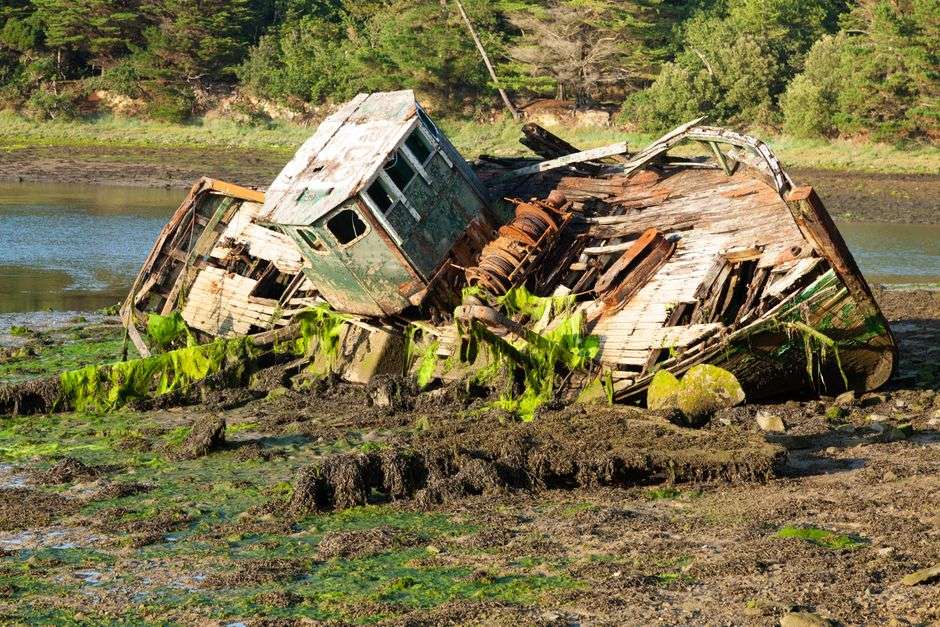
For generations, families in Africatown passed down a story that outsiders often treated as legend: that the last known ship to bring enslaved Africans into the United States had been sunk and hidden somewhere in the murky waters of the Mobile River. Last week, that story became documented history. The Alabama Historical Commission announced that a shipwreck discovered in a previously unsearched stretch of the Mobile River has been positively identified as the Clotilda, the schooner that illegally carried 110 captive men, women and children from present-day Benin to Mobile in 1860, more than five decades after the United States banned the importation of slaves. Cleon Jones, president of the Africatown Community Development Corporation, said the confirmation validated stories he heard from his parents and grandparents throughout his life.
"We've been taught all this, all our lives," Jones said. "I've even fished in the area where the Clotilda was laying dormant. I was quite confident we would be celebrating the finding of this great ship." Alabama Historical Commission Executive Director Lisa Demetropoulos Jones called the discovery an extraordinary archaeological find. "The voyage represented one of the darkest eras of modern history and is a profound discovery of the tangible evidence of slavery," she said in a statement.
"This new discovery brings the tragedy of slavery into focus while witnessing the triumph and resilience of the human spirit in overcoming the horrific crime that led to the establishment of Africatown." Historical accounts describe how Timothy Meaher and Captain William Foster orchestrated the Clotilda's voyage as a wager that they could smuggle enslaved Africans into Mobile without being caught by federal authorities. After delivering the captives, the two men attempted to destroy the evidence of their crime by burning the ship and scuttling its remains, then dispersing the enslaved Africans among various captors. Many of those survivors remained enslaved until the end of the Civil War, after which they pooled resources to purchase land north of Mobile and founded the community now known as Africatown.
The renewed search effort that led to this month's confirmation traces back to early 2018, when a local reporter's claim to have found the wreck turned out to be inaccurate. Though that specific vessel was not the Clotilda, the episode reignited public interest in solving the long-standing mystery and prompted state officials to organize a more rigorous search. Under the federal Abandoned Shipwrecks Act, the Alabama Historical Commission and the State Historic Preservation Office are responsible for managing and protecting maritime archaeological sites embedded in the state's waters.
Acting on that authority, the commission assembled a team of researchers from the Black Heritage Council, the National Geographic Society, the Smithsonian's National Museum of African American History and Culture, the Slave Wrecks Project, Diving With a Purpose and the National Park Service. Maritime archaeologist Dr. James Delgado and the firm Search Inc. led the fieldwork, which focused on a stretch of the Mobile River that had not previously been surveyed. Initial historical research and sonar surveys identified as many as two dozen vessels resting in the search area, ranging from the 19th to the 20th centuries. Underwater excavation eventually isolated one wreck whose dimensions and construction closely matched historical descriptions of the Clotilda.
Background and Context
"Utilizing the latest scientific techniques and in-depth archival research, the team identified a target for further investigation and excavation," said Eric Sipes, a senior archaeologist with the state. Over the course of roughly a year, researchers conducted forensic analysis in laboratories operated by Search Inc. and National Geographic, cross-referenced original shipping and customs documents, and consulted with independent maritime historians. That work led to the conclusion that the wreck is very likely the Clotilda, a finding that was then independently reviewed and confirmed by a panel of outside experts. Investigators pointed to several converging lines of evidence. The wreck's size, structural dimensions and building materials, including locally sourced lumber and iron fittings, matched historic registry specifications for the Clotilda almost exactly.
The ship's construction techniques indicated it was built before 1870. Char marks found on the wreck were also consistent with Foster's own account of burning the vessel after running it aground. In a survey of historical shipping records covering the entire Gulf of Mexico region, including the Port of Mobile, researchers found only four schooners of matching size among roughly 1,500 vessels reviewed. Of those four, only the Clotilda fit every remaining detail. With the identification considered scientifically sound, the Alabama Historical Commission says its focus is now shifting toward protecting the wreck site and determining what, if anything, can safely be done with the remains. "Additional archaeological research will help us to learn more details about the story of the Clotilda and its survivors," said State Archaeologist Stacye Hathorne.
"It is important to preserve the site so that additional research may be conducted and the story may emerge." Dr. James Delgado, the maritime archaeologist who led the fieldwork, said the team approached the identification cautiously given the absence of a nameplate or bell bearing the ship's name. "We are cautious about placing names on shipwrecks that no longer bear a name or something like a bell with the ship's name on it," Delgado said. "But the physical and forensic evidence powerfully suggests that this is Clotilda." Alabama Historical Commission Chairman Walter Givhan said the commission is now working with state and local agencies to secure the wreck site against looting or unauthorized disturbance now that the identification has been confirmed.
"The State of Alabama holds this artifact as an irreplaceable cultural treasure and will prosecute any tampering or encroachment to the fullest extent of the law," Givhan said. "With the confirmation of this discovery, the responsibility to preserve it only increases, and the Alabama Historical Commission will continue to assess security needs and the most effective way to meet them." Other project partners echoed the weight of the find. Kamau Sadiki, a member of the Slave Wrecks Project who sat on the peer review team, called the discovery "the final nautical bookend to one of the most horrific periods in American and world history" and said he hoped it would bring "a comforting peace to the Africatown descendants" as a process of community and memory restoration begins. SEARCH Inc.
CEO Anne Stokes said the project was a reminder of why archaeological work matters to communities like Africatown, while Fredrik Hiebert, archaeologist-in-residence at the National Geographic Society, said the organization was honored to have supported the scientific research behind the find. Alabama Historical Commission Assistant Executive Director Clara Nobles framed the discovery as a step toward reconciliation between Africatown, the state and the nation, adding that "the larger story here is the people and what they were able to accomplish." Clotilda descendant Joycelyn Davis said Africatown's leadership and citizens "look forward to working with the AHC and project partners to tell our story and move forward as a community." In Africatown, the discovery has sharpened community hopes for a long-planned welcome center.
Background and Context
Jones said the community has already secured more than $3 million in BP oil spill settlement funds to build the facility, and he believes some connection to the Clotilda, whether through artifacts, a memorial or educational exhibits, could strengthen the project. "I'd like to see it in the community," Jones said of any memorial tied to the ship. "We could bring it to the same property as the welcome center." Karlos Finley, immediate past president of the Dora Franklin Finley African-American Heritage Trail, said he supports that vision and believes a full-scale replica of the Clotilda could eventually be built on site, potentially rivaling the impact of the Legacy Museum in Montgomery.
"There could be holograms from the bowels of the ship that tell the stories of those who crossed the Atlantic Ocean," Finley said. "It could be the most powerful thing people could see." Both Jones and Finley said they hope the international attention drawn by the discovery translates into economic opportunity for Africatown, bringing visitors from around the world to learn the history of the community and the people who built it.
Wider Significance for Coastal Alabama
This story is part of a broader set of changes playing out across Mobile, Baldwin and the wider Gulf Coast region. Local residents, businesses and government agencies have been watching developments like this one closely, because decisions made in Mobile and Baldwin counties often ripple outward into neighboring communities across south Alabama, Mississippi and the Florida Panhandle. Public meetings, council work sessions and state legislative hearings have all carried echoes of the underlying concerns, with stakeholders ranging from neighborhood associations to industry groups weighing in on what the outcomes will mean for daily life along the Gulf Coast. Reporters and editors in the region have worked to document how these issues affect ordinary people, from commuters on Interstate 10 to families visiting the public libraries and parks that anchor so many of the Port City’s neighborhoods. The deeper context often emerges over months rather than days, as projects move from announcement to planning to construction, and as the people most directly affected find their voices in the public record. Continued coverage remains important, both for accountability and for the historical record, and the unfolding situation is one that warrants attention from anyone with a stake in the future of south Alabama.
Looking ahead, observers across the region expect the conversation to continue evolving. Local officials have signaled their intent to monitor outcomes closely, and community organizations have indicated they will remain engaged as new information becomes available. The intersection of state policy, local implementation and on-the-ground impact is precisely where stories like this one tend to develop their lasting significance. For Mobile and Baldwin residents, the practical effects will play out over time, in everything from tax bills and utility rates to traffic patterns and the availability of public services. Following the developments requires patience and attention to detail, but it is also a reminder of how civic life in coastal Alabama continues to be shaped by decisions that begin far from the neighborhoods they ultimately touch. Residents who want to stay informed can do so by following local government meetings, attending public hearings when significant issues arise, and reading the regional reporting that tracks how these stories progress from one phase to the next.
Local news organizations continue to follow this story closely, and updates are expected as more details emerge. The developments have generated discussion across the region, with attention from both longtime residents and newcomers who are following the issue for the first time. Community leaders have emphasized the importance of staying engaged with local government and participating in public meetings when significant decisions are being made. As the situation continues to unfold, residents are encouraged to remain informed through reliable local reporting and official city and county communications channels. The story remains active, and additional information is anticipated in the coming days and weeks as the relevant agencies and stakeholders complete their work.