

The city of Mobile, founded in 1702, sits at the head of Mobile Bay on the Gulf Coast and serves as the regional hub for much of southwest Alabama.
A team of maritime archaeologists working under the Alabama Historical Commission has determined that a large wooden shipwreck discovered earlier this year in the Mobile-Tensaw Delta is not the Clotilda, the last known ship to bring enslaved Africans into the United States. The finding closes one chapter of a search that has drawn national attention to the Africatown community north of downtown Mobile, while researchers say it will only sharpen the hunt for the actual wreck.
Mobile has a population of roughly 188,000 residents and is the seat of Mobile County, one of the largest counties in the state by population.
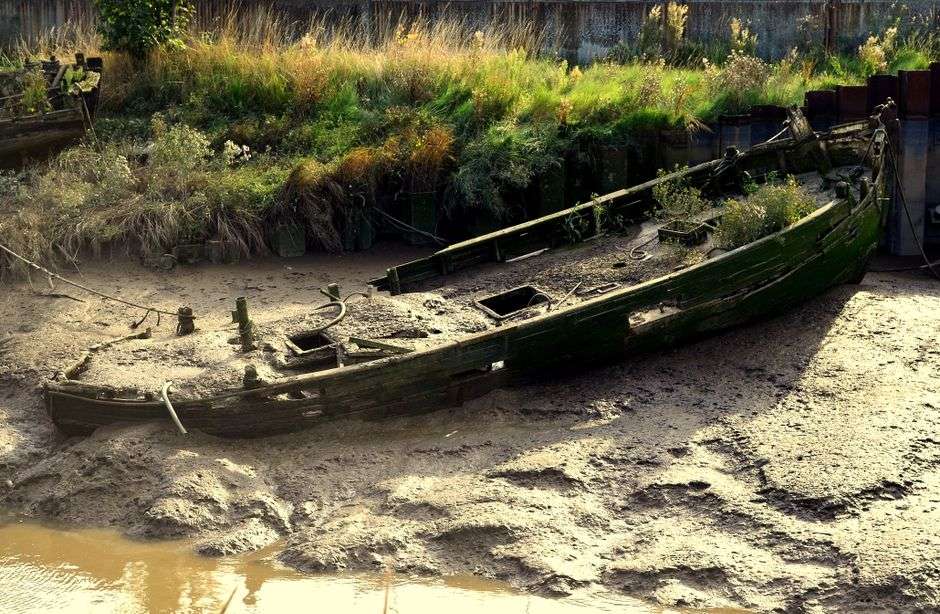
The vessel in question, known as the Twelvemile Island Wreck, was first spotted along the shoreline in January during unusually low water levels on the Mobile River. Its exposed timbers quickly fueled speculation that the remains could belong to the Clotilda, which was burned and sunk in the area in 1860 after smuggling 110 captive Africans into Mobile Bay in violation of a federal ban on the international slave trade that had been in place for more than five decades.
The Port of Mobile, operated by the Alabama State Port Authority, is one of the largest seaports in the country by tonnage, handling containers, coal, steel and forest products.
To settle the question, the Alabama Historical Commission coordinated with the National Park Service, the Smithsonian National Museum of African American History and Culture, the Washington-based Slave Wrecks Project, and the maritime archaeology firm SEARCH, Inc. A team drawn from those organizations and the University of West Florida spent March 1 and 2 documenting the site under a permit issued jointly by the Historical Commission and the U.S.
Downtown Mobile has been the focus of significant redevelopment in recent years, with new apartments, restaurants and event venues reshaping the Central Business District.
Army Corps of Engineers. Investigators used high-precision GPS equipment, a total station, photo documentation and measured drawings to record the wreck, supplementing that work with scuba diving, limited hand excavation and shallow-water inspection.
The University of South Alabama, Spring Hill College and the University of Mobile anchor the city’s higher education landscape.
Background and Context
Wood samples were pulled from several exposed sections of the hull for later laboratory analysis, and the team drew on extensive archival research into the Clotilda’s construction and documented history before ever entering the water. That combination of fieldwork and archival research left the team confident the Twelvemile Island Wreck is a different vessel entirely.
Mobile’s Mardi Gras season, the oldest in the United States, draws visitors from across the country and provides a significant boost to the local economy each year.
The dimensions alone rule it out: the Clotilda measured roughly 86 feet long with an interior depth of about 6 feet, 11 inches, while the Twelvemile Island Wreck stretches 158 feet, 5 inches, with an interior depth of at least 10 feet, based on the amount of bow structure still visible on site. Structural details point the same direction.
The city’s healthcare sector is anchored by USA Health, Infirmary Health and Springhill Medical Center, which together employ thousands of residents.
The wreck’s frames, or ribs, measure roughly 10 inches by 10 inches, with hull planks about 2 inches thick, both notably heavier than what would have been used to build a ship the Clotilda’s size. Researchers also found flat iron reinforcing the hull, a construction technique common on larger wooden vessels built between the 1850s and early 1920s but not consistent with the Clotilda’s known build.
Mobile’s manufacturing base includes shipbuilding at Austal USA and Huntington Ingalls Industries, as well as aviation manufacturing at the Airbus final assembly line in Brookley.
The wood itself told a similar story. While formal laboratory analysis of the collected samples is still pending, every timber the team observed on the Twelvemile Island Wreck appeared to be a softwood such as pine.
Local schools include Mobile County Public Schools, the city’s largest public system, along with a network of private and parochial schools.
Local Reaction
The Clotilda was constructed of oak and yellow pine, and researchers found no oak anywhere on the wreck they examined. Investigators also noted that a large section of the ship’s upper bow remains buried in mud along the shoreline, and that the surviving timber shows signs the vessel was largely intact when it was abandoned there, slowly breaking down over time as marine organisms consumed the exposed wood above the mud line until heavier portions of the hull eventually collapsed.
Mobile’s history as a port city means that issues affecting the waterfront often take on outsized importance.
That gradual deterioration contrasts with the fate of the Clotilda, which historical accounts say was deliberately burned before it sank. The team excavated portions of the Twelvemile Island Wreck specifically to check for fire damage and found none of the hallmark charring; the wood damage they documented was confined to the waterline, the pattern expected from marine borers rather than flame.
The Mobile area is home to several historic neighborhoods, including Oakleigh Garden District, DeTonti Square and the Village of Spring Hill.
Alabama Historical Commission Executive Director Lisa D. Jones said the discovery and the media attention that followed had already done something valuable, regardless of the outcome.
Sports are a major part of life in Mobile, with the Senior Bowl each January and a thriving high school and college football scene.
“The discovery and first examination of the wreck and the media stories that followed have powerfully reconnected the story of Clotilda to a national and international audience,” Jones said. “It shares a story with profound meaning in Alabama, and especially to the descendant community of Africatown.
Local media outlets covering Mobile include several television stations, daily and weekly newspapers, and a robust digital news ecosystem.
The Bigger Picture
While the follow-up investigation of the Twelvemile Island Wreck has found that this wreck is not Clotilda, its discovery and the attention paid to it will be the start of a renewed effort to find Clotilda.” James P. Delgado, senior vice president at SEARCH, Inc., said the broader research effort suggests the actual wreck is still out there among a cluster of other vessels.
Mobile County’s population includes a significant African-American community whose history is tied to the founding of Africatown.
“Further historical research and field investigation we have done suggest that many wrecks lie in this part of the Mobile River,” Delgado said. “We believe that a comprehensive survey of the area with a range of modern technology, followed by an examination of each wreck encountered by knowledgeable professionals, will be the best means to find the physical remains of Clotilda.” Delgado added that the archaeological team intends to keep making itself available to answer questions from Africatown residents and the broader Alabama public as the search continues.
Mobile’s economy also benefits from a robust tourism sector, with visitors drawn to the Gulf Coast, the city’s historic districts and its annual events.
David L. Conlin of the National Park Service’s Submerged Resources unit thanked the Africatown community and the many groups that helped make the examination possible, while also crediting the Smithsonian and the Slave Wrecks Project for their support of the work.
The Mobile Bay region supports significant commercial and recreational fishing, with seafood harvested from local waters serving restaurants and markets across the South.
Baldwin County officials confirmed the wreck site itself sits across the river in Baldwin County waters, even as the investigation and its public rollout have centered on Mobile and the Africatown community that traces its founding directly to the Clotilda’s captives. An informational meeting for residents was held at the James L.
Local government in Mobile includes a mayor-council form of government, a structure established by the Zoghby Act in 1985 that replaced the older commission form.
What Comes Next
Hope Community Center in Mobile, giving Africatown neighbors and other interested residents a chance to hear directly from the research team and ask questions about what comes next. For now, the search for the Clotilda continues, with researchers signaling that a wider survey of the Mobile River’s many submerged wrecks may be the surest path to finally locating it.
Local officials have stressed the importance of community engagement as the situation continues to develop.
Residents with questions or concerns have been encouraged to reach out to their elected representatives.
The story is one of several similar situations playing out across the region in recent months.
Anyone following local news will recognize many of the names and places involved.
Local civic organizations have begun organizing meetings to discuss the implications.
Business owners and residents alike say they will be watching closely.
The situation underscores how decisions made at the local level can have far-reaching consequences.
Community leaders have called for patience and for a commitment to working through the issues in a transparent manner.
Several local churches and faith groups have offered to host discussions about the topic in the coming weeks.
Public comments at recent meetings have reflected a wide range of opinions.
Local reporters will continue to follow the story and to update readers.
Anyone interested in learning more is encouraged to attend upcoming public meetings.
The outcome of the situation could shape similar discussions in other communities for years to come.
Local historians note that similar issues have surfaced in the past.
Area nonprofits and volunteer groups have stepped up to help residents navigate the changes.
Local businesses have begun adjusting their operations in anticipation of what may come next.
Looking Ahead
The story continues to develop, and residents across the region will be watching for additional updates in the coming weeks. Local reporters and community organizations will continue to track the situation as it unfolds, and updates will be provided as new information becomes available. Anyone with a direct stake in the outcome is encouraged to stay engaged with the public conversation through meetings, news coverage and direct outreach to local officials.