Tropical Storm Bertha Damages Pole, Knocking Out Power on Dauphin Island
Alabama Power will cut electricity to Dauphin Island from noon to 4 p.m. so crews can repair a utility pole leaning in the water near the causeway, Mayor Jeff Collier said.
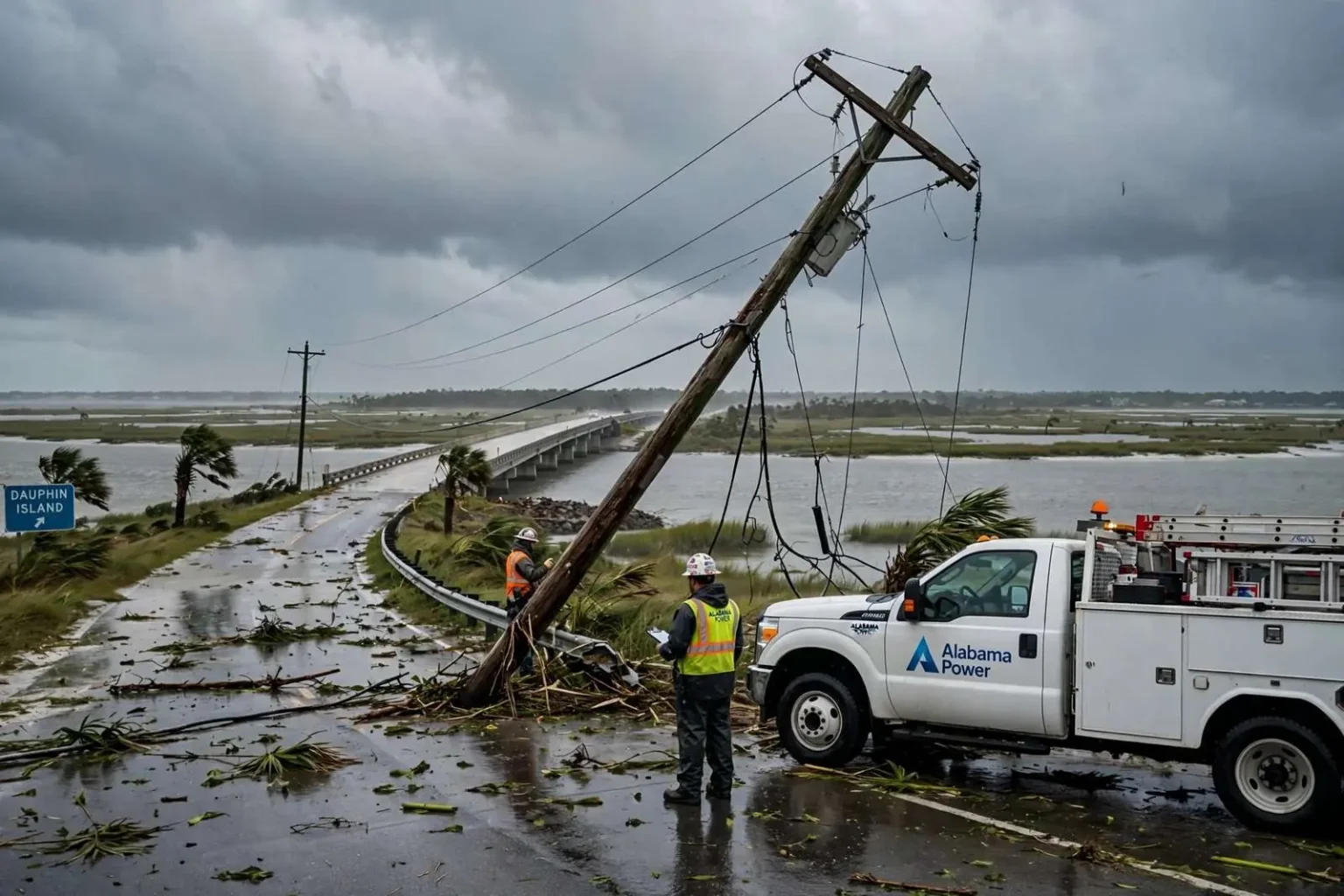
Dauphin Island residents and visitors were left without electricity for several hours Wednesday after Tropical Storm Bertha pushed a utility pole to a lean of nearly 45 degrees near the causeway. The storm-damaged pole left crews with no safe way to keep the lines energized, forcing a full shutdown of power to the island while repairs were made.
Alabama Power crews shut off electricity to the island around noon so workers could safely repair the leaning pole, Dauphin Island Mayor Jeff Collier said. The utility typically de-energizes lines before crews climb or use bucket trucks around damaged structures, a precaution that prevents energized wires from falling on workers or the public during repairs.
Officials expected the repair work to be finished no later than 4 p.m., when power was set to be restored across the island. That timeline meant most homes and businesses on the barrier island faced an outage window of roughly four hours on a weekday afternoon, long enough to disrupt refrigeration, air conditioning, water systems and the island’s small businesses during the middle of the day.
Residents and business owners on the island were encouraged to plan around the temporary outage while Alabama Power crews completed the fix. Local officials urged patience, noting that the shutoff was not an equipment failure on the utility’s part but a deliberate safety measure taken because of the storm-damaged pole near the causeway.
A Barrier Island’s Vulnerability to Storm Damage
Dauphin Island is a barrier island at the mouth of Mobile Bay, connected to the mainland by a single bridge and causeway across the Mississippi Sound. That geography makes the town unusually exposed to tropical weather: wind and water from the Gulf reach the island first, and utility infrastructure there sits on low-lying ground just a few feet above sea level.
A utility pole leaning at nearly 45 degrees is more than a cosmetic problem. When a pole tilts that far, the wires attached to it sag and lose the tension and clearance they are engineered to maintain, raising the risk of lines touching the ground, trees, vehicles or each other. Left energized, a pole in that condition can ignite fires, injure residents or knock out service far beyond the immediate area.
Tropical Storm systems regularly deliver sustained winds and gusts capable of producing exactly that kind of damage along the Gulf Coast. Even storms that arrive with less-than-hurricane strength can saturate the ground, undermine poles and push wind gusts strong enough to snap crossarms and topple structures that have stood for years.
For the island’s full-time residents, power outages carry added complications. Many homes rely on electrically powered water and sewer systems, and the island’s restaurants, bait shops, rental houses and other tourism-dependent businesses lose their livelihood for every hour the lights are out during the busy season.
How Utilities Restore Power After a Storm
The sequence Alabama Power followed Wednesday reflects standard practice for storm restoration across the Gulf Coast. When high winds damage equipment, utilities first assess the damage, then de-energize affected lines so repair crews can work safely. Power is restored once the physical repair is complete and the line has been cleared for re-energizing.
Damage near a causeway or bridge crossing presents its own challenges. Lines that span water or serve as the primary feed to an island cannot be easily bypassed with alternate routes, which is why a single damaged pole near the causeway was enough to require a shutoff for the entire island rather than just the immediate neighborhood.
Utility crews along the Gulf Coast practice this kind of work routinely, staging trucks, poles and hardware ahead of named storms and coordinating with local emergency management officials. Coastal Alabama municipalities maintain close contact with utility representatives during tropical weather events, passing along outage information and restoration timelines to residents.
Local governments like Dauphin Island’s rely on those relationships to keep residents informed. Mayors and emergency management coordinators typically relay confirmed details, such as the cause of an outage and the expected restoration time, rather than speculation, which helps families and businesses make decisions about food safety, generators and travel.
Planning Around a Temporary Outage
Even a four-hour outage requires planning on a barrier island. Residents were encouraged to think through the basics: keeping refrigerator and freezer doors closed to preserve cold air, avoiding the use of candles in favor of battery-powered lighting, and checking on elderly neighbors or anyone relying on electrically powered medical equipment.
Business owners on the island faced similar calculations. Restaurants and markets with perishable inventory have a limited window before spoilage becomes a concern, and rental property managers fielded questions from guests about amenities such as air conditioning, pool pumps and internet service that go dark when the power does.
Boaters and visitors also feel the effects. The island’s marinas, ferry operations and beach amenities depend on electricity, and an afternoon outage during tropical weather can ripple through travel plans for people crossing the causeway for the day. Officials encouraged anyone heading to the island during the repair window to plan accordingly.
Tropical Storm Bertha’s Visit to the Gulf Coast
Tropical Storm Bertha brought the kinds of conditions that Alabama’s coastal communities know well: bands of heavy rain, gusty winds and rough surf along the Gulf beaches. While the system’s winds were not at hurricane strength, they proved strong enough to do real damage to infrastructure along the coast, as the leaning pole near the Dauphin Island causeway demonstrated.
Named tropical systems affect coastal Alabama in different ways depending on their track, size and forward speed. A storm passing well offshore can still send dangerous waves over washovers areas on the island’s south side, while a storm crossing the coast directly can scatter debris, down trees and knock out power across the region for days.
The island has a long history of bouncing back from tropical weather. Storms over the decades have reshaped its beaches, damaged its homes and repeatedly tested its utilities and its bridge. Each event has informed how the town prepares, from building codes to evacuation planning to the coordination between town hall, the county emergency management agency and utility crews.
Wednesday’s outage was, by those standards, a minor event: a single damaged pole, a planned shutoff, and a repair completed within a single afternoon. But it was also a reminder of how quickly conditions on a barrier island can change and how dependent modern life remains on a handful of poles and wires crossing the sound.
Back Online by Late Afternoon
With the repair finished and lines cleared, crews restored electricity across the island by the late-afternoon target. The relatively short outage window reflected both the simplicity of the fix, once the pole could be safely approached, and the efficiency of a utility response mounted for a single structure rather than a widespread storm cleanup.
For islanders, the episode ended with a familiar rhythm: report the outage, wait out the planned shutoff, and return to normal once the trucks pull away. Town officials thanked residents for their cooperation and reminded everyone that tropical season along the Gulf Coast has a long runway, running through the end of November.
The message for the rest of the season was clear. Dauphin Island’s location makes outages a part of life whenever tropical weather approaches, and the best response is preparation, patience and trust in the crews who climb the poles when the wind finally dies down.
Staying Prepared for the Next Storm
Emergency management officials along coastal Alabama recommend that residents keep basic storm supplies on hand through the season: water, nonperishable food, flashlights, batteries, phone chargers and a plan for any medical needs that require electricity. For barrier island communities like Dauphin Island, those recommendations carry extra weight because a single damaged pole or washed-out road can isolate the town until repairs are made.
Homeowners can also help prevent storm damage to the grid by trimming trees and limbs near service lines before storm season peaks and by reporting leaning poles, hanging wires and damaged equipment as soon as they are spotted. Early reports let utilities assess problems while conditions are still safe enough to reach them.
Wednesday’s repair also underscored the value of clear, timely communication during outages. Knowing the cause, the extent and the expected restoration time allowed island residents to plan their afternoon around the shutoff instead of wondering when, or whether, the lights would come back on. That kind of information flow has become a fixture of Gulf Coast storm response, refined through years of hurricanes and tropical storms.
By the time the evening arrived, the island was back to normal, the causeway pole standing straight again and the grid re-energized. For a community that sits at the mercy of the Gulf every hurricane season, a four-hour planned outage was a manageable price for keeping crews safe and keeping the island’s power infrastructure sound for the storms still to come.