

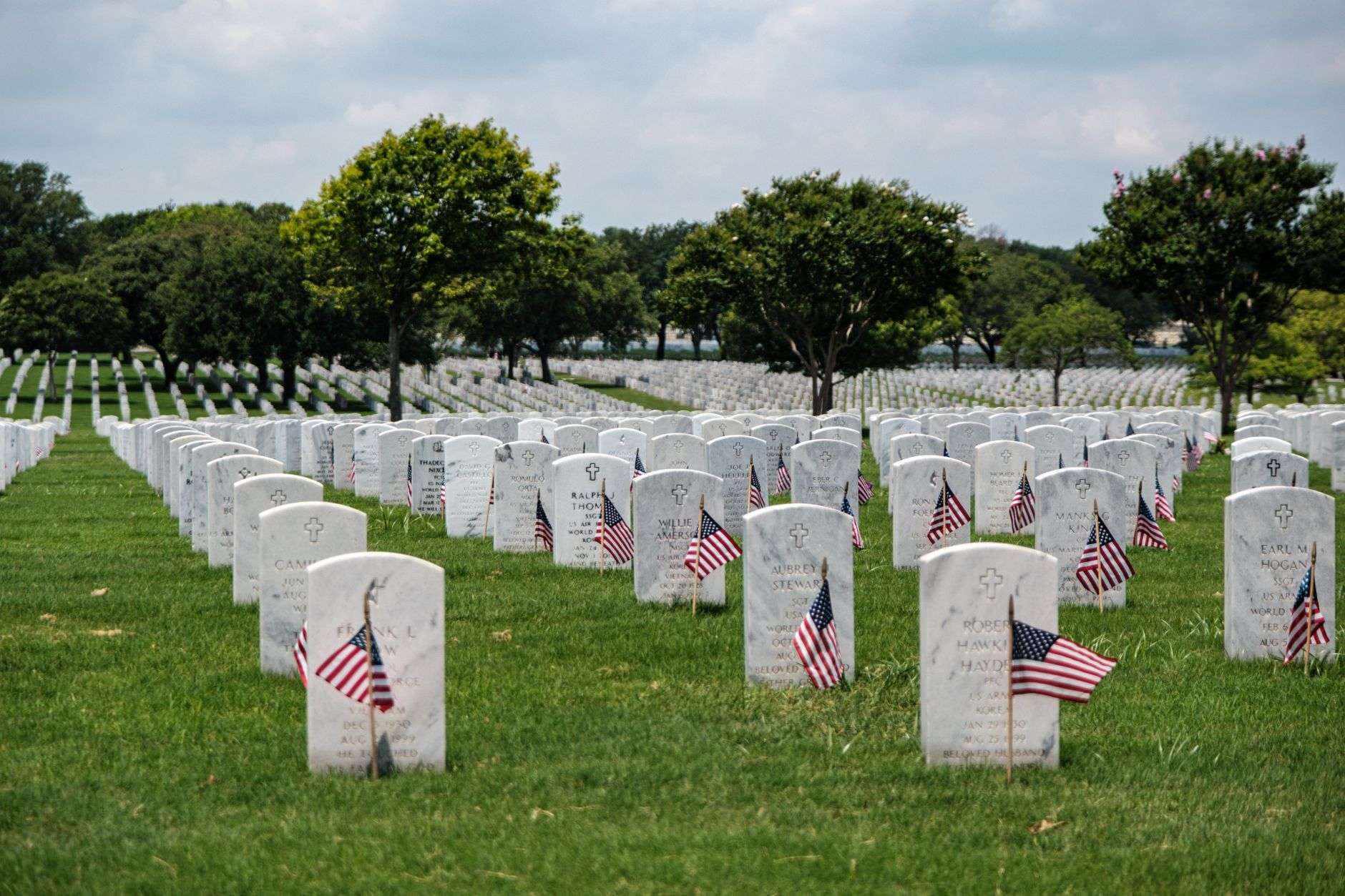
SPANISH FORT, Ala. — The Alabama State Veterans Memorial Cemetery in Spanish Fort will expand with more than 2,000 additional gravesites under a $283,000 grant from the U.S. Department of Veterans Affairs.
The award comes through the VA’s National Cemetery Administration and will fund construction of the new in-ground gravesites along with hardscape, landscape, irrigation and supporting infrastructure.
Who the Cemetery Serves
The cemetery serves more than 160,000 veterans and their eligible family members across the region.
That figure is worth pausing on. It represents the eligible population in the cemetery’s service area — not the number of interments, but the number of people entitled to burial there. It is a reminder of how large the veteran population of south Alabama is, in a part of the country with a long and continuing military presence.
What the Grant Pays For
The funding covers more than the graves themselves. Hardscape, landscape, irrigation and supporting infrastructure are all included.
For a cemetery, that supporting work is substantial. New sections require access roads and walkways, drainage that keeps burial areas from flooding, irrigation to maintain turf in the Gulf Coast climate, and the grading and preparation that allows precise placement of gravesites in the aligned rows characteristic of veterans cemeteries.
The visual uniformity of a national or state veterans cemetery — identical headstones in exact rows — is the product of considerable engineering. It requires level, well-drained ground and precisely surveyed layout.
The Veterans Cemetery Grants Program
The National Cemetery Administration operates a grants program that provides funding to states, territories and tribal governments to establish, expand or improve veterans cemeteries that they own and operate.
The arrangement divides responsibility: the federal government funds construction, and the state operates and maintains the cemetery afterward. State veterans cemeteries must meet the national cemetery standards for appearance and operation, and they serve veterans who might otherwise face a long drive to reach a national cemetery.
That geographic point is the program’s core rationale. The national cemetery system cannot place a facility within reasonable distance of every veteran in the country, and state cemeteries built with federal grant money fill the gaps.
Capacity Planning
Expansions of this kind are driven by projected demand rather than by immediate shortage. Cemeteries plan in decades, and a facility that waits until it is full to begin expansion has waited too long — design, grant application, award and construction together consume years.
More than 2,000 additional gravesites represents meaningful additional capacity for a state cemetery. How long that capacity lasts depends on interment rates, which in turn depend on the age distribution of the veteran population the cemetery serves.
Eligibility for Burial
Eligibility for burial in a state veterans cemetery generally tracks the standards used by the national cemetery system. Veterans who served and were discharged under conditions other than dishonorable are typically eligible, as are spouses and certain dependent children.
Specific requirements, including any state residency provisions and any fees that apply to family members rather than to veterans themselves, vary and are set by the operating state. Families considering the cemetery are advised to contact it directly to confirm eligibility and to understand what documentation — discharge papers in particular — will be needed.
Veterans and families are also generally encouraged to complete eligibility determination in advance rather than at the time of need, which spares survivors from navigating paperwork during a difficult period.
Spanish Fort and the Eastern Shore
Spanish Fort sits at the head of Mobile Bay in Baldwin County, at the junction of Interstate 10 and U.S. 90/98 — a location that makes the cemetery reachable from Mobile, from the Eastern Shore communities of Daphne and Fairhope, and from the broader region served by the interstate.
The site’s accessibility is part of what makes it a practical location for a state cemetery serving a regional population, including families who travel for services and for visits.
A Long-Term Commitment
A cemetery is among the more permanent obligations a government takes on. Once interments begin in a section, the land is committed indefinitely, and the maintenance obligation continues without end.
The $283,000 grant funds construction. What follows — the mowing, the irrigation, the headstone alignment, the grounds keeping that gives a veterans cemetery its characteristic appearance — is a permanent state responsibility, carried forward year after year.