2008 Report Recalled Earlier Student Loss at Baldwin County High School
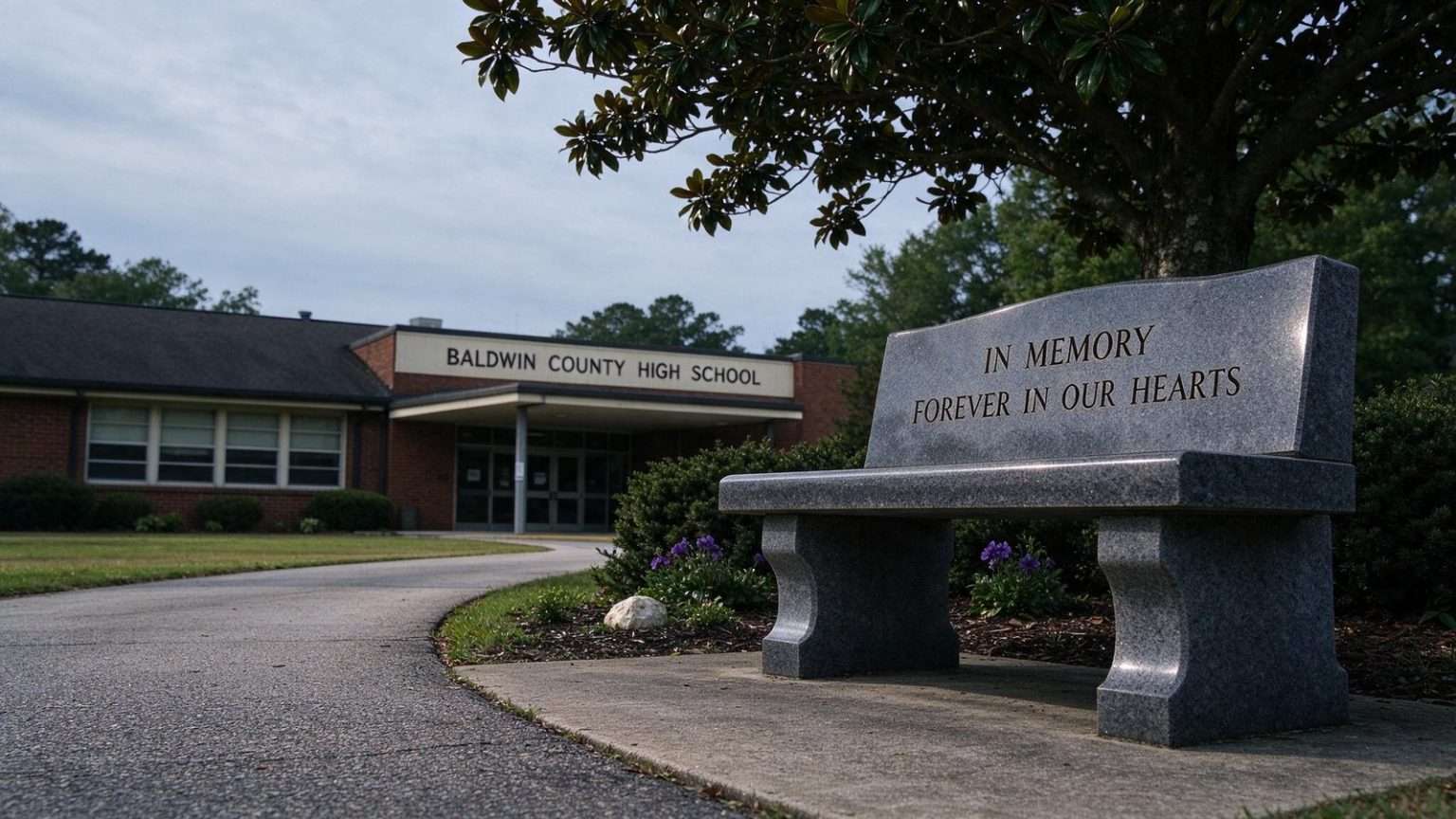
A historical WKRG report recalled how an earlier student death affected the Baldwin County High School community and emphasized the need for support after loss.
Content note: This historical story discusses suicide without graphic detail. If you or someone you know is in crisis, call or text 988 for the Suicide & Crisis Lifeline.
In a March 2008 report, the station revisited the lasting effect that a student suicide years earlier had on the Baldwin County High School community. The report aired as a separate, contemporaneous school tragedy unfolded elsewhere in the Mobile area, and it used that moment to look back at how one Baldwin County school community had carried the weight of a previous loss across the years that followed.
Baldwin County High School, the flagship school of the county system’s northern district in Bay Minette, serves students from communities across northern Baldwin County — Bay Minette, Stockton, Whitehouse Forks and the surrounding rural stretches. In a school community of that kind, where families know one another across generations and students grow up together from elementary school through graduation, the loss of a student registers far beyond the classroom it empties.
The station’s report was framed not around the circumstances of the loss but around its aftermath — what happens to a school community in the years after a student dies, and what the people who lived through it learned about grief, memory and mutual support.
What the Years Had Left Behind
A former school athletic director told the station that the loss was difficult for students and staff, and that the experience still affected him years later. His account gave the report its emotional center: the testimony of an educator who had worked through the loss alongside students and colleagues, and who could speak to how a school community absorbs and carries a tragedy of this kind over time.
Educators who guide schools through such losses describe a distinctive kind of grief — one that is public, shared, and unevenly distributed across a student body and staff. A school is a closed community where everyone knows everyone’s name, and a student’s death touches classmates, teachers, coaches and younger siblings of former classmates in waves that continue long after the initial crisis period ends. Anniversaries, graduation seasons and ordinary moments in hallways can bring the loss back to the surface years later, as the athletic director’s testimony confirmed.
That lasting quality is one of the most consistent findings in school-crisis literature: the acute response is a matter of days and weeks, but the community’s grief runs on for years, resurfacing in different forms for different members of the school family. Staff members, who are expected to be steady for students, often carry their own grief without the same structures of support — a burden the former athletic director’s candor helped name.
The Advice the Report Carried
The former athletic director said people coping with a traumatic loss should seek support from trusted colleagues, loved ones, counselors or faith leaders. The advice was simple and deliberately broad: the point was not a single prescribed path through grief but the insistence that no one should carry it alone.
Each of those supports serves a different function. Trusted colleagues understand the specific pressures of the workplace where the loss occurred — for educators, the shared experience of standing in front of students while managing one’s own grief. Loved ones provide the personal, sustained support that carries someone through the years afterward. Counselors bring professional training in trauma and grief, the structured help that talking with friends cannot replace when a loss is this severe. Faith leaders offer the frameworks of meaning, ritual and community that many families draw on in times of loss, particularly in communities like those of northern Baldwin County where congregations are central civic institutions.
The message to seek support rather than isolate is also the core of every modern suicide-prevention and postvention guidance framework. Grief after a suicide carries complications — questions without answers, guilt, stigma — that make the instinct to withdraw stronger precisely when connection matters most, and postvention specialists emphasize that reaching out, in whatever form, is the healthiest available response.
How Schools Respond to Student Loss
School communities across Baldwin County and the wider Gulf Coast region have built response practices over the decades for the loss of a student, drawing on postvention guidance developed by national education and mental health organizations. The immediate response in the days after a loss centers on restoring routine, providing counseling space, and giving students and staff structured opportunities to grieve — while carefully managing how the loss is communicated so that the school remains a safe and stable environment for the young people in it.
The longer-term work is less visible. Schools that have lost students often maintain quiet memorials, scholarship funds or service projects in the student’s memory, and staff learn to watch the calendar and the milestones — prom, graduation, the anniversary — when grief resurfaces. Teachers and coaches become the long-term caretakers of a community’s memory, which is why testimony like the former athletic director’s matters: it acknowledges the weight those adults carry and the years over which they carry it.
Research on school communities after a student death consistently points to the same priorities: honest, age-appropriate communication; ready access to counseling; attention to the students closest to the loss; and care for the staff. Schools that treat grief as a long-term community condition, rather than a one-week crisis, fare better in the years that follow — a conclusion the 2008 report’s retrospective framing itself illustrated.
The Broader Conversation of 2008
The March 2008 report was framed in response to a separate, contemporaneous school tragedy elsewhere in the Mobile area — one of those moments when news of one school’s loss reopens another community’s memory. Communities across the Gulf Coast have historically responded to such events by sharing what they have learned, and the station’s decision to revisit the Baldwin County High School experience was part of that pattern: a community that had walked through loss offering its experience to one that had just begun to.
The exchange also reflects how the public conversation about youth mental health evolved through that era. In 2008, school districts across the region were formalizing crisis-response teams and postvention protocols, and news coverage increasingly looked past the event itself to the questions of support and resilience that followed. The report’s focus on seeking help from counselors, faith leaders and loved ones fit the direction that conversation has continued to move since.
What has changed most in the years since is the infrastructure. Crisis lines, school-based mental health services and community awareness have all expanded, and the national 988 Suicide & Crisis Lifeline now provides a single, memorable number for anyone in crisis or concerned about someone who is — a resource the era of the original report did not have.
Carrying the Lessons Forward
This article preserves only the broader lessons about grief and community support; it does not repeat detailed circumstances. That restraint is deliberate and consistent with modern reporting guidance on suicide, which discourages detailed description of circumstances and methods while encouraging coverage that points people toward help. The value of a story like this one lies in what it teaches about living with loss, not in the specifics of the loss itself.
The durable message from the Baldwin County High School community’s experience is the one the former athletic director offered: grief of this kind does not resolve on a schedule, the people who guide others through it need support too, and the supports that matter — colleagues, family, counselors, faith communities — are most useful to those willing to reach for them. A school community never returns entirely to what it was before such a loss, but with support, it carries the memory while continuing to serve the students who come after.
This is an archived historical report, not current mental-health guidance. For immediate crisis support in the United States, call or text 988.
Supporting Someone After a Traumatic Loss
For readers who know someone carrying a loss like the one the report described, grief counselors offer consistent, practical guidance. Showing up matters more than saying the right thing: a specific offer — a meal, a ride, a shared task — is easier for a grieving person to accept than a general “call me if you need anything.” Listening without correcting or explaining, and continuing to check in over months and years rather than weeks, are the habits that make a difference long after the initial wave of support recedes.
Grief in the years after a loss tends to arrive in waves tied to dates and milestones, and friends and colleagues can help most by remembering those dates themselves. For educators and others whose grief is entwined with their workplace, the recommendation to lean on trusted colleagues reflects a real dynamic: people who shared the experience can offer a kind of understanding that even loving family members cannot.
When grief turns toward despair, professional resources are the appropriate next step. The 988 Suicide & Crisis Lifeline serves anyone in emotional distress, whether or not they are experiencing thoughts of suicide, and it is free, confidential and available around the clock by call or text. School counselors, employee assistance programs and community mental health centers in Baldwin County and the Mobile area offer the in-person versions of the same support.
Why Historical Reporting on Loss Still Serves a Purpose
Archived stories like the March 2008 report occupy a particular place in a community’s record. They document how a school and its people lived through something, preserve the testimony of those who guided others through it, and remain a reference for the communities that face similar losses later. Handling them with care — no graphic detail, an emphasis on support, and clear paths to help — lets that record serve its purpose without harm.
The former athletic director’s willingness to speak years later is part of that purpose. Testimony from educators who have carried a school community through loss gives the next generation of teachers, coaches and administrators a model: that it is possible to guide students through grief, that the weight is real and lasting, and that the adults need and deserve the same support they provide.
That is the report’s most durable contribution — not the details of a specific loss, but the accumulated wisdom of a community that learned what helps: honesty, structure, patience and the insistence that no one, student or staff, grieves alone.