

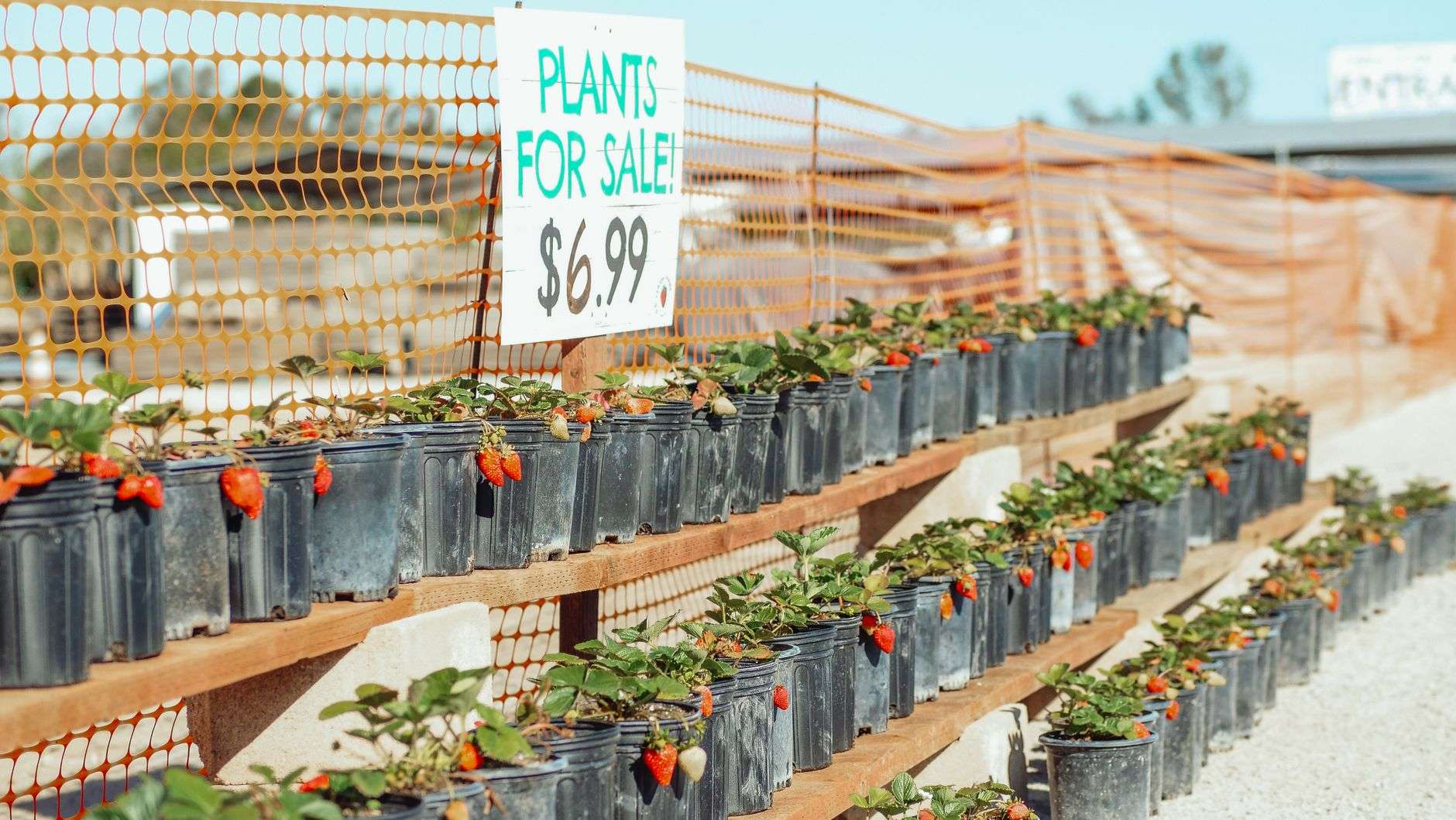
FAIRHOPE, Ala. — Fall planting season on the Gulf Coast gets a head start next month when the Baldwin County Master Gardeners hold their 2026 Fall Plant Sale, a three-day event across from Weeks Bay Reserve that will offer hundreds of plants at discounted prices and raise money for gardening education throughout the county.
The Baldwin County Master Gardeners fall plant sale runs from 9 a.m. to 4 p.m. each day, Friday, Oct. 16, through Sunday, Oct. 18, at 11401 Highway 98 in Fairhope. Admission is free.
Fall Plant Sale at a glance
- What: Baldwin County Master Gardeners 2026 Fall Plant Sale
- When: Friday, Oct. 16, through Sunday, Oct. 18; 9 a.m. to 4 p.m. each day
- Where: 11401 Highway 98, Fairhope, across from Weeks Bay Reserve
- Cost: Free admission; all plants offered at discounted prices
- For sale: Flowers, shrubs, trees, winter vegetables and herbs, plus a specialty selection of native and pollinator-friendly plants
- Help on site: Master Gardeners available to answer questions and help match plants to your garden
What shoppers will find
The sale will feature a wide mix: flowers, shrubs and trees for landscaping, along with winter vegetables and herbs for home gardens. A specialty section will focus on native and pollinator-friendly plants, a category that has grown in popularity as more homeowners look for plants that support bees, butterflies and other wildlife.
Every plant at the sale will be offered at a discounted price. The group’s website notes that the selection is chosen with Gulf Coast growing conditions in mind and that a detailed plant list was still being finalized.
Perhaps the most valuable thing on offer is free: advice. Master Gardeners will be on hand throughout the sale to help shoppers find what they are looking for and to talk through whether a particular plant is a good fit for their yard. Questions about sun exposure, soil, drainage and mature size are exactly the kind of thing these volunteers are trained to help with.
Where the money goes
The annual sale is one of the Baldwin County Master Gardeners’ largest fundraisers, and the proceeds stay in the community. According to the group, money raised supports:
- Master Gardener scholarships
- Community gardening and educational projects
- Public horticulture education and outreach programs
- Environmental stewardship initiatives
This year’s sale also carries a building goal. Funds will help support the development of a future Baldwin County Master Gardeners greenhouse facility. The organization says the planned greenhouse would let it expand plant production, strengthen training opportunities for volunteers and broaden its educational programming for the public.
A dedicated greenhouse matters for a group like this. Much of what Master Gardener chapters sell at their sales is propagated and grown by volunteers, and more controlled growing space means more plants, more reliable production and a place to teach hands-on skills such as propagation, seed starting and plant care.
Why fall is a good time to plant on the Gulf Coast
Many newcomers to coastal Alabama think of spring as planting season, but horticulturists often point to fall as the better time to put trees, shrubs and perennials in the ground. Cooler temperatures and often increased rainfall reduce stress on new plants, and the season gives roots time to grow stronger and deeper before the heat of the next summer arrives.
That is especially true in south Alabama, where winters are mild and the soil rarely freezes. A shrub planted in mid-October has months of root growth ahead of it before it has to face the long, hot stretch that starts in late spring.
Fall is also the time for cool-season vegetables. The Alabama Cooperative Extension System notes that many cool-season crops produce their best flavor and quality when they mature during cool weather — the opposite of spring, when rising heat can cause crops such as lettuce and spinach to bolt or turn bitter. Extension guidance also notes that south Alabama gardeners generally plant about two weeks later than the statewide fall window, which makes mid-October transplants a practical option for many winter crops.
Buying transplants rather than starting from seed can help at this time of year. Extension specialists warn that late-summer conditions can leave soil crusted and dry, which makes direct seeding difficult, especially in heavier soils. A healthy transplant skips that step.
The case for native and pollinator plants
The sale’s specialty selection of native and pollinator-friendly plants reflects a broader shift in home landscaping. Native plants evolved with local soils, rainfall and insects, and once established they often need less water and fertilizer than many non-native ornamentals. They also provide food and habitat for native bees, butterflies and birds.
The location of the sale makes that point well. Weeks Bay Reserve, directly across the highway, is one of the country’s National Estuarine Research Reserves, a system of protected coastal areas used for research, education and stewardship. The reserve protects habitat where the Fish and Magnolia rivers meet Weeks Bay, a shallow sub-estuary on the eastern side of Mobile Bay, and its trails and visitor programs showcase the kinds of native coastal plants that thrive in the region.
Weeks Bay was designated in 1986 as the nation’s 16th national estuarine sanctuary, and the reserve today covers about 6,525 acres of open water and tidal and forested wetlands. Its habitats range from freshwater and saltwater marshes to tupelo and cypress swamps, upland and bottomland forests, and rare bog habitat. Visitors can explore about 5,000 feet of boardwalk and two miles of nature trails, a native pitcher plant bog, and a butterfly and hummingbird garden near the reserve’s interpretive center. Shoppers who make the drive for the plant sale can see many native species growing in their natural setting just across the road.
For homeowners, adding pollinator plants can be as simple as swapping a few ornamentals for flowering natives or leaving space for plants that bloom at different times of year so something is always available for pollinators.
Who the Master Gardeners are
Master Gardeners are trained volunteers who work with the Alabama Cooperative Extension System, the outreach arm of Alabama A&M University and Auburn University, to share research-based gardening information with the public. The Baldwin County chapter operates in affiliation with Extension and Auburn University.
The Master Gardener concept began at Washington State University in the 1970s, and Alabama launched its own program in 1981. To become an Alabama Extension Master Gardener, volunteers complete a 14-week course that blends online and in-person sessions, then contribute 50 hours of Extension volunteer service in their community. Certified members keep their status with 25 volunteer hours and 10 hours of continuing education each year.
That training shows up in the kind of work Master Gardeners do: answering gardening questions, running demonstration and community gardens, teaching classes, and helping at events like this sale. Residents with questions year-round can also reach the Master Gardener Helpline at 877-252-4769.
Tips for plant sale shoppers
- Know your site. Before you go, note how much sun the planting spot gets, whether it stays wet or drains quickly, and how much room a plant will have when it is full-grown.
- Bring questions. Master Gardeners will be on hand to help you decide whether a plant suits your garden.
- Come prepared to carry plants. A wagon, boxes or a vehicle with room to spare make it easier to get purchases home safely.
- Plant soon after buying. Water new plants well and get them in the ground promptly to take full advantage of fall growing conditions.
- Consider timing. The sale runs three days, from 9 a.m. to 4 p.m. each day, with no early admission.
The bottom line
For Baldwin County gardeners, the Oct. 16-18 sale is a chance to stock up on discounted plants suited to the Gulf Coast, get free advice from trained volunteers, and support scholarships, education programs and a planned greenhouse that will expand the Master Gardeners’ work in the county. Admission is free, and the plants — and the answers — will be waiting across from Weeks Bay Reserve.