

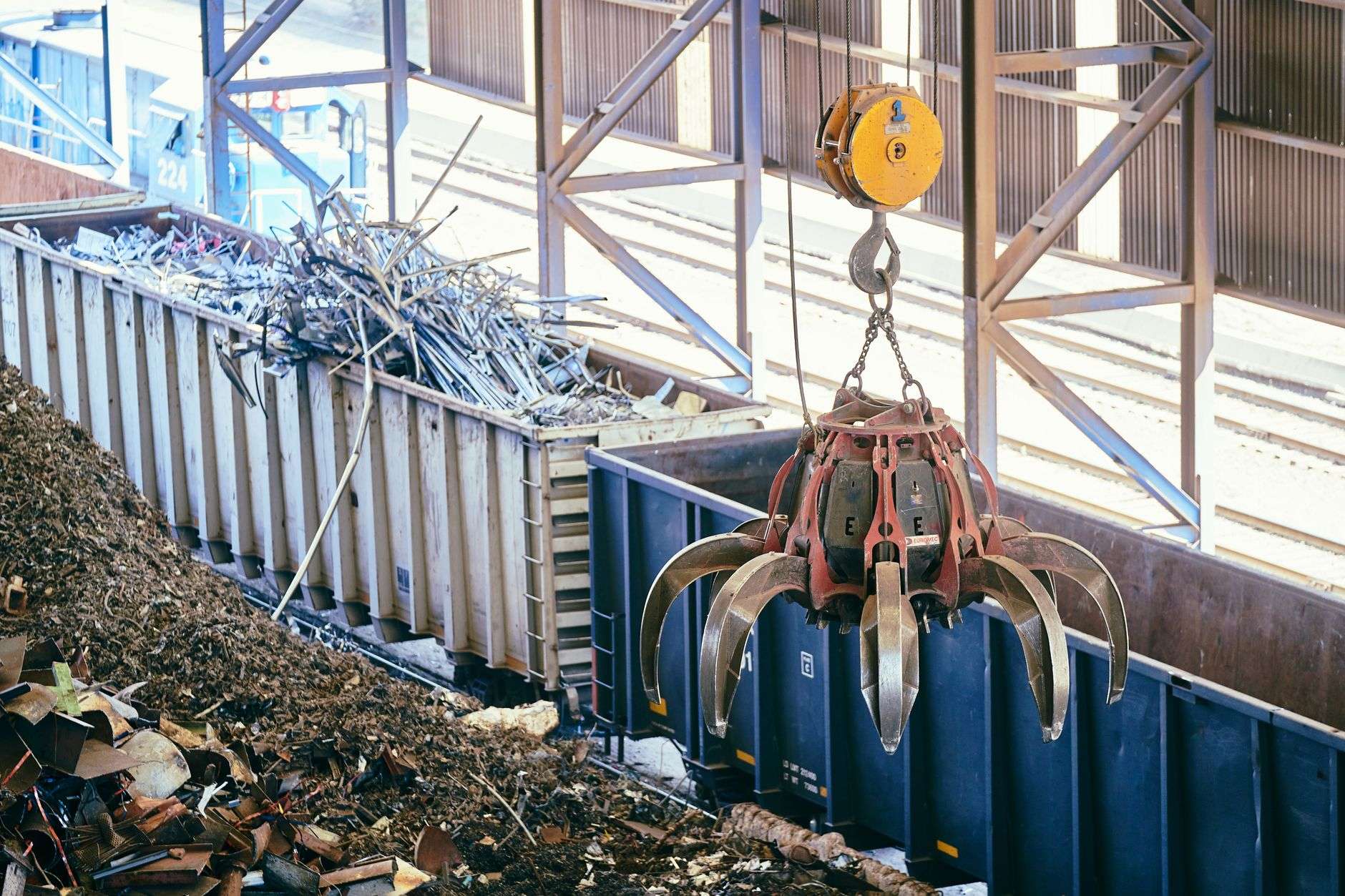
Baldwin County residents now have a third option for disposing of hard-to-recycle items after the Baldwin County Solid Waste Disposal Authority opened a new Center for Hard-to-Recycle Materials, known as a CHaRM facility, in Orange Beach. The new site is the largest of the authority’s three CHaRM locations in the county, joining existing facilities in Fairhope and Summerdale. The centers are designed to accept materials that typically cannot go into a household’s curbside recycling bin, including glass, electronics, batteries, paint and household hazardous waste.
The opening marks a milestone for a program that is barely a year old and already handling volumes its organizers could not have projected when the first location opened. Baldwin County, one of the fastest-growing counties in Alabama, has watched its population climb along both the Interstate 10 corridor and the coast, and with the growth has come more of everything households throw away — including the awkward items that curbside trucks cannot legally take. The Orange Beach facility puts that capacity on the county’s southern end, minutes from the beach communities where seasonal populations can double the waste stream.
The Orange Beach CHaRM sits on 1.25 acres at 22510 Russian Road, off the Baldwin Beach Express behind Baldwin EMC and Orange Beach Public Works, in a 47,538-square-foot facility. It is open Monday through Friday from 10 a.m. to 6 p.m. and Saturday from 7 a.m. to noon. The project was partially funded through a $1.5 million grant from the Gulf of Mexico Energy Security Act, known as GOMESA. The location was chosen with access in mind: the Baldwin Beach Express carries traffic directly between the beach highway and the northern county, so a resident from Fairhope, Foley or Bay Minette can reach the site without threading through the summer congestion of Perdido Way or Canal Road.
The authority opened its first CHaRM location last August, and since then has served nearly 20,000 customers and collected more than 26,000 hard-to-recycle items, according to officials. Those first-year numbers told the authority what its directors suspected: Baldwin County residents had been storing these materials in garages and sheds for years, waiting for somewhere legitimate to take them. Nearly 20,000 visits across two small facilities — before the largest location even opened — was the clearest possible evidence of pent-up demand.
SWDA CEO Terri Graham said the centers are intended to make it easier for residents to responsibly dispose of items that could otherwise end up in landfills or, worse, dumped illegally. She said staff at each facility are available to help residents figure out how to handle items they aren’t sure what to do with. “If you come to a CHaRM, our workers are going to help you figure out what to do with it,” Graham said. “And that’s the biggest thing. Don’t just throw it out, let us help you.”
The “let us help you” approach is a deliberate design choice rather than a slogan. Many residents who arrive at a recycling center with an unknown chemical or an unlabeled container simply want to be told what to do, and facilities that turn such items away tend to send them back home — where the usual endpoint is a ditch, a storm drain or a trash can headed for the landfill. By staffing each CHaRM with people who can identify and sort problem materials on the spot, the authority is trying to close that escape route.
GOMESA money at work on the coast
Alabama Department of Conservation and Natural Resources Commissioner Chris Blankenship said GOMESA funding was central to making the Orange Beach facility possible. “GOMESA funding allows us to invest revenues generated from offshore energy production back into projects that protect and enhance Alabama’s coastal communities,” Blankenship said. “The Orange Beach CHaRM is a perfect example of that investment at work. By expanding access to responsible recycling and disposal services, this facility will help protect our coastal waterways, wildlife habitats and the natural resources that are so important to Baldwin County’s quality of life and economy.”
The Orange Beach facility was funded through Gulf of Mexico Energy Security Act, or GOMESA, funds, which direct a share of federal offshore energy revenue toward coastal restoration, infrastructure and conservation projects in Gulf Coast states. Under the federal law, counties and municipalities along the Gulf share in those revenues on a formula, and local officials choose how to spend their allocations within the law’s permitted uses. Baldwin County has used GOMESA funding for a range of public projects in recent years, from boat launches to shoreline improvements.
The logic of spending offshore energy money on a recycling center is straightforward, coastal officials argue. A recycling facility that keeps paint, gasoline and pesticides out of the county’s ditches is, in effect, a water-quality project — and water quality is the foundation of the Baldwin County economy, from the oyster reefs of Mobile Bay to the swimming beaches that draw the county’s tourist crowds. Every gallon of used paint or oil that reaches a CHaRM instead of a storm drain is a small deposit against that foundation.
Orange Beach Director of Coastal Resources Phillip West said the facility reflects the city’s continued commitment to environmental stewardship. “This facility gives residents and visitors another way to help keep our beaches, waterways and neighborhoods clean,” West said. “We are proud to partner with SWDA on a project that benefits our community while supporting broader sustainability efforts throughout Baldwin County.”
More locations on the way
The authority isn’t finished expanding the program. Officials say three more CHaRM centers are planned throughout Baldwin County, with one already under construction in Bay Minette. The eventual map would place a facility within a reasonable drive of every major population center in the county — the eastern shore, the southern beaches, and the fast-growing northern tier around Bay Minette, where new subdivisions have been arriving faster than the county’s services have caught up.
What residents can drop off
A range of common household recyclables can be dropped off free of charge at the Orange Beach CHaRM, including aluminum cans, plastics numbered 1 through 7, mixed paper, cardboard, small household batteries, light bulbs, and glass bottles and jars. The free list covers most of what a household generates week to week, which is by design: the authority wants routine trips to the center to feel easy, not like an errand that requires a wallet. Glass in particular has become a centerpiece, since most curbside programs across the region have abandoned it and residents have been left stockpiling jars with nowhere to send them.
A small handling fee applies to certain hard-to-recycle materials to help cover the cost of safe processing: residential paint and household hazardous waste such as chemicals, gasoline and pesticides are $2 per gallon, car batteries are $2 each, propane tanks and fire extinguishers are $4 per tank, and electronics such as TVs, phones and laptops are $5 per unit. The fees recover a fraction of what safe processing actually costs — electronics and chemicals must go to licensed handlers — but the authority keeps them low enough that disposal remains cheaper than the fines and cleanup that follow illegal dumping.
The facility does not accept bulk items such as tires, mattresses, furniture, major appliances, construction debris or medical and bio-hazardous waste. Those categories require different handling channels, and the authority directs residents to county and municipal programs that take them. Household hazardous waste — items such as paint, batteries, pesticides, cleaning chemicals and electronics — poses particular disposal challenges because it cannot legally or safely be placed in standard landfills or curbside bins. Programs like the CHaRM centers are increasingly common across the country as counties look for ways to reduce the volume of hazardous material that ends up improperly discarded.
Residents can find a complete list of accepted materials, hours of operation and any applicable fees at baldwinrecycles.org or by calling 251-972-6878. For the county’s growing population, the message from the authority is the same one Graham puts to every visitor: whatever is sitting in the garage, the shed or the under-sink cabinet, someone at the counter can tell you where it belongs — and it is almost never the ditch.
Why Baldwin built the program
The CHaRM program’s rapid growth reflects a county that outgrew its old disposal habits. For years, Baldwin residents who missed the occasional municipal hazardous-waste collection day had no year-round answer for the paint cans, old laptops and half-empty gasoline cans that accumulate in every household. Those one-day collection events, common across Alabama, work well for urban counties with dense populations but strain to reach a county the size of Baldwin, where a resident in Stockton or Lillian may be forty minutes from the nearest event site. Permanent facilities flip that model: instead of the county scheduling collection days and hoping residents show up, the collection point is simply always there.
The economics of the program rest on that permanence. A fixed staff, a fixed site and predictable volumes let the authority contract with processors on better terms than sporadic collections allow, and the modest fees on the hardest materials stretch the grant-funded infrastructure further. Each new CHaRM also diverts material from the county’s landfill streams, where improper disposal imposes its own costs in groundwater monitoring and remediation. In that sense, the $1.5 million GOMESA grant is best understood as money spent to avoid larger future expenses.
For Orange Beach specifically, the facility answers a long-standing gap at the coast, where rental properties and vacation turnovers generate steady streams of electronics, batteries and household chemicals with limited disposal options nearby. West’s coastal resources office has spent years on stormwater and habitat projects protecting the city’s waterways, and a year-round recycling point upstream of the back bays fits directly into that work. With three more centers planned and the Bay Minette site already rising, the program’s first year has turned an experiment into a permanent part of how Baldwin County manages its waste.