

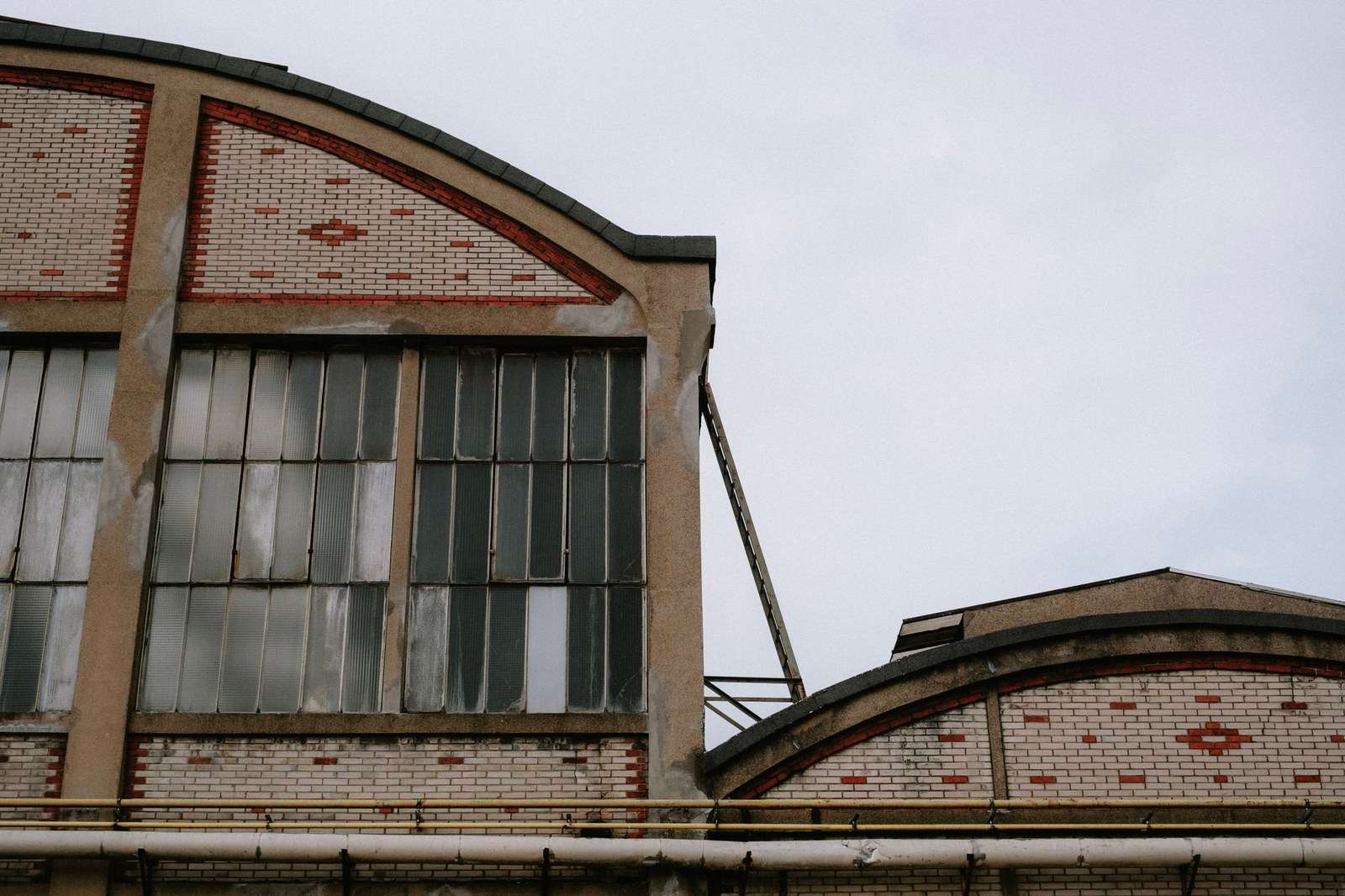
Bay Minette has cleared the first real hurdle on a property that has been sitting empty in the middle of town. The city announced, in a news release posted to its Facebook page, that the South Alabama Regional Planning Commission has awarded Phase I funding for the former Standard Furniture property — the opening step in a federally backed process designed to make long-vacant industrial sites usable again.
The money comes through the Environmental Protection Agency’s Brownfields program, and it pays for the part of redevelopment that almost never gets financed privately: finding out what is actually in the ground.
What a Brownfield Is, and Why It Sits Empty
A brownfield is a property whose redevelopment is complicated by the known or suspected presence of contamination. The definition is deliberately broad, because the practical problem is usually uncertainty rather than confirmed pollution.
That uncertainty is what keeps these sites vacant, and the mechanism is worth spelling out. A buyer looking at a former industrial property faces a risk they cannot size. The site might be clean. It might need modest remediation. It might carry a liability that exceeds the value of the land several times over. Without an assessment, there is no way to tell which of those is true — and lenders will not finance a purchase against an unbounded environmental risk, no matter how attractive the location.
The result is a property that everyone can see is underused and nobody will touch. It is a standing feature of American downtowns: a large, well-located, infrastructure-served parcel that stays empty for decades while development pushes outward to greenfield sites on the edge of town, where the ground is unknown but also unsuspected.
The Brownfields program exists to break that loop by paying for the assessment itself, so the risk becomes a known quantity.
The $1.5 Million Coalition Grant Behind It
Earlier this year, SARPC received a $1.5 million EPA Brownfields Coalition Assessment Grant — one of only two awarded in Alabama.
The coalition structure is the significant detail. Rather than a single city applying on its own behalf, SARPC leads a partnership that includes the Baldwin County Economic Development Foundation and the Escambia County Commission. The grant is intended to strengthen regional brownfield revitalization efforts and return underutilized properties to productive use.
The coalition’s stated aim, according to the city, is “reducing environmental uncertainty, supporting economic development and helping communities transform long-vacant properties into assets.”
That first phrase is the whole theory of the program. The coalition is not primarily in the cleanup business. It is in the uncertainty-reduction business. Cleanup, where it proves necessary, comes later and is usually financed differently.
There is a practical reason the regional approach works. Environmental assessment is technical work that requires specialized consultants, EPA reporting compliance and grant administration capacity. A city the size of Bay Minette would have to build all of that from scratch to run its own program for one property. A regional planning commission can maintain that capacity once and deploy it across multiple member communities — which is precisely the argument for why only two such grants went to Alabama and why they went to regional bodies rather than individual municipalities.
What Phase I Actually Covers
Phase I funding provides 100 percent funded environmental and planning services at no cost to the property owner. The work includes:
- A Phase I Environmental Site Assessment
- Asbestos-related evaluations
- Preliminary redevelopment and reuse planning
A Phase I Environmental Site Assessment is a specific, standardized product, and understanding what it is — and is not — clarifies where the Standard Furniture site now stands.
A Phase I is a records-and-observation review. It examines the property’s ownership and use history, historical aerial photographs and maps, regulatory databases, adjacent land uses, and the visible condition of the site. It documents what practitioners call recognized environmental conditions: indications that hazardous substances may have been released on the property.
What a Phase I does not do is collect samples. No soil is drilled, no groundwater is tested, no laboratory analysis is performed. That is Phase II, and it happens only if the Phase I identifies conditions that warrant it.
The asbestos component addresses a separate and very common issue with mid-century industrial buildings. Asbestos-containing materials were standard in insulation, flooring, roofing and fireproofing for decades. Their presence is a demolition-cost question rather than a soil-contamination question, but it is frequently the single largest unknown in the budget for redeveloping an older industrial structure — and it is the kind of number that can kill a project after a buyer is already committed.
The reuse planning piece is the forward-looking half. It asks what the site could reasonably become given its size, location, infrastructure and zoning context, so that the environmental findings arrive alongside some sense of what they would mean in practice.
According to the city, those activities will establish the environmental groundwork needed to understand site conditions and guide future planning under the Brownfields Program.
Why “No Cost to the Property Owner” Matters
The provision that Phase I services are fully funded, with nothing charged to the owner, is not a courtesy. It resolves a specific deadlock.
Property owners have a rational reason to avoid environmental testing. An assessment that finds nothing costs money and changes little. An assessment that finds something creates a documented record of a problem, potentially triggers disclosure obligations, and may reduce the property’s market value or the owner’s ability to sell it as-is. From a narrow self-interest standpoint, the incentive runs toward not looking.
Public funding changes that calculation by removing the cost of looking and by placing the assessment within a program whose purpose is redevelopment rather than enforcement. The owner gets information and a pathway rather than a bill and a liability.
A Year of Groundwork
Getting to this point took sustained effort. Throughout 2026, Bay Minette city leadership worked closely with the Standard Furniture property owners to complete the review processes required to secure Phase I funding. The city described that collaboration as “essential in advancing the site toward new opportunities.”
That description points at something the announcement handles diplomatically. A city cannot unilaterally enroll a privately owned property in a brownfields assessment. The owner has to consent, provide access, supply historical records about site operations, and agree to the process. Months of work between the city and the owners preceded the award, and the funding arrived because that relationship held.
The furniture industry connection also explains why the site qualifies. Furniture manufacturing historically involved solvents, adhesives, wood treatment chemicals, finishing and coating operations, and on-site fuel storage. None of that establishes that contamination exists at this particular property — that is exactly the question a Phase I is designed to answer — but it is the sort of operational history that makes an assessment a reasonable step rather than a formality.
An Early Step, Described as One
City leadership said in the release that it is encouraged by the milestone and looks forward to continuing its collaboration with the property owners and SARPC as future opportunities for the property are explored.
The language throughout the announcement is measured — “an early step,” “potential revitalization,” “future opportunities” — and that restraint is appropriate. No tenant has been identified. No redevelopment plan has been adopted. No timeline for reuse has been announced. What exists is funding to answer a question that has gone unanswered, and the answer will shape everything that follows.
If the Phase I finds little, the property becomes substantially easier to market, and the path to reuse shortens considerably. If it identifies conditions requiring further investigation, the process moves to Phase II sampling, and the timeline extends. Either outcome is more useful than the current condition, which is a large property in a county seat where nobody can say with confidence what is underneath it.
The Broader Baldwin County Picture
Bay Minette sits in one of the fastest-growing counties in Alabama, and growth pressure makes vacant in-town industrial property more valuable and more conspicuous at the same time. Land on the periphery gets developed because it is simple. Land in the center stays empty because it is complicated.
Returning a site like the former Standard Furniture property to use has advantages that a new subdivision on the county’s edge does not: existing roads, existing water and sewer, existing proximity to the rest of the town. Those are costs the public does not have to pay twice.
That is the case for the Brownfields program in a sentence — and, for now, Bay Minette has funding to find out whether it applies here.