Bermuda Volunteer Fire Chief Hilton Ryland Dies, Conecuh County Community Mourns
Hilton Ryland, chief of the Bermuda Volunteer Fire Department in Conecuh County, Alabama, has died, Monroeville Fire-Rescue announced in a weekend post.
The volunteer fire chief who led the department serving the small Conecuh County community of Bermuda has died, according to an announcement from a neighboring fire agency. Hilton Ryland, chief of the Bermuda Volunteer Fire Department, died over the weekend, the Monroeville Fire-Rescue Department said in a social media post published Sunday. The neighboring department shared the news publicly and offered condolences to Ryland’s colleagues and to the community he served.
“Condolences and prayers for the Bermuda Vol Fire department and the Bermuda community as they mourn the loss of their Fire Chief Hilton Ryland,” the Monroeville Fire-Rescue post read. “RIP old friend, you served your community well.” The message, posted publicly rather than conveyed through formal channels, reflected the informal bonds that tie small departments together across county lines — relationships built over decades of shared calls, joint training and mutual-aid runs where crews from different departments work the same scene side by side.
News of the chief’s death settled over the community quietly but heavily. In a place the size of Bermuda, the fire chief is not a distant official but a neighbor — someone residents see at the store, at church and at the ballfield, and whose phone number half the community knows by heart. Volunteer departments in towns like Bermuda are woven into the social fabric of the community, and the loss of the man who led one is felt in ways a larger city department would rarely experience.
A Rural Community Served by Volunteers
Bermuda sits in Conecuh County, southeast of Monroeville and just north of Repton. The community lies in a rural corner of south Alabama where the landscape is dominated by pine timberland, small farms and the quiet two-lane roads that connect scattered settlements. Conecuh County itself is one of the state’s least populated counties, with its county seat at Evergreen along the Interstate 65 corridor, while communities like Bermuda sit off the main highways in the rolling timber country that stretches toward the Monroe County line.
Like much of rural south Alabama, the area depends on a volunteer fire department rather than a full-time paid staff, meaning residents who hold other jobs answer fire, medical and rescue calls for their neighbors. In communities like Bermuda, the volunteer roster typically includes farmers, loggers, teachers, mill workers and retirees — people who leave a job in the middle of the day, a family dinner or a night’s sleep to respond when a siren sounds. Response times from the nearest paid departments can run long across rural distances, which makes the local volunteer company the difference between a contained fire and a lost home, or between a medical emergency survived and one that is not.
The economics behind that arrangement are simple and stark. Small towns and rural communities cannot support the tax base that a full-time, paid fire service requires, so residents organize, fund and staff their own protection. Fundraisers, fish fries and donation drives keep trucks fueled and equipped, and state and county grants stretch what local donations can cover. The result is a system built entirely on civic commitment — neighbors protecting neighbors because no one else will.
The Work of Leading a Volunteer Department
Chiefs of small volunteer departments typically handle training, equipment upkeep, fundraising and mutual-aid coordination with surrounding agencies in addition to responding to calls themselves. The job is less a position than a second vocation. A rural chief sets and leads training drills for members who hold day jobs, keeps the department’s engines and tanker trucks running on a thin budget, chases grants, plans the fundraisers that keep the lights on, and maintains the working relationships that let neighboring departments roll to each other’s aid without hesitation.
The coordination piece matters more than outsiders often realize. Rural departments rely on mutual aid — standing agreements under which a call to one department can bring trucks and crews from several others — because no single volunteer roster can field enough personnel for a serious structure fire, a wreck with entrapment or a wildfire in dry conditions. In south Alabama’s piney woods, wildfire response in particular depends on those agreements, as lightning and dry conditions regularly ignite timber stands that no one department could fight alone.
That mutual-aid relationship is reflected in the fact that word of Ryland’s death was shared by a department based in a neighboring county seat. Monroeville, the seat of Monroe County, sits to the northeast of Bermuda, and its fire-rescue agency serves as one of the neighboring departments that would work alongside Bermuda crews when calls demanded it. The decision to publish a public tribute rather than make a private call underscored how these agencies see one another: not as separate organizations, but as a single extended family spread across county lines.
A Loss Felt Beyond One Community
No cause of death was released, and no further details about Ryland’s tenure or service record were included in the announcement. That scarcity of detail is itself characteristic of rural fire service, where the people who do the work rarely talk about it. Volunteer chiefs in communities like Bermuda tend to measure their service in quiet increments — the calls answered, the trucks kept ready, the recruits trained, the fundraisers held — rather than in press releases or commendations.
Arrangements were not announced at the time of the post. As word spread through the community and across the region’s fire-service circles, messages of condolence from neighboring departments joined the Monroeville post, a reminder of how tightly the volunteer fire community of south Alabama is bound together. Departments separated by county lines train together, borrow equipment, stand watch over each other’s stations during funerals and turn out in numbers to honor a fallen colleague.
The death of a volunteer fire chief also lands on the department he leaves behind in practical ways. Rosters in small departments are short, and filling a chief’s role — administrative, operational and ceremonial at once — falls on the remaining volunteers while they continue answering calls without interruption. Communities served by volunteer agencies understand that continuity depends on the willingness of the next neighbor to step forward, take the training and keep the pager on the nightstand.
Volunteer Fire Service in Rural Alabama
Bermuda’s experience mirrors that of rural communities across Alabama, where the majority of fire departments rely on volunteers rather than paid staff. State fire officials have long noted that most of Alabama’s fire departments are volunteer or combination agencies, protecting wide stretches of the state’s countryside with rosters of part-time responders who train on nights and weekends to the same standards paid departments must meet. The system keeps rural protection affordable, but it runs on a fragile asset: the willingness of a few dozen residents in each community to carry a pager.
Recruitment and retention are perennial struggles. Younger residents move away for work, call volumes rise as populations age, and the time commitment — initial certification courses, monthly drills, the calls themselves — competes with jobs and family. When a department loses its chief, the question of who takes up the pager and the keys becomes an urgent one for the whole community, not just the firehouse.
The training burden alone is significant. New volunteers typically complete introductory firefighter certification through the Alabama Fire College and its regional delivery programs, learning hose operations, ladders, scene safety and basic rescue skills before they ever ride a truck. Experienced members maintain medical certifications, pump operations qualifications and officer training, and departments run regular drills to keep skills sharp between calls. In a volunteer agency, all of that preparation happens after hours — around shift work, harvests, church commitments and family life — which makes steady leadership all the more important to keeping members engaged.
Funding follows the same volunteer-driven pattern. Small departments often operate on a patchwork of county appropriations, state forest-fire grants, community donations and the proceeds of the fundraisers the chief himself helps organize. Every set of turnout gear, every self-contained breathing apparatus cylinder and every tire on a tanker has to be paid for through those channels, and a chief who is skilled at both grant writing and fish fries can mean the difference between a well-equipped department and one that struggles to keep two trucks running.
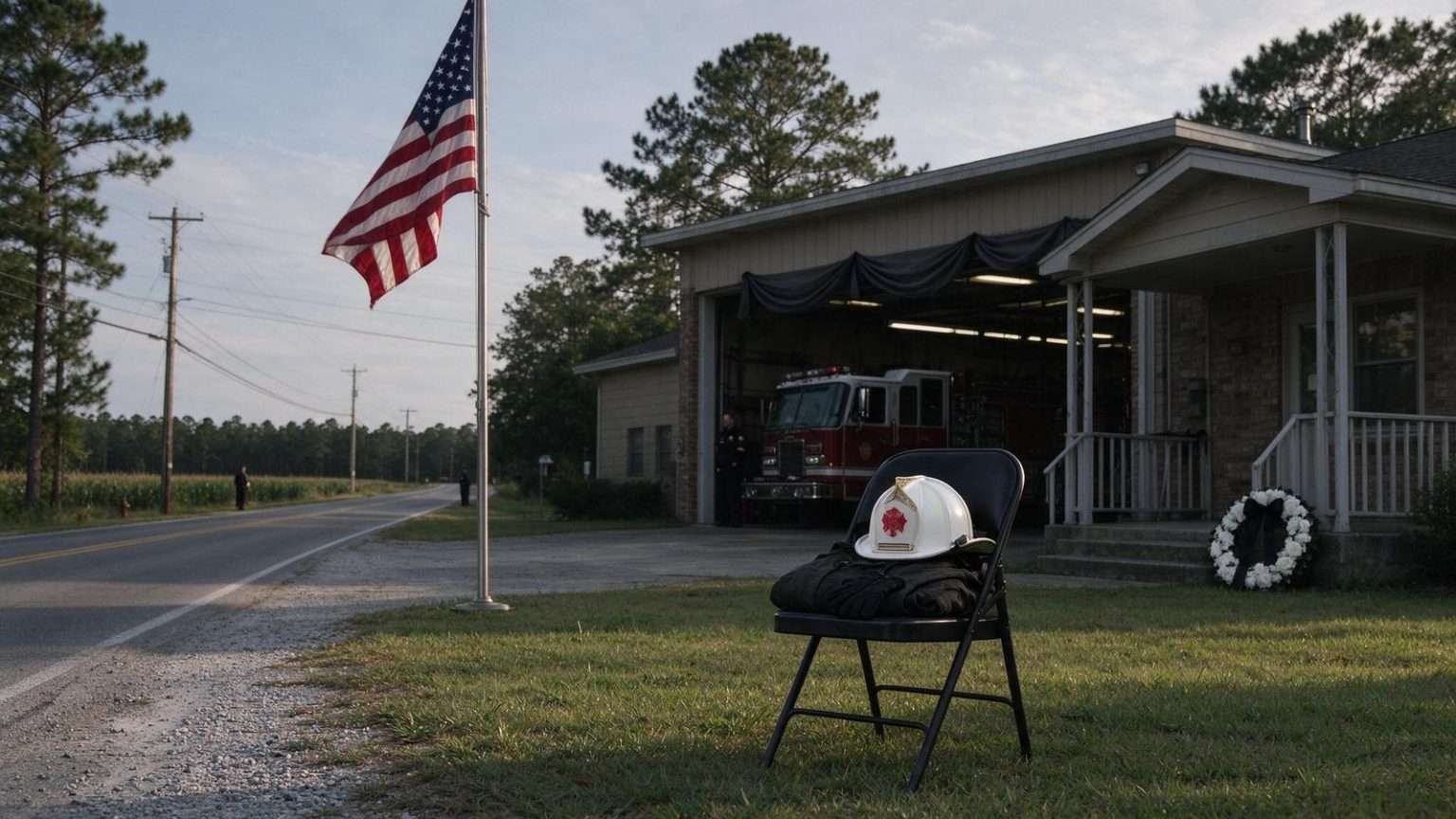
For Bermuda, the weekend brought the answer to a different question: how a small community mourns one of its own. Neighbors gathered, flags were lowered at the station he led, and firefighters from across Conecuh and surrounding counties stood ready to support the department as it grieved. The Monroeville department’s closing words — that Ryland served his community well — captured what his neighbors already knew, and what the fire service in rural Alabama asks of everyone who wears the badge: show up, serve well, ask nothing in return. Hilton Ryland did exactly that, and the community he protected will not forget it.