

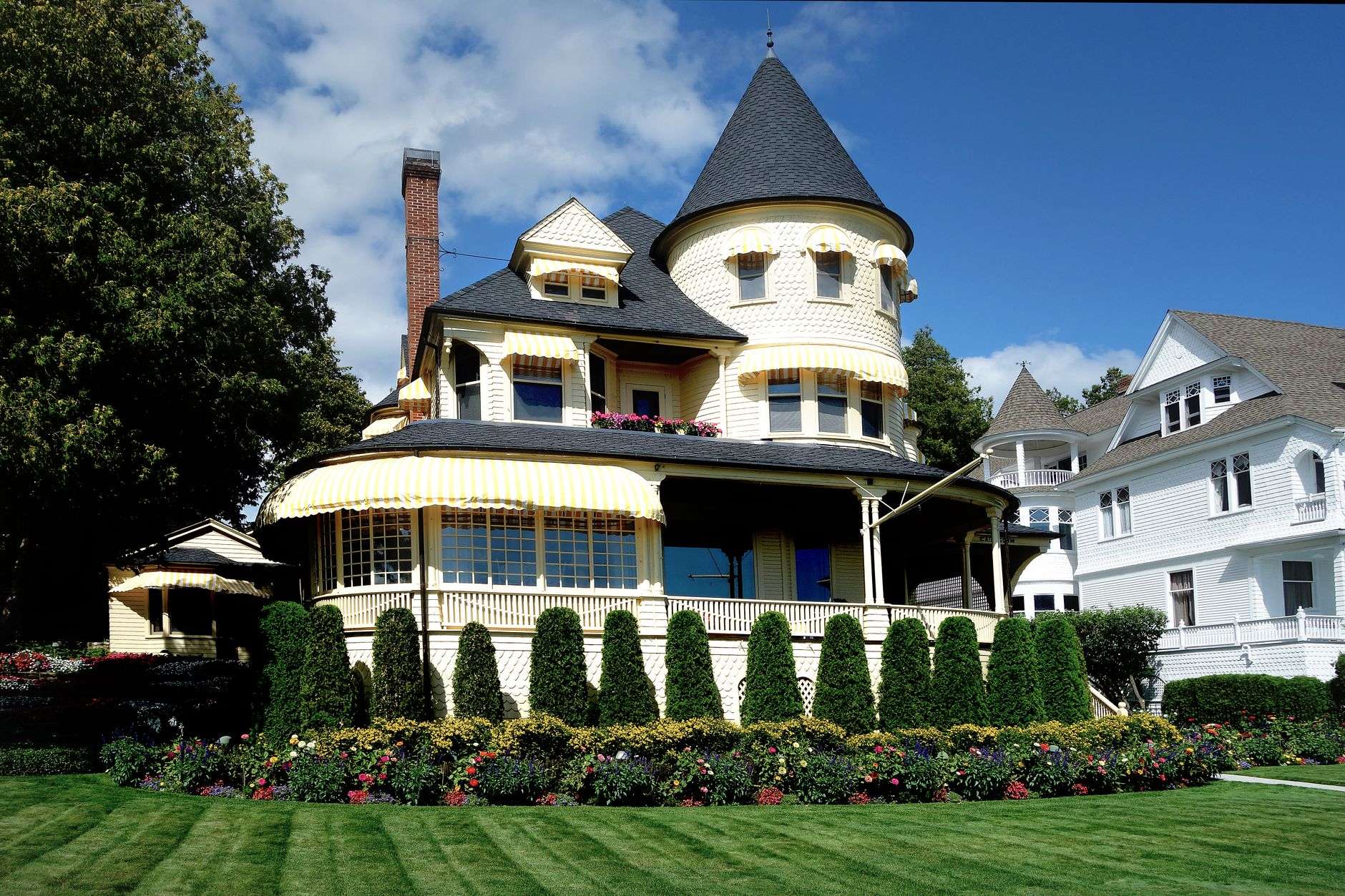
MOBILE, Ala. — Thousands of drivers and pedestrians pass it every week without a second glance. The faded yellow house on St. Francis Street in downtown Mobile has clearly seen better days. But for the descendants of the woman who built it nearly 150 years ago, it is far more than an aging building. It is proof of what one formerly enslaved woman accomplished in the years after the Civil War, and they are determined not to let it go.
The Bettie Hunter House, at 504 St. Francis St., was completed in 1878 and has remained in the Hunter family ever since. Today, family members are searching for a way to restore and preserve it, even as the cost and complexity of caring for a historic property weigh on them.
“My ancestors built this house from scratch. And my ancestors lived in this house at one period of time. I lived in this house,” said Janice Reddick Morrison, a descendant of Bettie Hunter.
Who was Bettie Hunter?
A historical marker in front of the house tells part of her story. According to the marker, placed as part of Mobile’s African-American Heritage Trail, Bettie Hunter was born into slavery in 1852 in Dallas County, Alabama, and moved to Mobile after the Civil War.
In Mobile, she and her brother, Henry Hunter, built a profitable carriage business downtown. Their company provided transportation, including hack and carriage service and the hauling of goods to and from the port, at a time when Mobile’s waterfront was one of the busiest in the South and horse-drawn vehicles were essential for moving people and cargo through the city.
Their success allowed Bettie Hunter to build the substantial home on St. Francis Street in 1878. She died the next year, in 1879, at just 27 years old. She had no children, and the house passed to her family, where it has remained for generations.
A rare piece of history
The house is built in the Italianate style, a popular architectural style of the mid-to-late 19th century known for features such as bracketed eaves, tall narrow windows and decorative trim. In 1985, the Bettie Hunter House was listed on the National Register of Historic Places, recognizing both its architecture and its historical significance.
Historians have noted that the home is an important example of a substantial 19th-century residence built and owned by an African American in the Deep South, comparable in quality and design to homes built by prominent white residents of the same era. That is part of what makes it so meaningful. In the years after emancipation, many formerly enslaved people faced enormous economic, legal and social barriers. Bettie Hunter’s success in business and her ability to build and own a fine home in the center of a major Southern port city stand out as a remarkable achievement.
The house is also a stop on the Dora Franklin Finley African-American Heritage Trail of Mobile, which highlights sites across the city connected to the history and contributions of Black Mobilians.
A promise to keep
For the family, the home is not only a historic landmark. It is a promise.
“I promised my mother as she was dying that I wouldn’t sell it, number one. Number two, I treasure the story. I think that too much has been taken from black people without any recognition, as it is,” said Jamie Hobbs, another of Bettie Hunter’s descendants.
Family members say they have received several offers over the years from people interested in buying the property. Selling might seem like a simple answer to the challenges of maintaining it, but the family says that is out of the question.
“You don’t sell your history. That’s history. That’s like saying, why not sell America? Why not sell Washington, DC?” Morrison said.
The challenge of preservation
Family members say they have struggled to find the money needed to restore the property. Its listing on the National Register of Historic Places adds to the challenge.
While a National Register listing brings recognition and can open the door to certain preservation programs, restoring a historic home is often far more expensive than ordinary repairs. Work on historic buildings frequently requires specialized craftsmen, materials that match the original construction, and careful attention to preservation standards, particularly when owners seek grants or tax incentives tied to historic status. Old wood framing, plaster, windows and trim may need to be repaired rather than replaced, and hidden problems such as rot, termite damage or foundation issues can drive costs higher once work begins.
In downtown Mobile, those challenges are compounded by the Gulf Coast climate. Heat, humidity, heavy rain and hurricanes take a steady toll on wooden buildings, and deferred maintenance can quickly turn small problems into major ones.
For now, Hobbs said she does all she can to maintain and secure the house while the family searches for a path forward.
A vision for the future
Hobbs said she would like to see the home preserved in a trust that would help carry Bettie Hunter’s story forward for future generations.
“I would like to see it preserved and her story to resonate through time to embolden young women of all nationalities,” Hobbs said.
Preservation trusts and similar arrangements are sometimes used to protect historic properties over the long term, allowing families or organizations to hold a building in a way that ensures it will be maintained and, in some cases, opened to the public for education. Such arrangements can also make it easier to raise money from donors, foundations and preservation programs.
Resources for historic property owners
Owners of historic properties in Mobile and across Alabama have several places they can turn for guidance. The Alabama Historical Commission, the state historic preservation office, administers programs related to the National Register and historic preservation tax credits. The Mobile Historic Development Commission works with owners of properties in the city’s local historic districts, and statewide nonprofits such as the Alabama Trust for Historic Preservation, along with local preservation groups, advocate for endangered historic buildings.
Preservation experts often encourage owners of historic homes to seek professional advice early, both to understand what funding may be available and to avoid repairs that could unintentionally harm a building’s historic character.
Part of Mobile’s larger story
Mobile has one of the richest collections of historic architecture on the Gulf Coast, and much of the city’s identity is tied to its past, from its colonial French and Spanish roots to its antebellum homes, Mardi Gras traditions and the story of Africatown, founded by survivors of the Clotilda, the last known ship to bring enslaved Africans to the United States.
The Bettie Hunter House adds an important chapter to that story, one about self-determination, entrepreneurship and family legacy in the years immediately after slavery ended. Visitors interested in learning more about the city’s history can explore institutions such as the History Museum of Mobile, and follow the African-American Heritage Trail to sites like the Hunter home.
Why it matters
Many historic homes built by Black families in the South after the Civil War have been lost to neglect, redevelopment or changes in ownership. When those buildings disappear, the stories connected to them often fade as well.
For Bettie Hunter’s descendants, keeping the house in the family is about making sure that does not happen here. The faded paint and worn exterior are, for now, part of the house’s present. But the family hopes its future will look very different: a restored home that stands as a lasting tribute to a young woman who was born enslaved, built a business, and left behind a legacy her family still treasures nearly a century and a half later.