

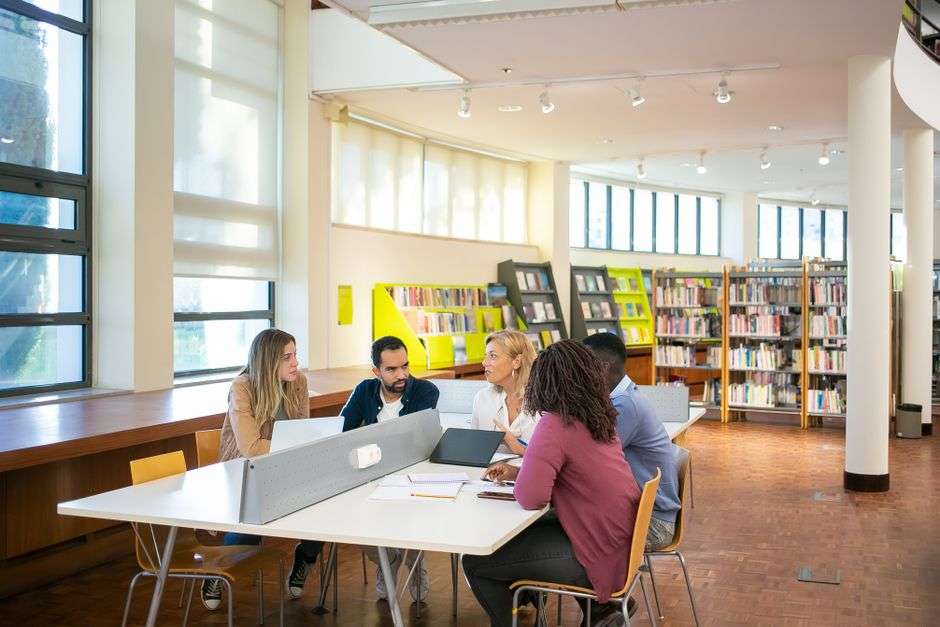
Bishop State Community College has been awarded a $75,000 Innovation Space Grant through The Home Depot Retool Your School program, a national initiative that funds campus improvement projects at Historically Black Colleges and Universities. The award will pay for the transformation of a long-unused space on the college’s Carver Site — the former Autobody Paint Booth area — into a technology-equipped hub where students can study, collaborate on projects and connect with employers and mentors.
What the Space Will Include
Plans for the renovated area, to be known as the Innovation Lounge, call for modular furniture, dedicated collaboration zones, smart boards and interactive displays, individual work pods, and technology-enabled meeting spaces. College officials describe the design as flexible enough to support a range of academic and professional activities, from group projects and individual study sessions to career development programming and employer meet-and-greets. A break area is also planned as part of the buildout.
The mix of spaces reflects how community colleges have rethought campus facilities over the past decade. A student’s day at a two-year college often stretches from an early class to a late work shift, with gaps in between that used to mean a spot in a hallway or a trip home; a lounge built around work pods, collaboration zones and meeting spaces turns those gaps into productive time. The employer meet-and-greet programming adds a career dimension that a conventional study lounge never attempted — bringing hiring partners directly into a space where students already spend their day.
Repurposing a Career-Technical Facility
The Carver Site has long served as a home for Bishop State’s career and technical programs, and the choice to convert the former paint booth area reflects a broader push by the college to update older facilities for current student needs. Rather than building new, the project repurposes existing square footage, turning a space once used for vehicle body work into one built around technology and collaborative learning.
That instinct carries particular weight at Bishop State, whose history is tied to Alabama’s segregated past. The college’s roots trace to the Mobile-based institution founded for Black students in an era when the state’s public higher education system was segregated, and its Carver Site carries the name of George Washington Carver — the Tuskegee scientist whose legacy is honored in the names of institutions across Alabama’s Black educational landscape. Bishop State grew into a comprehensive community college serving Mobile, and its facilities tell that story in layers: vocational shops built for the industrial economy of mid-century, and now a campus adapting those same buildings for a technology-driven economy.
Converting the paint booth rather than demolishing and rebuilding also stretches the grant’s $75,000 considerably further. Campus improvement grants of this size typically fund furnishing, equipment and moderate renovation rather than new construction, and the former autobody space offers what innovation spaces need most — open floor area, industrial-grade utilities and room for the modular layout the design calls for.
Part of a Larger Home Depot Initiative
The Retool Your School program has directed millions of dollars in grants to HBCUs across the country since it began, funding campus improvement projects that range from outdoor gathering spaces to renovated academic buildings. Bishop State’s Innovation Space Grant places it among the latest round of recipients benefiting from the initiative, which is aimed at helping HBCUs modernize their campuses and strengthen the student experience.
The program’s structure has made it a meaningful presence in the HBCU funding landscape. Campus improvement projects are chronically difficult to finance — federal and state funding flows toward instruction and need-based aid, while the spaces between classrooms, where student life actually happens, often go unaddressed. Retool Your School fills that gap with grants that schools direct toward whatever their students need most, and the competitive process itself builds engagement: students, alumni and supporters vote and campaign for their institutions, turning each grant cycle into a nationwide demonstration of HBCU community loyalty.
For Bishop State, the award adds to a period of institutional momentum. The college serves a critical role in Mobile’s workforce pipeline, offering academic transfer programs alongside the career-technical training housed at the Carver Site — programs in skilled trades, health sciences and industrial fields that feed the Gulf Coast’s employers. Bishop State’s campuses sit within reach of some of Mobile’s most underserved neighborhoods, and the college has positioned itself as the point of entry into higher education for students who might not otherwise enroll, with support services and flexible scheduling built around working students and parents.
Why an Innovation Lounge Matters at a Community College
The Innovation Lounge’s design choices map directly onto the realities of Bishop State’s student body. Community college students are more likely than their university counterparts to commute, to work substantial hours, and to balance coursework with family obligations. Study spaces that assume a residential campus experience — a library open during conventional hours, quiet carrels for full-time students — underserve that population. Work pods give a student between shifts a private space to focus; collaboration zones accommodate the group projects that now anchor coursework across disciplines; smart boards and interactive displays support the digital literacy employers expect; and the planned break area acknowledges that retention sometimes depends on something as simple as a place to rest and eat between commitments.
The employer programming embedded in the plan extends the lounge’s function beyond study space. Community colleges succeed when students can see the endpoint of their programs — the apprenticeship, the certification, the job — and spaces where hiring partners meet students informally lower the barriers that formal career fairs create. For a college whose career-technical heritage is embodied in the very building being renovated, turning a paint booth into a place where students meet future employers closes a symbolic loop: the trades facility becomes the career center becomes the innovation hub.
The Carver Site’s Next Chapter
The renovation will be watched closely by the college community, both for what it delivers and for what it signals. Bishop State has invested steadily in modernizing its facilities as enrollment programs evolve, and the Innovation Lounge demonstrates an approach other two-year colleges have studied: identify obsolete space, repurpose rather than replace, and design around how students actually live. When the modular furniture, interactive displays and meeting spaces are in place and the doors open, the Carver Site’s former autobody paint booth will have completed its transformation from the industrial Mobile of the past to the connected, career-focused Mobile the college is preparing its students for.
Bishop State’s Role in Mobile
Bishop State Community College occupies a distinctive position among Alabama’s two-year institutions. Designated a historically Black college and university, it serves Mobile County through its main campus and satellite sites, including the Carver Site, offering academic courses that transfer to four-year universities alongside workforce programs aligned with the region’s industries. Its student body reflects Mobile itself — a majority of students drawing on financial aid, many the first in their families to attend college, and a substantial share balancing education with jobs in the port city’s economy of healthcare, shipping, shipbuilding and service industries.
The college’s partnership network extends across the region’s major institutions. Students transfer into the University of South Alabama and other state universities, dual-enrollment high schoolers get their first college exposure on Bishop State campuses, and the college’s workforce programs respond directly to employer demand — a function that has grown only more important as the Gulf Coast’s industrial base expands. In Mobile’s educational landscape, Bishop State functions as both an institution and an on-ramp, and campus improvements like the Innovation Lounge are aimed squarely at the students moving through that on-ramp at the most fragile points of their journey.
The Carver Site itself anchors the college’s career-technical mission. Its shops and labs have trained generations of Mobile workers in automotive, industrial and skilled-trade fields, and the site’s location keeps technical training accessible to neighborhoods where a full college campus can feel out of reach. The decision to locate the Innovation Lounge there — rather than consolidating every improvement onto the main campus — spreads the benefit across the college’s footprint and keeps the career-technical students, for whom the flexible study spaces may matter most, closest to the amenity.
Retool Your School’s Model
Since its launch, Retool Your School has grown into one of the largest recurring corporate investments in HBCU campus infrastructure, with The Home Depot committing grant funding each year across campus improvement, sustainability and community engagement categories. The program’s voting component has turned it into an annual event in HBCU communities, with schools mobilizing students, alumni chapters and supporters nationwide — and with the grants themselves funding tangible changes that students see and use daily: renovated lounges, upgraded outdoor spaces, technology centers and now, at Bishop State, a transformation of unused industrial space into an innovation hub.
For an institution of Bishop State’s size, a $75,000 grant is not cosmetic. Community college budgets are lean, discretionary facility money is scarcer still, and a funded renovation of the kind the Innovation Lounge plan describes would otherwise sit years away in a capital request. The grant converts a dormant room into a functioning academic asset within a single cycle — the kind of acceleration that state funding rarely allows and that corporate programs like this one exist to provide.
When the Innovation Lounge opens on the Carver Site, it will carry with it the story of how it arrived: a historically Black community college, a national corporate program built to strengthen HBCU campuses, and a former paint booth reborn as the place where Mobile’s next generation of students studies, collaborates and meets the employers waiting for them.