

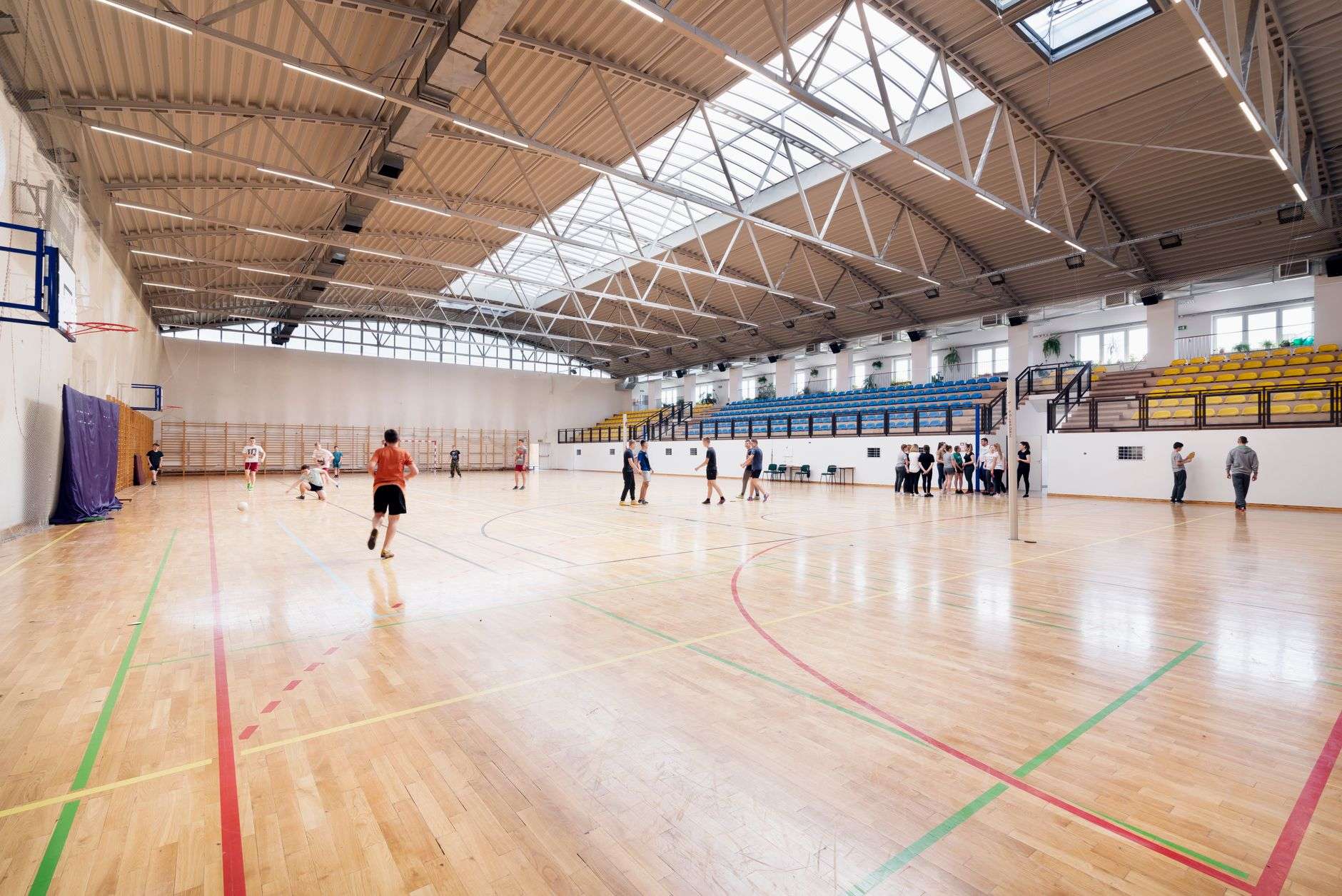
Basketball and community resources came together at Bishop State Community College on Saturday, Aug. 1, as the second annual Rebounds and Resources Community Fair wrapped up its weekend of events at the college’s gymnasium. The event, spearheaded by Pivot Foot Creative Athletics and founder Monétlicia Pettway, combined a basketball tournament with a resource fair built around fathers, youth and young adults, giving families a space to connect through sports and mental health support.
Organizers said the goal was to meet families where they are, designing father-centered activities that made learning and connecting feel natural rather than formal. The format is a deliberate one: instead of asking parents to attend a lecture or a seminar, the fair puts a basketball in their hands, surrounds the court with tables from service organizations and lets conversations happen on the families’ own terms.
The choice of venue carries weight as well. Bishop State’s gymnasium sits at the heart of the college’s main campus in Mobile, a facility that has long doubled as a gathering place for the surrounding neighborhoods. Community colleges across Alabama have increasingly opened their athletic spaces for exactly this kind of civic use, and the fair’s second consecutive year at Bishop State reflects a working partnership between the college and the organizers behind it.
A Tournament With a Purpose
The basketball tournament anchored the weekend, drawing players and spectators into the gym and giving the resource fair a built-in audience. Tournament play is more than entertainment at events of this type — it creates the footprint that brings fathers, sons and daughters through the same doors as the vendors and agencies set up along the sidelines.
Pivot Foot Creative Athletics, the organization Pettway founded, has built its programming around that intersection of sports and support. The group’s events are designed to treat athletics as the hook and community services as the substance, a model that has gained traction across youth sports circles in recent years as organizers look for ways to reach families who might not otherwise seek out help directly.
The timing matters too. A fair held in early August lands squarely in the back-to-school window, when families across Mobile County are managing new schedules, supply lists and the anxieties that come with a fresh academic year. Placing mental health support and community resources in front of parents at that moment gives the information a practical, immediate use.
Fathers at the Center
What distinguishes the Rebounds and Resources Fair from many community events is its deliberate focus on fathers. Father-centered programming has become a growing priority for community organizations nationwide, with research consistently linking involved fatherhood to better outcomes for children in school attendance, behavior and emotional health.
By designing activities that put fathers in the gym — competing, coaching, cheering and connecting — the fair works to normalize the presence of men in parenting-support spaces where they have traditionally been underrepresented. Organizers said the father-centered activities were crafted so that learning and connecting felt natural rather than formal, an approach that trades lectures for conversation.
That philosophy extends to the broader crowd the event drew. Youth and young adults were named alongside fathers as the fair’s core audiences, reflecting an understanding that community support works best when it reaches a family across generations rather than one member at a time.
City Hall on the Sidelines
District 1 Mobile City Councilman Cory Penn was on hand to celebrate a student athlete who received the “Ville Life Scholar 2026” award as part of the event. Penn’s presence tied the fair to the neighborhood it serves: District 1 covers much of Mobile’s downriver communities, including the neighborhoods surrounding Bishop State’s campus, and the councilman has made youth engagement a recurring theme of his work at City Hall.
The Ville Life Scholar award puts a spotlight on a student athlete from the community, pairing athletic participation with academic recognition. Awards of this kind serve a dual purpose at community events — they reward the student in front of a supportive crowd, and they show younger attendees that the path from neighborhood courts to academic achievement is one their community celebrates.
For the city, events like the fair also function as an informal bridge between government and residents. Council members who show up at neighborhood gyms, food drives and school events gather a kind of direct feedback that rarely surfaces in formal council meetings, and families get a face to attach to the district office when issues arise later.
Partners Across the Gym Floor
Community organizations also took part, including Victory Professional Development Center, which said the turnout reflected the strength of the surrounding community. “Seeing our community come together is always a blessing,” a representative for the organization said.
Victory Professional Development Center is among the Mobile-area organizations focused on workforce readiness and personal development, and its presence at the fair connected the event’s athletic energy to practical next steps for attendees. Resource fairs succeed or fail on the quality of their vendor lineup: families who walk in for a basketball game leave with contacts for tutoring, job training, health services or counseling only if the right organizations are at the tables.
The fair’s mental health component was a signature piece of its design. Conversations about emotional wellness remain harder to start in many communities than sign-ups for sports leagues, and the organizers’ strategy of embedding support resources in a celebration — rather than staging a standalone event — is aimed directly at that gap. Families who might hesitate to attend a counseling workshop will pick up a flyer courtside, and that first contact is often what opens the door.
Building on Year One
The event marked the second year Pivot Foot Creative Athletics has hosted the fair at Bishop State, building on a mission to give Mobile fathers and youth a dedicated space for engagement heading into the new school year. Second-year events carry their own significance on the community calendar: they signal to families who attended the first one that the effort was not a one-time gesture, and they give organizers a baseline to measure growth in turnout, vendor participation and community response.
The Role of Bishop State
Bishop State Community College has been part of Mobile’s educational fabric for generations, serving students from across the city and anchoring the area around its main campus north of downtown. As a member of the Alabama Community College System, the college’s mission stretches beyond credit courses into workforce training and community programming, and its athletic facilities have long served as neutral, familiar ground for neighborhood events.
Hosting a father-and-youth fair on a college campus also carries a quiet aspirational message. For young attendees, spending a day inside a college gymnasium — surrounded by banners, staff and a setting that says “this place is for you” — plants a seed that extends past the weekend. Community colleges across the state have leaned into that role, opening their doors to events that introduce families to campus life long before enrollment decisions arrive.
The partnership also benefits the college’s broader outreach. Events that draw hundreds of neighborhood residents onto campus build the relationships that support recruitment, workforce partnerships and grant-funded community programs in the years that follow.
Why Sports-Based Outreach Works
The fair’s sports-first approach reflects lessons learned across the youth development field. Athletics draw a wider and more diverse crowd than almost any other community programming format, cutting across lines of age, income and background that other events struggle to bridge. A basketball tournament requires no registration fee barrier to watch, no prior involvement to enjoy, and no particular credentials to belong.
That accessibility is what makes the resource component work. When families arrive for a game, they arrive relaxed and in the company of neighbors — conditions far more favorable to honest conversation about mental health, parenting stress or job training than a brochure mailed home or a meeting in an office. Organizers who pair services with sports are, in effect, borrowing the trust that athletics already command in the community.
For fathers specifically, the gym setting matters. Many fatherhood programs struggle with attendance because they ask men to join conversations in institutional settings where they feel out of place. A basketball court is familiar territory, and the fair’s design puts the resources within arm’s reach of that territory rather than asking anyone to cross unfamiliar ground.
Looking Ahead to a Third Year
With two years of the fair now behind it, Pivot Foot Creative Athletics has established the Rebounds and Resources event as a fixture of Mobile’s late-summer community calendar. The organization’s model — meeting families where they are, through the sports they already love — positions the fair to grow as more organizations and city partners see the turnout it produces.
For the fathers, students and young adults who filled the Bishop State gymnasium on Saturday, Aug. 1, the weekend offered what its organizers intended from the start: a space where support and celebration shared the same court, and where heading into the new school year felt less like a family’s individual burden and more like a community’s shared project.
The second annual Rebounds and Resources Community Fair closed out its weekend of events with the message organizers have carried since the first year — that Mobile’s families are strongest when the community shows up for them, on the court and beyond it.