

Blue Jeans and Beethoven: A Perfect Saturday in Downtown Mobile
On a spring Saturday in downtown Mobile — blue skies, low humidity, lunch eaten outdoors — it is easy to forget which city you are in. Flowers spill from window boxes along Dauphin Street, music drifts from restaurant patios, and the sidewalks fill with an improbable mix of people: conventioneers with lanyards, dance mothers shepherding little girls in sparkly costumes, tourists and locals of every background. It feels like the kind of day people travel to other cities for. In Mobile, it is simply a Saturday.
Lunch With a View of the Street
The best way to start such a Saturday is with an outdoor table and nowhere urgent to be. Downtown’s restaurants supply the vantage point, and few menus embody the city’s easy unpredictability better than a plate of Eggs Benedict built with fried oysters standing in for Canadian bacon — Gulf Coast cooking at its most confident. Add chicken liver pâté, deviled eggs, steak frites, and an Aperol Spritz, and lunch becomes theater: long, unhurried, and full of people-watching.
The pleasure of the meal is inseparable from the street. Mobile’s historic downtown has spent two decades clawing its way back into the living, and on a spring weekend the evidence walks past your table in every direction.
Inside a Rehearsal at the Saenger
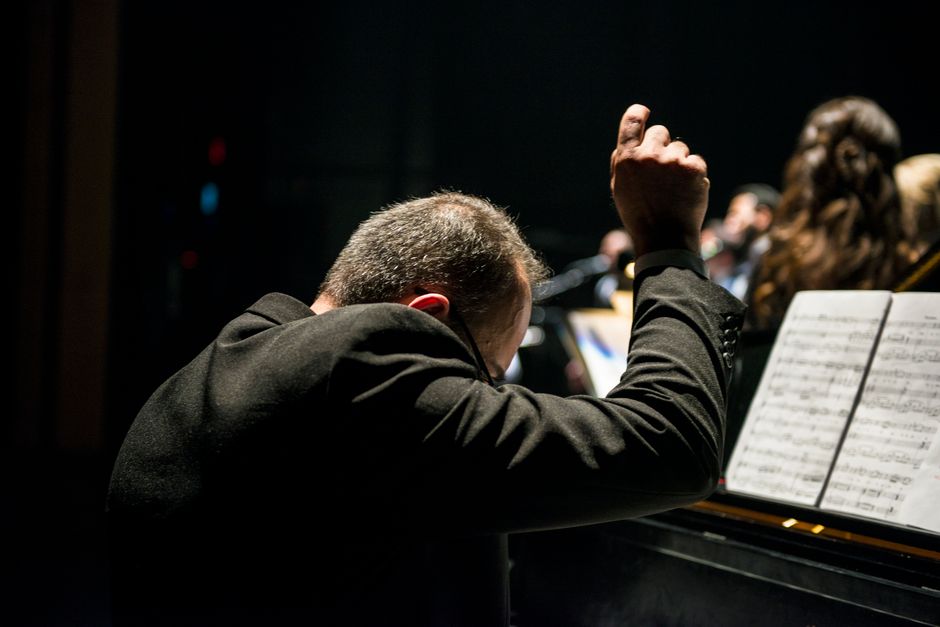
A few blocks away, the historic Saenger Theatre offers a second act. The 1927 movie palace, restored and now home to the Mobile Symphony Orchestra, hosts the orchestra’s annual casual concert, Beethoven and Blue Jeans — an event built to strip away the “high art” intimidation and invite patrons to come as they are, jeans included. On concert weekends, donors are sometimes invited to bring guests to the final rehearsal, and that is how a small group of friends found themselves seated close to the stage, one of only a handful of listeners in the hall, watching a professional orchestra put a program together in real time.
The rehearsal opened with the first piece on the program: Zoltán Kodály’s Dances of Galánta, a dazzling, toe-tapping tribute to the Hungarian Romani folk music the composer grew up hearing in the market town of Galánta. From close range, the mechanics of a professional orchestra are as fascinating as the music itself. Conductor Scott Speck stopped to give notes; a violinist or cellist would raise a question; the ensemble would run a passage again. Music speaks to the heart, but the working vocabulary of these artists — precise, technical, expressive — is exhilarating to overhear.
A Local Orchestra With Local Roots
During a break, a conversation with one of the orchestra’s violists revealed something surprising: roughly 65 percent of the Mobile Symphony’s members come from the Mobile area, with the rest commuting from cities including Baton Rouge, Birmingham, Tallahassee, and Huntsville. They represent every age, gender, and professional background — a reminder that a regional orchestra is less an institution than a community of people who never stopped practicing.
The Accordionist Who Beat the World
The guest artist for the weekend was Radu Ratoi, the Romanian accordion virtuoso whom the orchestra bills as one of the world’s top players — an understatement once his resume comes out. Born in 1998, Ratoi started the accordion at age six and treats the instrument, in his words, as “an instrument with almost unlimited possibilities.” Between 2018 and 2020 he won the six most important accordion competitions in the world — the Coupe Mondiale, the Klingenthal Accordion Competition, the Trophy Mondiale, the Arrasate Accordion Competition, PIF Castelfidardo, and the Moscow Accordion Competition — becoming the first and only player to sweep all of them across both classical and entertainment categories. In 2024 he added first prize at the Young Concert Artists Susan Wadsworth International Auditions, the launchpad that has introduced generations of soloists to American stages.
His vehicle in Mobile was Astor Piazzolla’s Aconcagua: Concerto for Bandoneon — written for the free-reed instrument at the heart of tango, here played on the accordion. The piece blends European classical form with contemporary harmony, tango-infused and jazz-tinged, and Ratoi performs it with an energy that makes the instrument look effortless. Watching him play — eyes closed, dancing in his chair through the Allegro — is to watch a musician argue, successfully, that the accordion belongs in a concerto. The dialogue between conductor and soloist radiated mutual respect, a reminder of what music is for.
Joyful Beethoven to Finish
The program closed with Beethoven’s Symphony No. 2 in D major — cheerful, bold, and expansive, and one of the composer’s most joyous works. In rehearsal it drew fewer stops and starts, perhaps because these musicians have played Beethoven for years and his nuances are imprinted in their hands. As a finale to an afternoon that opened with Hungarian folk dances and passed through Argentine tango, it sent the room out into the spring sunshine humming.
Classical Music Without the Stiff Collar
Beethoven and Blue Jeans is the Mobile Symphony’s argument that a symphony concert does not require a tuxedo — just an open mind and an afternoon. The orchestra backs that up with real access: student tickets on Saturday run $10, and through the orchestra’s Big Red Ticket program, sponsored by the Alabama Power Foundation and the Figures Foundation, students in grades K-12 attend Sunday matinees free with a paying adult. Concerts run about an hour and thirty-five minutes including intermission — long enough to feel like an occasion, short enough for anyone’s attention span.
For locals, the deeper message of such a Saturday is the one that comes last. The same city block that holds lunch on a patio holds a world-class orchestra rehearsing a Romanian accordion star in a 1927 theater. No passport, no airport, no plan — just a hometown afternoon that could stand in for San Diego, Paris, or Anywhere, USA.
The Mobile Symphony Orchestra performs at the Saenger Theatre in downtown Mobile throughout the season, with program details and Big Red Ticket information available through the orchestra’s box office.