Mobile Symphony Orchestra Season Opener Pairs Music and Visual Art Oct. 10-11 at the Saenger Theatre
The Mobile Symphony Orchestra opens its season Oct. 10 and 11 at the Saenger Theatre with three works inspired by visual art, from Berlioz’s Roman Carnival to Mussorgsky’s Pictures at an Exhibition.
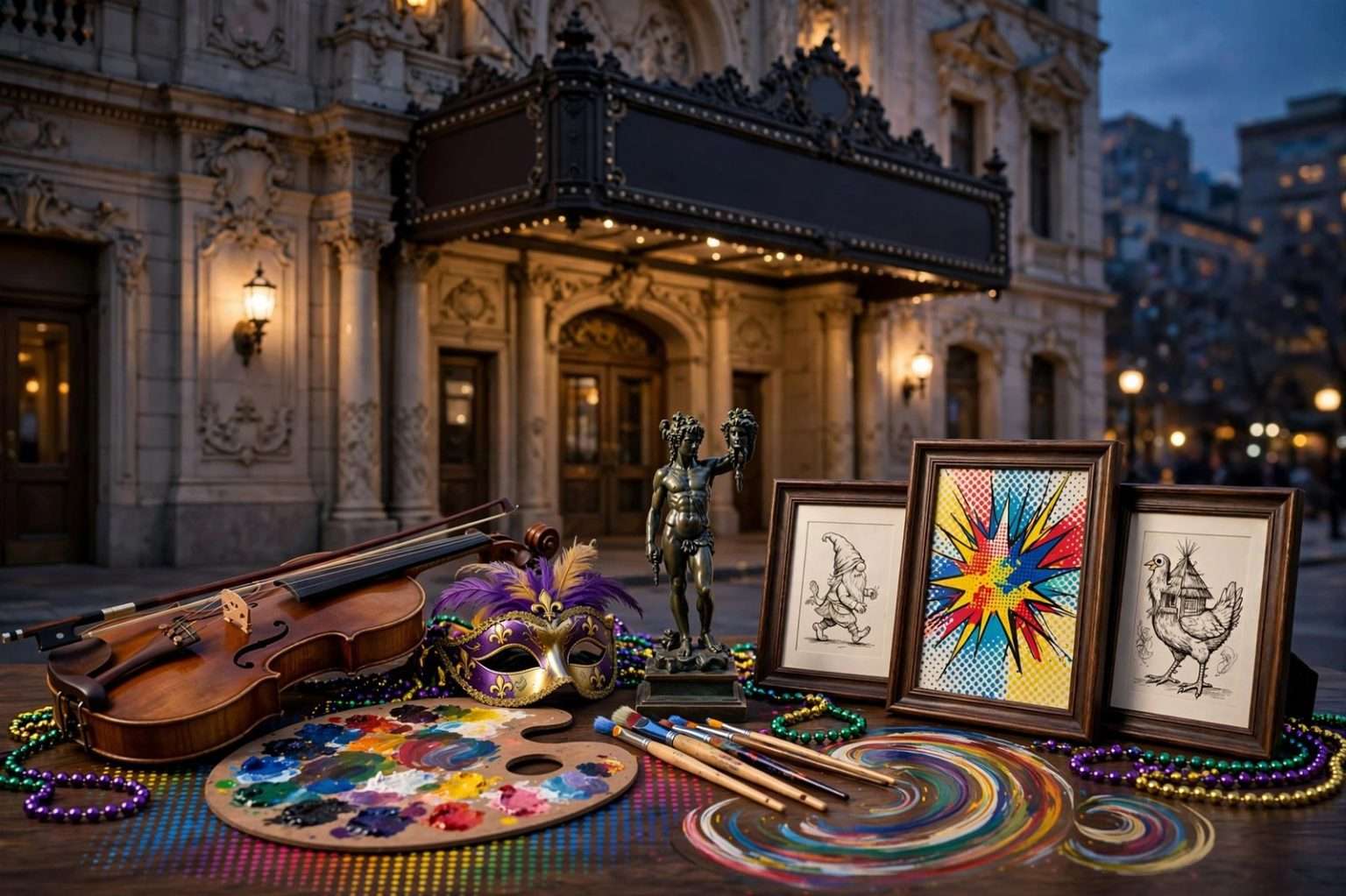
MOBILE, Ala. — The Mobile Symphony Orchestra season gets underway next weekend with a program built around a single idea: the bond between music and the visual arts. The orchestra will perform its opening concert twice at the Saenger Theatre in downtown Mobile — Saturday, Oct. 10, at 7:30 p.m. and Sunday, Oct. 11, at 2:30 p.m.
Music Director Scott Speck has framed the opener around three works, each tied to a painter or sculptor. The lineup moves from a 19th-century French concert overture to a contemporary American piece drawn from pop art, closing with one of the most popular showpieces in the orchestral repertoire.
“Three vivid musical canvases launch the Mobile Symphony’s season with spectacular colors, as we celebrate the connection between the visual and musical arts,” Speck said.
Concert at a Glance
- What: Mobile Symphony Orchestra season-opening concert
- When: Saturday, Oct. 10, at 7:30 p.m., and Sunday, Oct. 11, at 2:30 p.m.
- Where: Saenger Theatre, downtown Mobile
- Program: Hector Berlioz’s Roman Carnival; a contemporary work by former MSO Composer-in-Residence Kenji Bunch inspired by Roy Lichtenstein; Modest Mussorgsky’s Pictures at an Exhibition
- Tickets: $25 to $102; student tickets $10
- Season subscriptions: Six-concert packages from $132 to $462
Berlioz’s ‘Roman Carnival’: A Renaissance Mardi Gras
The program opens with Berlioz’s Roman Carnival, which Speck described as a picture of wild pre-Lenten revelry.
“Berlioz’s Roman Carnival depicts a wild Mardi Gras celebration during the lifetime of Renaissance sculptor Benvenuto Cellini,” Speck said.
French composer Hector Berlioz wrote the Roman Carnival overture as a standalone concert piece, drawing on music from his opera “Benvenuto Cellini,” which centers on the famed Italian goldsmith and sculptor. Cellini, a Florentine artist of the 1500s, is remembered for works such as his bronze statue of Perseus holding the head of Medusa, as well as for a colorful autobiography. The overture is known for its sweeping, lyrical melody for English horn and its exuberant, dance-driven finale.
The carnival theme should resonate in Mobile, a city that proudly claims the oldest Mardi Gras celebration in the United States and knows a thing or two about parades, masks and late-night festivities.
Kenji Bunch Brings Pop Art to Life
The middle work comes from Kenji Bunch, who previously served as the MSO’s composer-in-residence. His contemporary piece is inspired by the paintings of Roy Lichtenstein and brings cartoon imagery to life in sound.
Lichtenstein was one of the leading American pop artists of the 1960s. His best-known paintings borrow the look of comic books, with bold outlines, bright primary colors, speech balloons and the tiny dots used in commercial printing. Translating that crisp, graphic style into music gives the orchestra a chance to show a lighter, more playful side, and gives local audiences a chance to hear a living composer with an existing connection to the Mobile Symphony.
Bunch is an American composer and violist whose music often blends classical forms with influences from popular and vernacular styles.
Mussorgsky’s ‘Pictures at an Exhibition’ Closes the Program
The concert concludes with Modest Mussorgsky’s Pictures at an Exhibition, a suite that portrays the whimsical, fantastical and sometimes monstrous creations of artist Viktor Hartmann.
The Russian composer wrote the work for solo piano in 1874 as a musical memorial to Hartmann, his friend, after the artist’s death. Each movement depicts one of Hartmann’s drawings or designs, linked by a recurring “Promenade” theme that represents a visitor strolling through a gallery. Along the way, listeners meet a lurching gnome, chicks dancing in their shells, a somber descent into the Paris catacombs and the witch Baba Yaga’s hut on hen’s legs, before the suite builds to its grand finale, “The Great Gate of Kiev.”
Today, Pictures at an Exhibition is best known in orchestral form. Several composers have arranged it for orchestra, most famously Maurice Ravel, whose 1922 version has become a staple of concert halls around the world. Its brilliant brass writing and vivid scene-painting make it a natural choice for a season opener.
Tickets, Student Pricing and Subscriptions
Single tickets for the opening concerts range from $25 to $102. Students can attend for $10, an option that makes the program an affordable outing for young musicians, art students and families introducing children to live orchestral music.
Patrons planning to attend more than one performance this year can purchase a six-concert season subscription, priced from $132 to $462. A subscription lets concertgoers secure seats for the full season in a single purchase.
Tickets and subscription details are available through the Mobile Symphony Orchestra.
About the Saenger Theatre
The Saenger Theatre is a historic downtown Mobile venue that opened in the 1920s as a movie palace and has since been restored as a performing arts hall. It serves as the concert home of the Mobile Symphony Orchestra and hosts concerts, touring productions and other events throughout the year. Its ornate interior adds to the experience of hearing a full orchestra in person.
Planning Your Visit
Concertgoers choosing between the two performances have options. The Saturday evening concert begins at 7:30 p.m., a fit for a night out downtown, with restaurants and other attractions nearby. The Sunday matinee starts at 2:30 p.m., a time that may suit families with children, older patrons and those who prefer not to drive after dark.
Because the program is built around paintings, drawings and sculpture, audience members may enjoy looking up the artworks behind the music before they go — Cellini’s sculptures, Lichtenstein’s comic-inspired canvases and the surviving Hartmann images that inspired Mussorgsky. Seeing the visual sources can make it easier to pick out the musical “pictures” as they unfold onstage.
Arriving early is a good idea to allow time for parking, picking up tickets and finding seats before the orchestra tunes.