Volunteers Help Decode Fairhope’s Founding-Era Letters and Diaries at Museum Transcription Days
The Fairhope Museum of History is inviting the public to transcribe handwritten letters and diaries from the city's founding years so they can be read and searched online for free.
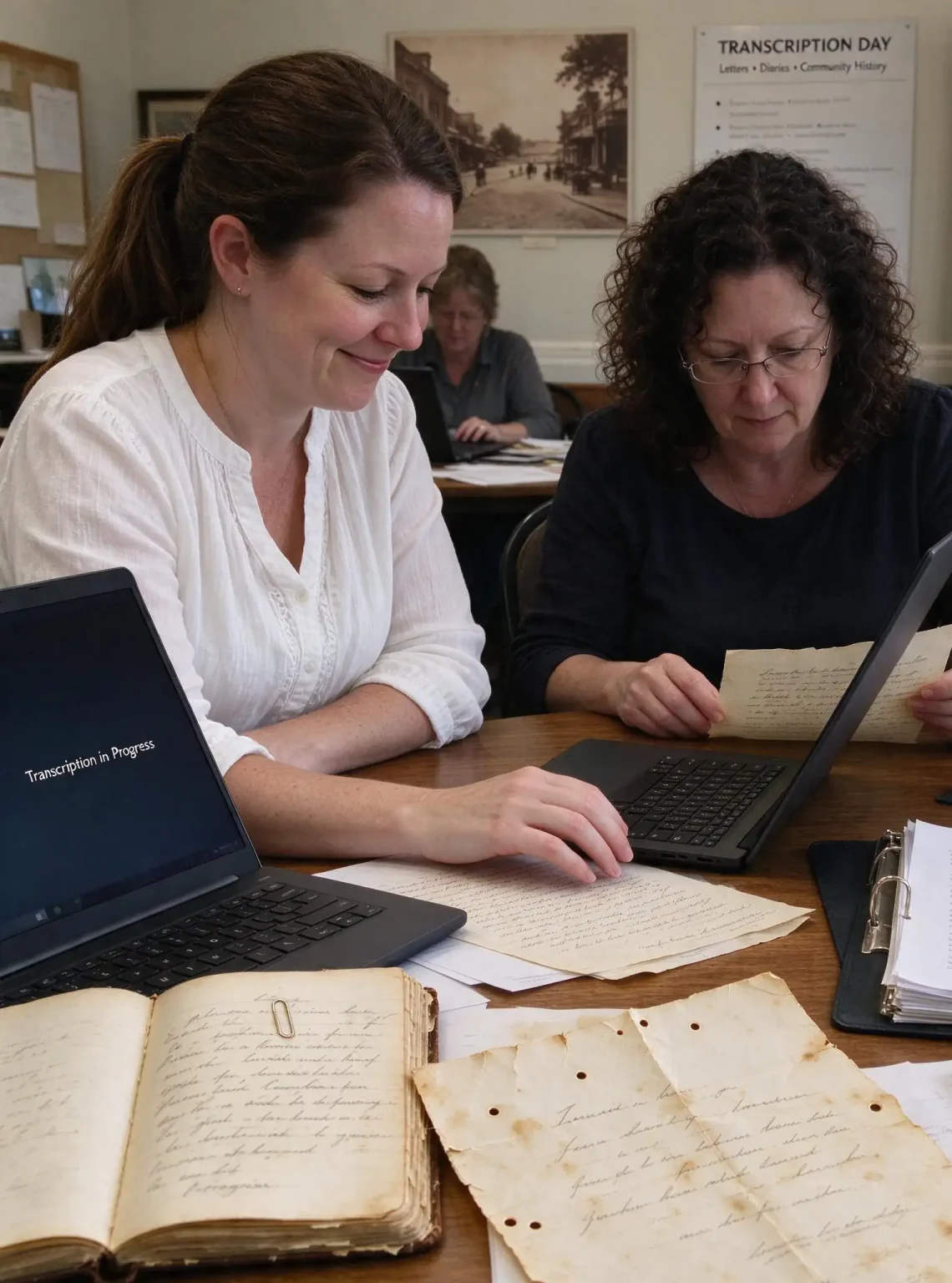
Anyone who can puzzle out old-fashioned cursive now has a way to help preserve Fairhope’s past. The Fairhope Museum of History has started holding Transcription Days, sessions in which members of the public view historic papers and artifacts tied to the city’s story and then help turn handwritten pages into typed text that can be shared online.
The museum held its second Transcription Day on Saturday, Nov. 14. Volunteers at that session worked through letters, notes and diaries dating to Fairhope’s earliest years, roughly 1894 and 1895. More sessions are planned, so residents who have not yet taken part will have additional chances to join in.
Turning Handwriting Into Searchable Text
The goal of the project is simple: make old records easier to use. Once a page is transcribed, the typed version will be posted to the online archive maintained by the Fairhope Single Tax Corporation, which the public can search and read at no cost.
A museum official explained that each transcription can be linked to the scanned image of the original document. That means a reader who struggles to make sense of faded or cramped handwriting, or a researcher who simply needs specific information without combing through every line, can go straight to the typed version and find what they are looking for.
Where the documents come from
Most of the material comes from two sources: the archives and collections of the Fairhope Museum of History itself, and those of the Fairhope Single Tax Corporation. Between the two organizations, the volume of documents and handwritten pages is enormous, far more than a small staff could transcribe on its own in any reasonable amount of time.
Why Volunteers Matter
According to the museum, reading these records is a skill in its own right. The majority of the papers were written in cursive, and every writer formed letters differently. Many of the documents also use words and expressions that have fallen out of everyday speech, and some contain misspellings, so a transcriber often has to work out what the writer actually meant.
The official said the ability improves with practice and that the work takes real effort from everyone who attempts it. Having members of the community volunteer their time, the official said, is a major help to the museum.
A growing practice at archives nationwide
Fairhope’s project reflects a broader trend among libraries, museums and archives. Across the country, institutions large and small have turned to volunteers to help transcribe handwritten collections, from family letters to government records. Typed transcriptions make documents readable for people who never learned cursive, allow text to be searched by keyword, and make historical material more useful to students, genealogists and historians.
Cursive instruction faded from many American classrooms in the early 21st century, though a number of states, including Alabama, have since passed laws calling for it to be taught again. For younger readers in particular, nineteenth-century handwriting can be difficult to decipher without help, which makes transcriptions especially valuable.
What Volunteers Have Uncovered
The pages that have passed through volunteers’ hands offer glimpses of daily life, worry and community in the young settlement on Mobile Bay’s Eastern Shore.
Founding-era letters and diaries
The Nov. 14 session focused on correspondence, notes and diaries from 1894 and 1895, the period when Fairhope was first being established. Records from those years can shed light on how the early colonists organized their community, what they hoped to build and what challenges they faced.
A letter from a yellow fever year
One document already transcribed is a letter written around 1897, during an outbreak of yellow fever. The letter has small perforations, which suggest the mail was fumigated in an effort to stop the disease from spreading.
That detail fits what historians know about the era. Yellow fever struck Gulf Coast port cities repeatedly in the 1800s, and an epidemic in 1897 reached several communities along the coast, including Mobile. At the time, the cause of the disease was not understood. It was not until around 1900 that researchers confirmed mosquitoes carry the virus. Before then, health authorities often tried to disinfect objects that might carry contagion, including letters. Mail was sometimes slit or punched with holes so that fumes or disinfecting agents could reach the paper inside, leaving marks like those on the Fairhope letter.
The diary of the Round House builder
Volunteers have also worked on portions of the personal diary kept by Henry Stuart while he lived in his well-known Round House in Montrose, the small community just north of Fairhope along the bay. The museum is still working on that project. Stuart wrote in the diary every single day, and his handwriting is unusual, which makes the pages particularly slow going.
Stuart’s dome-roofed house, also known as the Hermit Hut and the Round House of Tolstoy Park, has drawn attention of its own this month. On Nov. 10, the structure was moved from the Montrose homesite where it stood for about a century to the City of Fairhope’s Flying Creek Nature Preserve, where it is expected to be opened to the public again. The transcription of Stuart’s diary adds another layer to the story of a figure who remains part of Eastern Shore lore.
A Town Built on an Idea
The records being transcribed are closely tied to one of the most unusual founding stories in Alabama. Fairhope was established in 1894 by a group of settlers, many of whom came from Iowa, who followed the ideas of economist Henry George, who argued that public revenue should come from a single tax on the value of land rather than from taxes on labor or improvements.
To put that idea into practice, the colonists bought land and leased it to residents, collecting rent based on the land’s value and using the money for community needs. The Fairhope Single Tax Corporation, which grew out of that original effort, still holds land in Fairhope today and leases it to residents and businesses, typically under 99-year leases, with lessees paying an annual rent tied to the value of the land. The corporation’s records are a key part of the documentary history of the city, which is why so much of the material in the transcription project comes from its collection.
About the museum
The Fairhope Museum of History, located in downtown Fairhope, collects, preserves and displays material related to the city’s development, from its single tax beginnings to its growth into one of Baldwin County’s best-known communities. Transcription Days give residents a hands-on way to engage with that collection, rather than simply viewing items behind glass.
How the Online Archive Helps
Placing transcriptions online expands who can use the collection. Some of the ways the typed records can help include:
- Researchers can locate names, dates and topics quickly without reading every page of a handwritten original.
- Genealogists tracing families who lived in early Fairhope can look for ancestors in letters and diaries.
- Students and teachers can use primary sources from Alabama history in class without needing to decipher cursive.
- Residents and visitors can explore the town’s past from home, at any time.
- The originals are handled less often once a reliable typed version exists, which can help protect fragile paper.
Getting Involved
Anyone who missed the first two sessions has not missed out for good. The museum intends to hold more Transcription Days in the future. Participants do not need to be professional historians. The work rewards patience, careful reading and a willingness to look up an unfamiliar word or puzzle over a stubborn signature.
Those interested in upcoming dates can contact the Fairhope Museum of History directly or keep an eye on the museum’s announcements. People who would rather explore on their own can visit the Fairhope Single Tax Corporation’s free online archive, where transcriptions will be posted alongside the original documents as the work continues.
Key Facts
- What: Transcription Days at the Fairhope Museum of History
- Most recent session: Saturday, Nov. 14, the second held so far
- Material: Letters, notes, diaries and other records from the museum and the Fairhope Single Tax Corporation
- Highlights: Founding-era papers from about 1894 to 1895, a fumigated letter from a yellow fever outbreak around 1897, and the diary Henry Stuart kept at his Round House in Montrose
- Where results go: The Fairhope Single Tax Corporation’s free online archive
- What’s next: More Transcription Days are planned