Alabama State Government Alabama Port
Port of Mobile Opens Its Docks to Nearly 40 Women Leaders From Across Alabama in New Two-Day Program
The Alabama Port Authority's first Women on the Water program brought nearly 40 legislators, officials and business leaders to Mobile Nov. 12-13 for terminal tours, a Fowl River restoration briefing and a maritime museum visit.
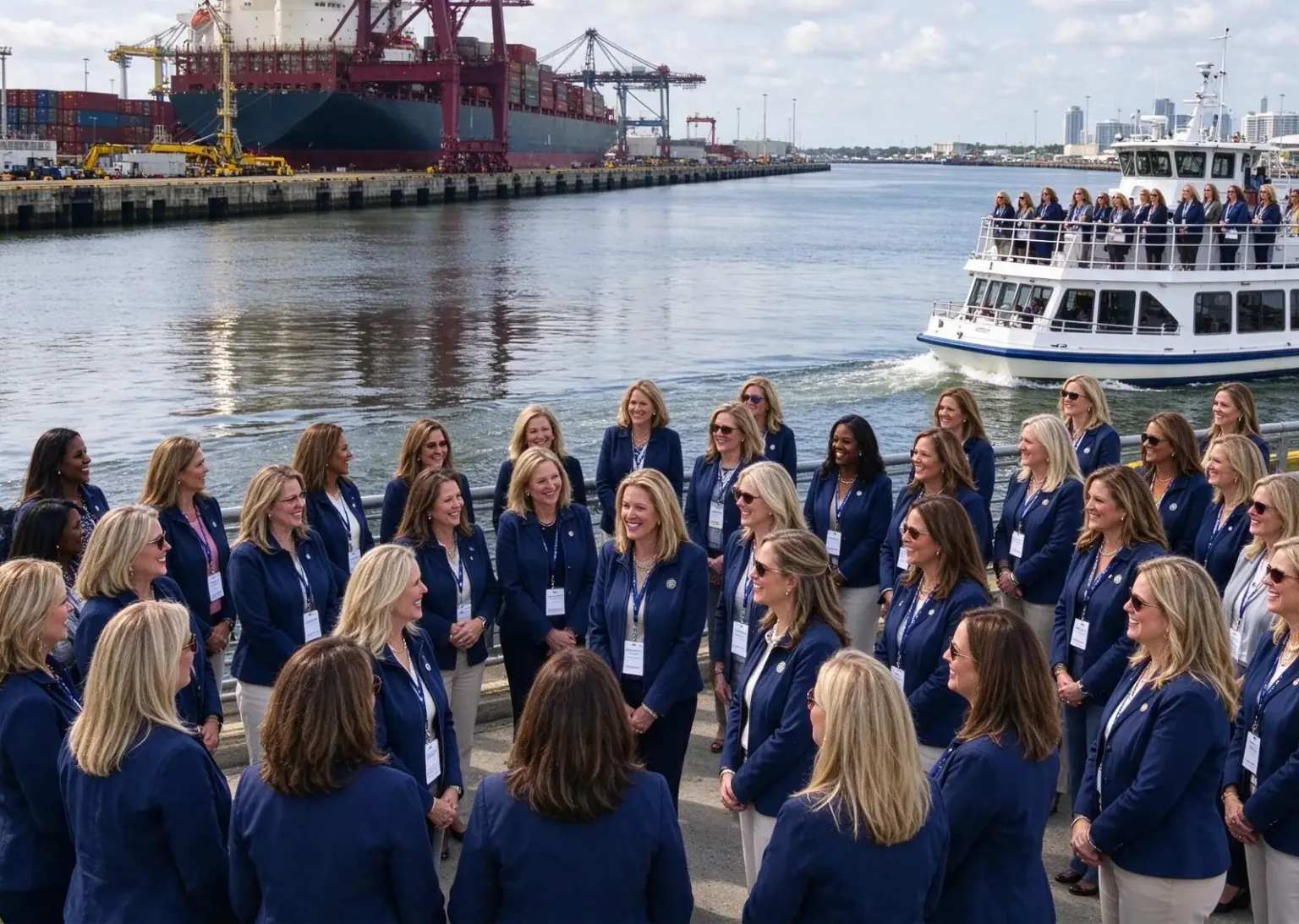
Nearly 40 women in leadership roles from around Alabama spent Nov. 12 and 13 on the docks and waterways of Mobile, taking part in a new two-day program designed to show how the state’s only deepwater seaport touches businesses and communities far beyond the coast.
The Alabama Port Authority hosted the first Women on the Water event, bringing together state legislators, government officials and leaders from business and industry. Over the two days, participants rode past the Port of Mobile’s terminals by boat, heard from port leadership and private maritime companies, and visited sites around Mobile Bay where port activity and coastal restoration intersect.
A Program Built on a Forestry Model
Women on the Water was created by a member of the port authority’s state affairs staff. It follows the pattern of Women in the Woods, a program the same organizer started in 2022 at the Alabama Forestry Association to introduce leaders to the state’s timber industry.
The idea carries over directly: rather than learning about an industry through reports and presentations, participants see the work in person and meet the people who do it. In the port’s version, that meant time on the water and on the docks rather than in the forest.
The port authority’s external affairs team organized the event, and port leadership thanked both the organizer and the team for bringing the program to Mobile, along with the leaders who attended.
Inside the Port’s Operations
The centerpiece of the program was an on-water tour of the Port of Mobile’s terminals, giving participants a view of ships being loaded and unloaded. Port leadership also spoke to the group about the port’s role in the state’s economy.
A port official said reading about the port is very different from watching cargo move from the water, and that leaders who see the operation in person and meet the workers behind it come away with a better grasp of what it takes to keep goods moving and why that matters to the rest of Alabama.
Representatives of Crescent Towing, a tugboat company with a long history at the port, also addressed the group. They discussed how the public port works hand in hand with the private companies that keep it running, including tugboat crews, stevedores, terminal operators and longshoremen.
Who does what on a working waterfront
- Tugboat crews help large vessels maneuver safely through the harbor and into and out of berths, where ships are too big to turn and dock easily under their own power.
- Stevedoring companies organize and manage the loading and unloading of cargo on ships.
- Longshoremen are the dockworkers who physically handle cargo and operate the equipment that moves it between ships and shore.
- Terminal operators run the individual facilities where specific types of cargo, such as containers, bulk goods or steel, are received, stored and transferred.
From Bellingrath to the Estuary
More than 30 of the participants toured Bellingrath Gardens, the historic garden estate on the Fowl River south of Mobile, and then headed out onto the river itself. An official with the Mobile Bay National Estuary Program explained how sediment removed during dredging is being put to beneficial use in local restoration projects, several of them led by the estuary program.
Bellingrath Gardens sits along the Fowl River in the Theodore area of south Mobile County and has been open to the public since the 1930s. The river winds through marsh and residential shoreline before emptying into Mobile Bay, making it a natural setting for a conversation about how coastal habitat is protected and rebuilt.
Dredging is a constant part of life for a port. Shipping channels must be kept at their authorized depths so vessels can travel safely, and the material removed from the channel bottom has to go somewhere. Instead of treating that sediment purely as waste, coastal managers increasingly use it to rebuild marshes, restore eroding shorelines and create habitat for fish and birds.
The Mobile Bay National Estuary Program is part of the federal National Estuary Program, established under the Clean Water Act to protect and restore estuaries of national significance. Its work around coastal Alabama includes watershed planning, habitat restoration and partnerships with local governments, agencies and landowners.
A Stop for Maritime History
The itinerary also included the National Maritime Museum of the Gulf in downtown Mobile. Participants visited the museum’s new Jimmy Buffett: Son of a Son of a Sailor Experience, an exhibit that follows the late singer’s roots in Mobile and his family’s ties to the city’s working waterfront.
The museum, which sits on the downtown waterfront near the port’s terminals and the cruise terminal, presents exhibits on the maritime history of the Gulf Coast, including shipbuilding, navigation and commercial shipping.
The stop connected the modern port to the long maritime heritage of the Port City, where shipping, shipbuilding and seafaring have shaped the local economy and culture for generations.
Why the Port Matters Statewide
Port officials designed the program to show leaders from every part of Alabama how the port supports jobs, industries and communities, including those hundreds of miles from the Gulf.
The numbers behind that message are substantial. Marine cargo activity at the Alabama Port Authority’s public and private terminals supports one of every seven jobs in Alabama. From 2019 through 2025, that activity generated $486.5 billion in total economic value, with an impact reaching all 67 of the state’s counties.
Alabama’s farms, timber producers, mines, steel mills and manufacturers depend on the port to ship their goods to markets around the world, while many companies in the state rely on it to bring in raw materials and parts. That reach is why a program focused on a coastal facility drew participants from across the state.
One participant said most Alabamians probably do not realize how much of the state’s economy flows through the Port of Mobile. She said the work done on the docks creates jobs and opportunities throughout Alabama and helps businesses of all sizes grow and compete, and she thanked the port authority for bringing women leaders together to see it for themselves.
About the Alabama Port Authority
The Alabama Port Authority owns and operates the public terminals at the Port of Mobile, the state’s only deepwater seaport. The port handles a wide mix of cargo, including containers, coal, steel, forest products and other bulk and breakbulk goods, and it connects to the nation’s inland waterway system as well as to major rail lines and highways.
Because the port’s success depends on decisions made in Montgomery and Washington about funding, infrastructure and regulation, programs that bring policymakers to the waterfront are one way the authority builds familiarity with its operations among the people who make those decisions.
Looking Ahead
As Alabama continues to compete for and attract new investment, port leaders see programs like Women on the Water as a way to make sure decision-makers understand how the port fits into the state’s economic picture. The event was billed as the inaugural edition, signaling that the port authority intends it to be the first of more.
Program highlights
- Dates: Nov. 12 and 13, 2026
- Host: Alabama Port Authority
- Attendance: Nearly 40 state legislators, government officials and business and industry leaders
- Stops: An on-water tour of the Port of Mobile’s terminals, Bellingrath Gardens and the Fowl River, and the National Maritime Museum of the Gulf
- Topics: The port’s economic role, partnerships with private maritime companies, and beneficial use of dredged sediment in restoration projects
- Economic impact: One in seven Alabama jobs; $486.5 billion in total economic value from 2019 to 2025; impact in all 67 counties