

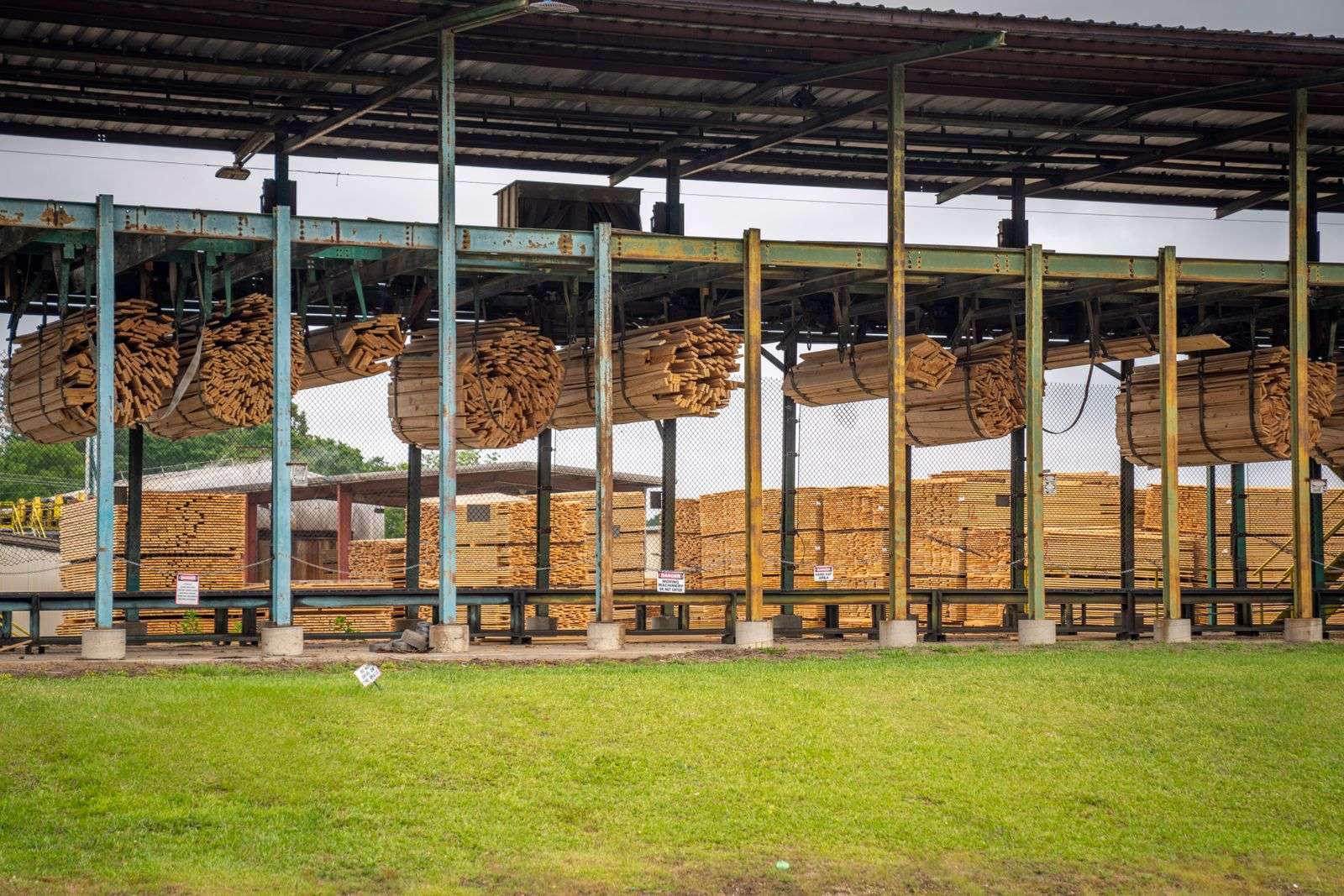
BUCKS, Ala. — A worker was killed Monday morning at a sawmill in north Mobile County after he was caught in a piece of industrial machinery, according to the Turnerville Volunteer Fire Department.
Firefighters said the man was an employee of Canfor, the forest products company that operates the sawmill off U.S. Highway 43 in the Bucks community. His name had not been released as of Monday afternoon.
What we know
- When: The call came in at about 9:20 a.m. Monday, Sept. 28, 2026.
- Where: The Canfor sawmill off Highway 43 in Bucks, in northern Mobile County.
- What happened: A worker became caught in a piece of industrial machinery, according to fire officials.
- Outcome: The worker died.
- Responders: Turnerville Volunteer Fire Department, assisted by Mobile Fire-Rescue’s High Angle Response crews.
High-angle rescue crews called in
Turnerville volunteer firefighters were first on the scene. Officials said Mobile Fire-Rescue’s High Angle Response team was called to assist them. High-angle rescue teams are specially trained and equipped to reach and recover people in elevated, confined or otherwise hard-to-reach places, including inside large industrial equipment, using ropes, rigging and other technical rescue tools.
Fire officials have not said what type of machinery was involved, how the worker became caught or how long the recovery took.
Workplace death investigations
Deaths on the job at private employers in Alabama fall under the jurisdiction of the federal Occupational Safety and Health Administration, since Alabama does not operate its own state OSHA plan for private-sector workers. Federal rules require employers to report a work-related fatality to OSHA within eight hours of learning about it.
OSHA typically opens an inspection after a fatality to determine whether safety standards were violated. Those investigations can take months, and the agency has up to six months to issue citations if it finds violations. Local law enforcement and the county coroner’s or medical examiner’s office also typically play a role in determining the cause and manner of death.
Canfor had not issued a public statement about the incident as of Monday. It was not known whether OSHA had opened an inspection.
The dangers of sawmill work
Sawmills and other wood-products plants are among the more hazardous industrial workplaces. Workers operate around conveyors, saws, chippers, planers, debarkers and other powerful machinery with moving parts that can pull in clothing, hands or entire bodies in an instant.
Federal safety data has long identified “caught-in” or “caught-between” incidents as a leading cause of serious injuries and deaths in industrial settings. Safety experts point to several key protections designed to prevent them:
- Machine guarding: Physical barriers that keep workers’ bodies away from moving parts during normal operation.
- Lockout/tagout: Procedures that require machinery to be shut down and its energy sources locked out before anyone performs maintenance or clears a jam, so it cannot restart unexpectedly.
- Training: Making sure workers understand the hazards of the equipment they operate and the procedures for working around it safely.
- Emergency stops: Easily reachable controls that can halt equipment immediately.
Investigators have not said whether any of these factors played a role in Monday’s death.
Timber’s role in the region
The forest products industry is a major employer across southwest Alabama, where pine forests supply sawmills, paper mills and other plants. Canfor, headquartered in Vancouver, British Columbia, is one of the largest lumber producers in North America and operates a number of sawmills in the U.S. South.
The Bucks community sits along Highway 43 in northern Mobile County, near Mount Vernon and the Mobile River, an area with a long history of industrial and timber operations.
A loss for the community
The death is a heavy blow for the worker’s family, co-workers and the small communities of north Mobile County. Volunteer fire departments such as Turnerville’s are staffed largely by local residents, and first responders often know the people involved in emergencies close to home.
Workplace deaths can also take an emotional toll on co-workers who witnessed or responded to the incident. Many employers offer employee assistance programs with free confidential counseling after traumatic events.
What happens next
Officials are expected to release the worker’s name once his family has been notified. This article will be updated as more information becomes available from fire officials, the company and investigators.