

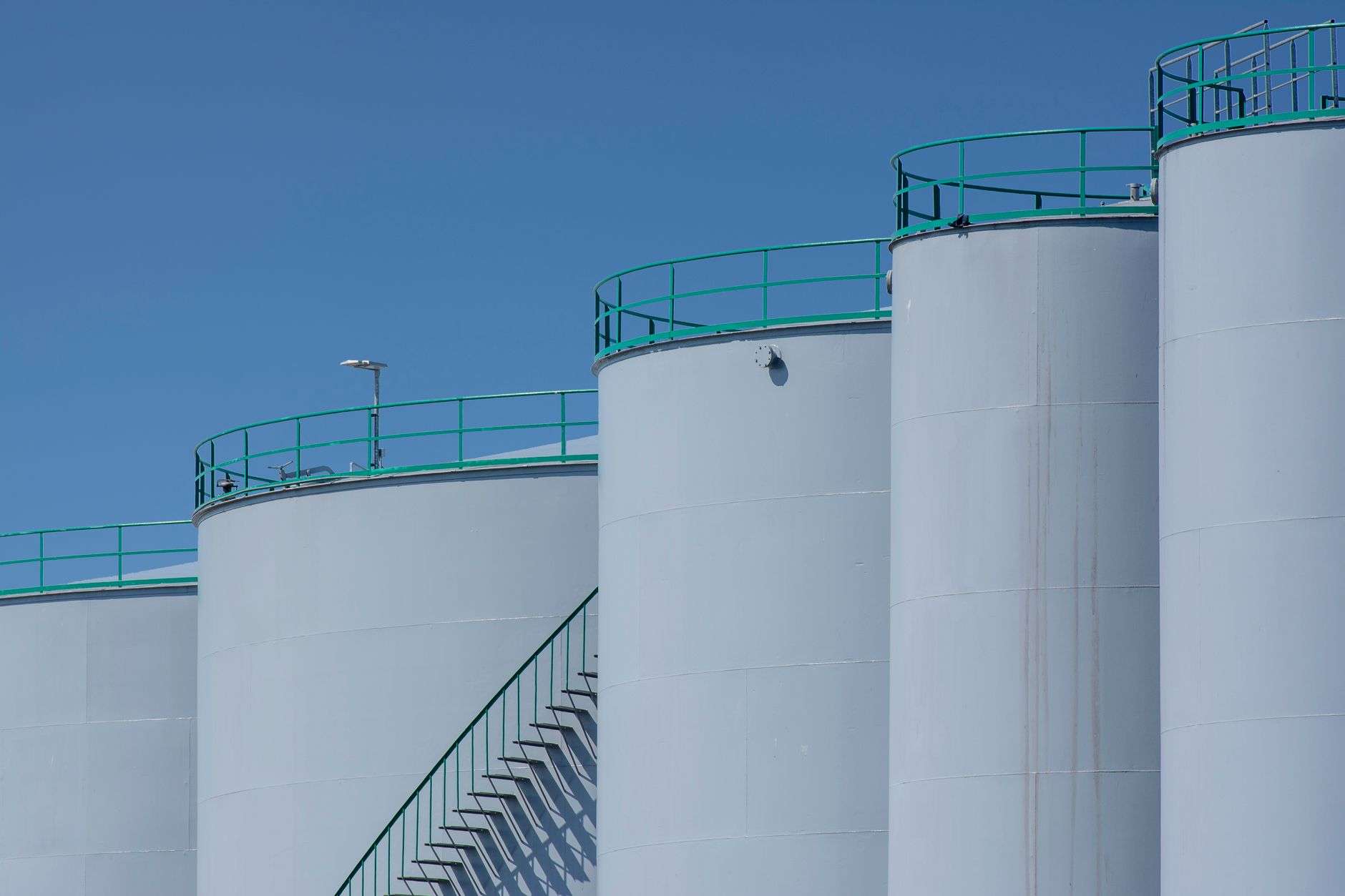
The Mobile Fire-Rescue Department responded to a call for service Monday, Aug. 3, shortly after 2 p.m. at Vertex Energy. The call was in reference to a man suffering a medical emergency while working on a 60-foot tank. Mobile Fire-Rescue, along with the Saraland Fire Department and Vertex personnel, arrived on scene within minutes to assist. MFRD crews were able to reach the individual and lower him to the ground, but he was pronounced deceased at the scene. All other inquiries related to the incident should be directed to Vertex Energy.
The emergency unfolded at an industrial worksite where rescue itself is a technical operation. A worker on a 60-foot tank who suffers a medical emergency cannot simply climb down, and rescuers cannot simply climb up: reaching a man at that height requires aerial apparatus or a rope rescue team, harness work, and a coordinated lowering operation. Mobile Fire-Rescue crews performed exactly that, getting to the individual and bringing him down to the ground, where he was pronounced deceased.
The response drew units from two departments. Mobile Fire-Rescue took the lead in the rescue operation, while the Saraland Fire Department assisted alongside Vertex Energy’s own personnel, who were on scene within minutes of the call. Industrial facilities of this kind maintain their own emergency response capabilities — site teams trained in confined-space and elevated rescue, first-aid equipment staged near work areas and, increasingly, automatic external defibrillators and oxygen kits — and those capabilities begin helping long before a municipal engine arrives.
Working at height in an industrial plant
Tanks of that height define the skyline of every refinery and bulk-liquid terminal on the Gulf Coast, and working on them is a routine part of the industry’s maintenance cycle. Inspectors, painters, welders and mechanics ascend external ladders and scaffolds to check weld seams, replace coatings, service gauges and vents, and perform the inspections that federal safety rules require at scheduled intervals. A man working on a 60-foot tank on an early August afternoon was, in the ordinary course of such a facility, doing work performed daily across the region’s petrochemical corridor.
August conditions on the Gulf Coast add a well-known hazard to that work. Afternoon heat and humidity push heat-stress conditions to their limits for anyone in protective clothing and hard hat on an elevated steel structure, which radiates the sun’s heat from above and below. Industry safety programs treat heat as a serious occupational exposure — mandatory hydration cycles, work-rest rotations and buddy checks — precisely because a medical emergency at elevation is far harder to manage than one on the ground.
Whatever the medical cause, the physics of the rescue are the same. Elevated rescues begin with assessment: rescuers determine whether the worker is responsive, whether he can be secured where he is, and what equipment the descent requires. A rope team or ladder company then reaches the worker, harnesses him to a lowering system, and controls the descent to the ground — a process that, even with everything going smoothly, takes precious minutes and multiple trained hands.
The response system behind the call
The speed described in the account — units arriving within minutes — reflects the density of fire coverage around Mobile’s industrial areas. Mobile Fire-Rescue operates a fleet of ladder trucks and specialized rescue units staged for exactly this kind of call, and the city’s industrial fringe sits close enough to populated stations that response times stay short. Mutual aid agreements extend that coverage across municipal lines, which is how the Saraland Fire Department came into the response alongside MFRD.
Those mutual-aid arrangements are a quiet foundation of Gulf Coast emergency response. A major industrial incident can quickly exceed any single department’s resources — multiple victims, confined spaces, hazardous materials, fire — and the region’s departments train together and pre-plan responses for the facilities inside their overlapping coverage. For a call like a worker down on a tank, the mutual-aid pieces mean a heavier rescue response arrives faster than any one department could assemble alone.
Once the worker reached the ground, the effort shifted from rescue to death investigation and care for those on scene. Pronouncing a worker deceased at an industrial site sets several processes in motion simultaneously: the company secures the work area, medical examiners take jurisdiction over the death, and federal workplace-safety authorities follow the employer’s obligations for reporting and investigating serious workplace fatalities. The fire departments’ role closes with the scene; the employer’s questions and obligations are only beginning.
Vertex Energy and Mobile’s industrial shoreline
Vertex Energy operates in an industrial sector that has shaped Mobile’s economy for a century. The company’s refining and re-refining operations — processing used oil and petroleum feedstocks into usable products — put it among the Gulf Coast’s network of facilities that turn the Port of Mobile’s logistics advantages into industrial production. Plants of this kind cluster along the waterways and rail lines south and north of the city, employing hundreds of workers in jobs that pay wages well above the regional average and that support contractors, truckers and suppliers across the area.
The work is skilled, well-regulated and never risk-free. Refinery and terminal workers labor around heavy equipment, pressurized systems, flammable materials and elevated structures, under a safety framework built by the federal Occupational Safety and Health Administration and layered with company-specific programs. Elevated tank work, confined-space entry and hot work each carry their own permit systems, requiring planning, air monitoring and standby personnel before the first worker climbs. When those systems work, they make dangerous work routine; when a medical emergency happens anyway, as the Aug. 3 call showed, the rescue system takes over.
The afternoon’s events rippled through the workforce in ways that extend beyond one loss. Coworkers who witnessed a medical emergency — or who worked alongside the man, or knew him across shifts — absorb the event as well. Industrial employers respond with employee-assistance resources, critical-incident debriefings and time away for those closest to the loss, recognizing that a fatality on a crew changes the crews around it.
What follows a workplace death
The path after a fatal workplace medical emergency is procedural and careful. The employer reports the death to OSHA within the required window, and federal investigators examine the work being performed, the conditions on the tank, the man’s training and equipment, and the company’s safety records. An autopsy by the medical examiner’s office addresses the medical question — whether a heart event, heat exposure or another cause — which often determines whether the death is treated as a workplace hazard issue at all.
Many such deaths, in fact, are natural cardiac events that would have occurred anywhere; the elevated worksite simply made them harder to survive and harder to reach. Distinguishing between a tragic coincidence and an occupational cause is exactly what the investigation process exists to do, and it protects workers either way: if conditions contributed, the findings force corrections; if they did not, the record shows the employer’s systems worked as designed.
The public account of the Aug. 3 response closed where the fire department’s role ended — with a rescue completed, a worker pronounced deceased at the scene, and further inquiries directed to Vertex Energy. That handoff is standard practice in industrial incidents. The company, as the employer, becomes the keeper of the details that fire departments do not release: the worker’s identity, his employment history and whatever the internal and federal investigations conclude.
The people behind the call
Behind the radio traffic of an industrial rescue call is a collaboration that usually goes unexamined. The Vertex personnel who reached the scene within minutes were the man’s coworkers — the site emergency-response team members who train for these calls on the expectation, mostly honored, that they will never use the training for a coworker. The Saraland and Mobile firefighters who arrived were executing a rescue discipline they rehearse continuously, part of a mutual-aid network that makes the region’s industrial economy possible to insure and to operate.
For the region’s industrial workforce, the account of that Monday afternoon carries a familiar weight. Workers on the Gulf Coast die on the job each year — in falls, in vehicle incidents, in medical emergencies at elevation — and each one is preceded by the same short sequence this report preserves: a call for service, responders arriving within minutes, crews reaching a man 60 feet in the air and lowering him to the ground, and a scene where the best efforts of trained rescuers end in a pronouncement rather than a transport.
The archived account records the essential facts of Aug. 3: the time of the call, the height of the tank, the departments that responded and the outcome at the scene. What it cannot record — the man’s name, his story and the conclusions of the investigations that followed — belongs to his family, his employer and the agencies that took the case from there. His death is preserved here as it was reported: a worker lost during an ordinary afternoon’s work on a tank along Mobile’s industrial shoreline.