Cannon Blast Opens 86th Alabama Deep Sea Fishing Rodeo on Dauphin Island
The 86th Alabama Deep Sea Fishing Rodeo is underway on Dauphin Island, with 3,700 anglers expected and more than $1 million in prizes at stake.
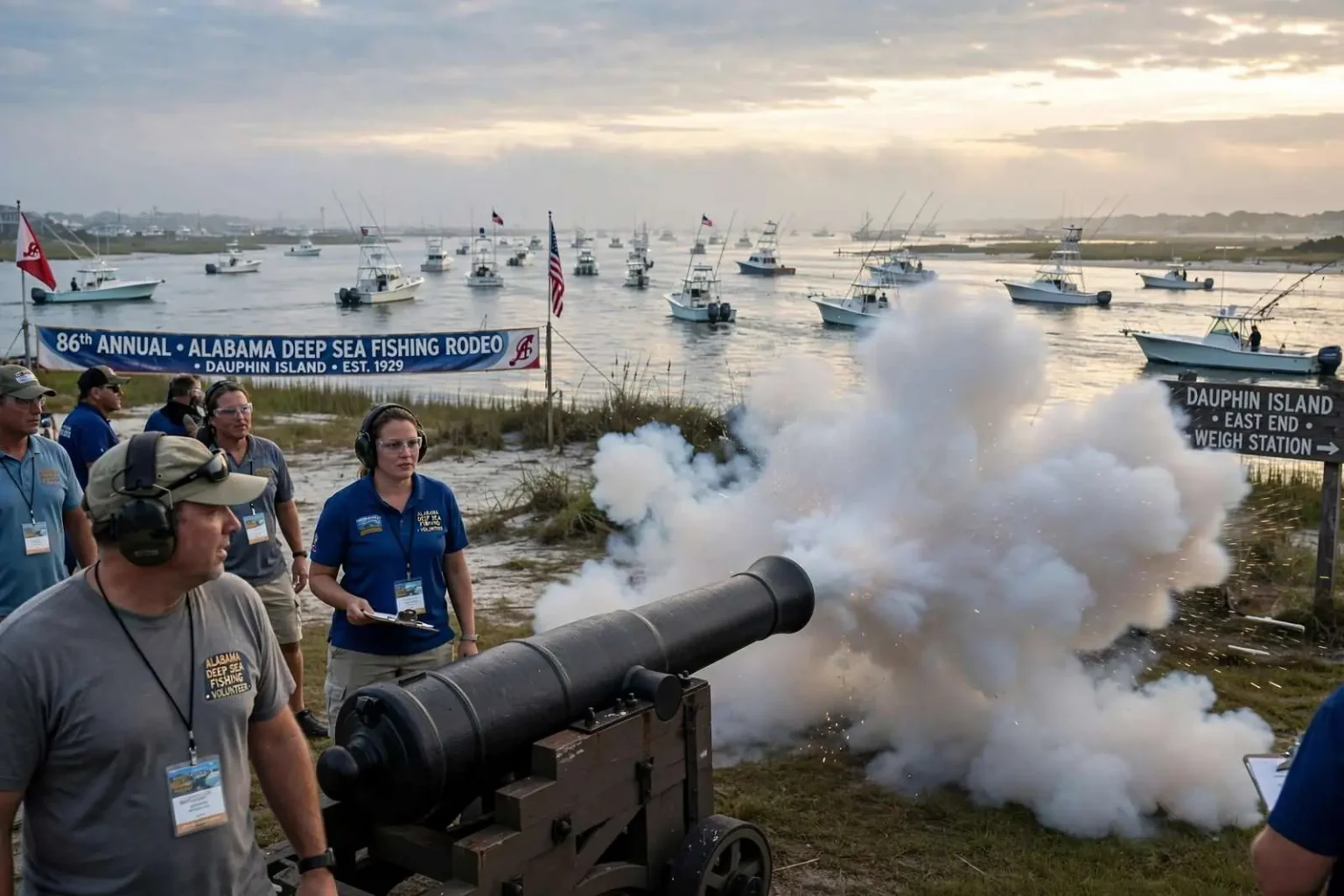
The 86th annual Alabama Deep Sea Fishing Rodeo is underway on Dauphin Island, opening at 5 a.m. Friday with the traditional blast of a cannon. The cannon shot, fired at dawn on the island’s east end, sent an estimated fleet of boats and shore-bound anglers into the Gulf and Mobile Bay for the opening hours of competition. The rodeo runs through the weekend, capping a tradition that has anchored the Alabama coast’s fishing calendar for more than eight decades.
Organizers estimate 3,700 anglers will be on the water over the next three days, competing for the biggest catch and a prize pool valued at more than $1 million. The field draws competitors from across the Gulf Coast and beyond, ranging from families fishing from piers and small boats to seasoned offshore crews running well past the barrier island. Every registered angler fishes under the same rules, with categories spanning inshore and offshore species and prizes decided at the rodeo’s scales on the island.
The rodeo has been recognized as the largest fishing tournament in the world since 2011. That designation, based on the event’s sheer number of participants, is a point of pride for Dauphin Island and for the Alabama Gulf Coast as a whole. It is staged entirely by volunteers, a fact organizers say is the most remarkable part of the operation.
“The amount of effort that goes in with the group of guys, that’s what makes it special to me,” said Cory Quint. “We’re all volunteers that just happen to put together the world’s largest fishing tournament in our spare time.” The all-volunteer model means the rodeo is planned, staffed and run by people who fit the world’s largest fishing tournament around their regular jobs, returning each July to put on an event that dwarfs most professional competitions.
A Dauphin Island tradition
The Alabama Deep Sea Fishing Rodeo is the oldest fishing tournament on the Gulf Coast, with roots stretching back to 1929. Founded as a saltwater angling competition, it has grown from a regional event into an internationally recognized tournament that now marks its 86th year. Generations of Gulf Coast families have made the rodeo an annual ritual, with some competitors tracing their participation back through parents and grandparents.
Dauphin Island itself is central to the event’s character. The barrier island sits at the mouth of Mobile Bay, reachable from the mainland by the Dauphin Island Bridge across the Gordon Persons Pass span, and its laid-back, village-scale atmosphere sets the rodeo apart from tournaments held at big marinas. During rodeo weekend the island swells with anglers, families and spectators, with the weigh station serving as the social center where crowds gather to watch the day’s catches come up the ramp and onto the scales.
The island’s geography also shapes the fishing. Anglers in the rodeo work the waters of Mobile Bay, the Mississippi Sound, the nearshore Gulf and — for the larger boats — the deep water beyond the shelf edge, which lies closer to Alabama’s coast than to many other points on the Gulf. That variety is part of why the tournament’s categories run from small inshore species to the giants of the offshore leaderboard.
What the rodeo means to the coast
A prize pool valued at more than $1 million makes the rodeo one of the richest fishing events anywhere. Rodeo weekend fills the island’s rental houses, restaurants, bait shops and marinas, and businesses from the Eastern Shore to the island depend on the annual surge. For three days, the tournament turns Dauphin Island into the center of the Gulf Coast angling world.
The competition itself follows the rodeo’s long-established format. Anglers weigh their catch at the official scales during posted hours, and leaders change throughout the weekend as fish come in from the bay, the sound and the open Gulf. Spectators can watch the weigh-ins, which has made the scales a favorite stop for visitors who never wet a line but want to see what the boats bring back.
The all-volunteer operation is what makes the scale of the event possible. From the committee members who write the rules and sell tickets to the crews who run the scales, dock operations and grounds, the rodeo depends on hundreds of people who take on the work because of the tradition. Quint’s description of the effort — a group of volunteers putting together the world’s largest fishing tournament in their spare time — captures the spirit that organizers say defines the event.
How the weekend unfolds
With the cannon firing at 5 a.m. Friday, the first hours of the rodeo are a scramble of boat ramps, bait runs and lines in the water across the bay and the Gulf. Fish caught through the day flow to the scales in waves, and by evening the leaderboards begin to take shape. The pattern repeats across the three days of competition, with the final hours Sunday typically deciding the largest prizes as offshore boats time their runs back to the island.
An estimated 3,700 anglers means the tournament’s reach extends far beyond the boats. Pier fishermen, kayak anglers, surf casters and shore-bound competitors all fish the same event, and families treat the rodeo as a weekend outing as much as a contest. The scale of participation is what earned the rodeo its standing as the world’s largest, and organizers say keeping that title is a year-round job for the volunteer committee.
Weather always plays a role in a Gulf Coast tournament. Summer squalls, afternoon thunderstorms and rough offshore conditions can change how far boats run and how many fish come to the scales, and rodeo crews are used to adjusting around the forecast. Competitors balance the risk of pushing offshore against the safer, dependable fishing of the bay and sound, a calculation that often decides who ends up on the leaderboard.
More than a fishing contest
The rodeo’s role on the Alabama coast reaches past the prize money. It is a gathering point for the angling community, a stage where the Gulf’s bounty is on public display and a measure of the health of the fisheries that sustain the coast’s working waterfronts. Scientists and fishery managers have long taken an interest in the event’s weigh data, which offers a broad snapshot of what the Gulf is producing in a given summer.
For Dauphin Island, the 86th edition is another entry in an unbroken lineage that stretches back to 1929. The island has weathered hurricanes, oil spills and the constant churn of coastal change, and the rodeo has returned every year through it all. That continuity is why organizers speak about the event in terms of tradition as much as competition.
As the weekend moves on, the crowds at the scales will grow with it, and by Sunday evening the 86th Alabama Deep Sea Fishing Rodeo will have its champions — decided, as always, by fish on the scales and hours on the water. The cannon that opened the tournament at 5 a.m. Friday will have echoed across another chapter of a Gulf Coast institution that shows no sign of slowing down, run by volunteers who fit the world’s largest fishing tournament into their spare time and wouldn’t have it any other way.
Planning a trip to the scales
For visitors heading to Dauphin Island during the rodeo, a little planning goes a long way. The island’s roads and parking fill quickly on rodeo weekends, and the bridge is the single route on and off the island, so arriving early or staying overnight makes the trip easier. Sunscreen, water and patience with the crowds are standard equipment for anyone standing at the scales through a July afternoon.
The weigh-in area is family friendly, and part of the rodeo’s enduring appeal is that it gives young anglers a look at the fish they might someday chase. Children watching a blue marlin or a giant tuna come across the scales tend to remember it, and plenty of longtime competitors trace their start in the sport to exactly that kind of rodeo weekend as a kid. The event’s mix of serious competition and seaside carnival atmosphere is hard to find anywhere else.
The volunteers behind the curtain
Putting on a tournament of this size without a professional staff requires year-round work from the rodeo’s committee. Rules are reviewed and updated, sponsors are lined up, merchandise is ordered and the logistics of scales, docks, security and parking are mapped out months in advance. During the event itself, volunteers work long shifts in the July heat, from the dock crews handling fish to the staff keeping the leaderboards current for the crowds.
Quint’s point about the effort — that the amount of work the group puts in is what makes the event special — reflects a truth common to the Gulf Coast’s biggest traditions. The rodeo has no corporate owner collecting the gate; it is a community institution that returns its energy to the island and the angling public. That structure is a large part of why the tournament has lasted 86 years while other events have come and gone.
The 3,700 anglers expected this weekend are, in a sense, the easiest part of the equation. Boats, bait and weather are variables every fishing tournament manages; the rodeo’s distinction is that it manages them entirely through volunteer hands. From the 5 a.m. cannon Friday to the final fish on the scales Sunday, the world’s largest fishing tournament runs on the Gulf Coast’s oldest currency — neighbors showing up to do the work.