After 38 Years, Mobiles Christmas Town Closes Its Doors for Good
Robert Moore and Larry Heard are retiring and closing Christmas Town, the Mobile shop that sold holiday decor year-round for 38 years.
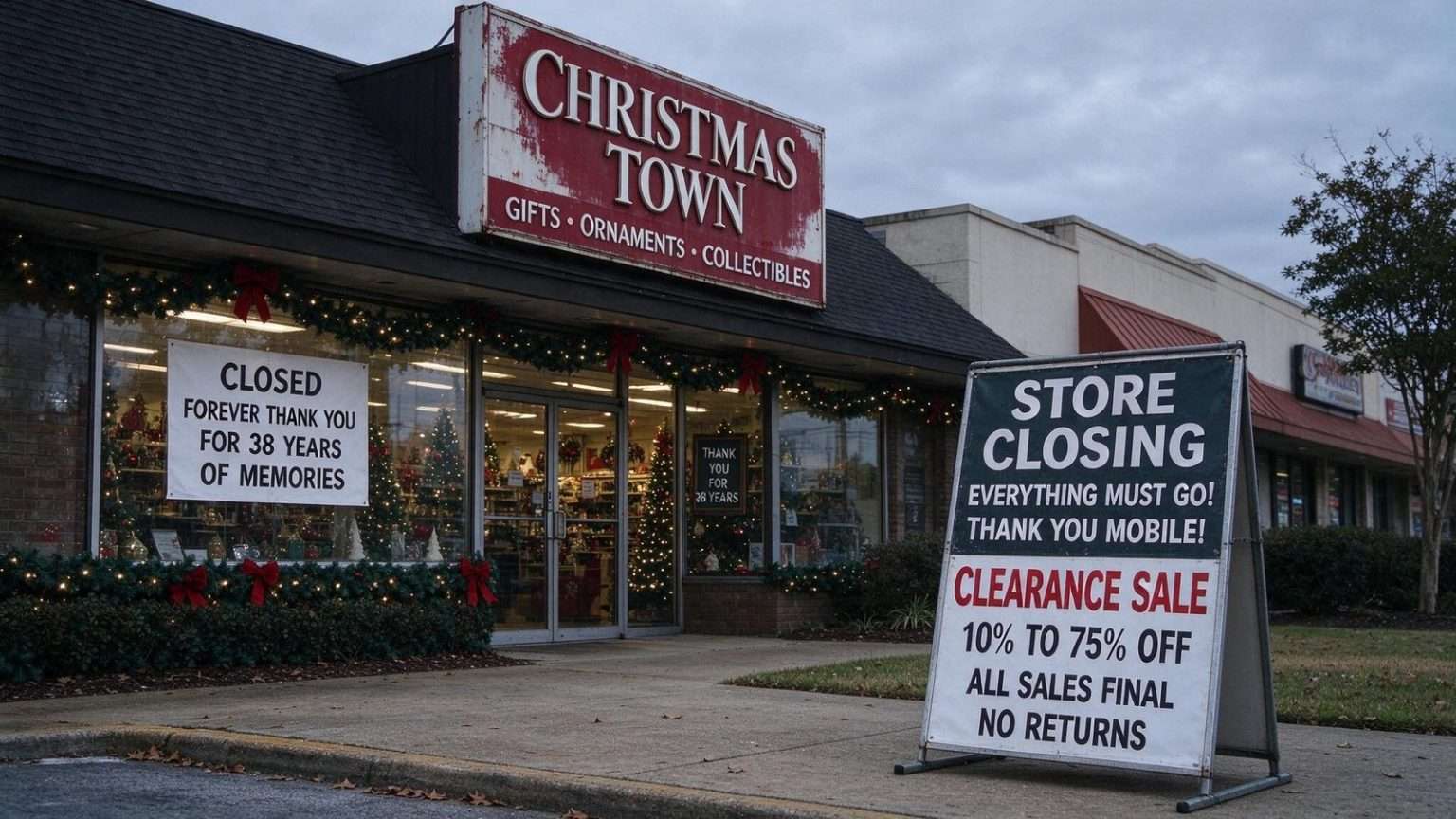
MOBILE, Ala. — For almost four decades, a shop on Halls Mill Road kept the holiday spirit alive every single day of the year. Now, owner Robert Moore and longtime general manager Larry Heard are retiring, closing the doors of Christmas Town for good after 38 years in business.
The closure marks the end of one of Mobile’s most distinctive retail institutions — a store where carolers played over the speakers in July, model trains circled through miniature villages beside shelves of ornaments, and shoppers came to find the Christmas they remembered from childhood at any point on the calendar.
From flowers to a nursery to a holiday landmark
Moore first opened the location in October 1976 as Floral Gardens, a nursery and florist shop built on the site of a former trailer park. His plans changed after Hurricane Frederic tore through the area in September 1979 and destroyed the greenhouses.
Frederic remains one of the defining disasters in modern Mobile history, a Category 3 storm that came ashore west of the city and leveled buildings, stripped trees and wrecked greenhouses across the area. Rather than rebuild the outdoor operation, Moore shifted focus to the indoor retail side of the business, selling gift items under a new name, Robert Moore and Co. The pivot turned a storm’s destruction into the seed of something unexpected.
Just a month after the storm, Larry Heard walked in and asked for a job, telling Moore he could sell ice to Eskimos. Moore decided to take a chance on him, and the two ended up working side by side for the next 35 years, building what Moore has jokingly called a partnership forged by two hurricanes that year. The offhand sales pitch proved to be the start of one of the longest retail partnerships on the Louisiana Street corridor — a working relationship that outlasted recessions, storms and the steady transformation of the neighborhoods around Halls Mill Road.
The turning point toward becoming a full-time Christmas destination came after the pair decorated the store for a couple of holiday seasons and decided to simply leave the decorations up year-round. From there, the concept grew steadily, eventually filling the shop with model trains running through miniature villages, nonstop holiday music, and ornaments available for purchase any month of the year.
A store built on year-round Christmas
The idea of a permanent Christmas shop was a gamble when Moore and Heard committed to it. Retail wisdom held that holiday merchandise belonged to a narrow season between Thanksgiving and Christmas Eve, and that selling tinsel in June was a way to lose money. Instead, the shop found an audience precisely because it refused to follow the calendar.
Collectors made the store a regular stop, returning for pieces to round out displays at home. Families built traditions around visits, treating a trip to Halls Mill Road as the unofficial start of the season regardless of when it fell. And the store’s sheer strangeness — a full-immersion Christmas environment in a south Alabama summer — turned it into a destination in the truest sense: people came because there was nowhere else like it.
Billboards along Interstate 10 and Interstate 65 helped draw shoppers from well outside Mobile who wanted to see the shop for themselves, and the store became known for rare finds, including one-of-a-kind porcelain collectibles from noted makers. Travelers steered off the interstate highways on the strength of a billboard, and word of mouth carried the rest — the kind of organic reputation that small shops spend marketing budgets chasing and rarely find.
The billboards became part of the store’s story in their own right. Motorists along the Gulf Coast’s busiest corridors grew used to seeing the signs advertise a Christmas shop open every day of the year, a claim odd enough to be memorable. For generations of travelers heading to the beach, spotting the sign became its own small tradition.
Why the doors are closing
Moore said health concerns and his age ultimately factored into the decision to close rather than push toward a 40-year milestone. The choice to stop short of the round number reflected a practical reckoning that accompanies every long-running small business: the work of a specialty retail shop is physical and constant, and the two men who built it had carried it longer than most careers last.
The shop closed briefly last week so staff could prepare for a clearance sale, with signage and pricing handled by an outside firm that specializes in retail closeout events. The sale is expected to run for as long as merchandise remains on the shelves, with discounts ranging from 10 to 75 percent off and prize incentives, including a vacation trip, a gift certificate, and electronics, offered to top spenders.
Closeout firms operate by taking over the markdown schedule from the first day, cutting prices in stages as inventory thins, which means shoppers who wait for the deepest discounts often find the best merchandise already gone. For regulars of the store, the arithmetic of the sale carried an added weight: every purchase came with the knowledge that the shelves would not be restocked.
The inventory being sold off represented decades of accumulation. Beyond the ornaments and gift items, longtime shoppers knew the store for its collection of rare porcelain pieces from noted makers — the kind of inventory that once anchored a collector trade stretching across the Gulf Coast. Closeout sales of stores like this one tend to draw two crowds: bargain hunters looking for discounts and loyal customers looking for a last piece of the place to take home.
A community responds
News of the closure spread quickly once word got out, with longtime customers sharing memories on the store’s social media page, from annual Thanksgiving trips to pick out ornaments to visits from family who return to Mobile from overseas each summer specifically to stop by the shop.
The tributes followed a pattern familiar to any city that has lost a beloved independent store. Shoppers did not simply describe merchandise; they described rituals — children brought to see the trains, grandparents buying a first ornament for a new grandchild, visits timed around holidays and homecomings. Institutions like Christmas Town accumulate that kind of loyalty precisely because they stay the same while everything around them changes.
For Moore, the outpouring reflects what the store came to mean to generations of local families who built it into their own holiday traditions. A shop that opened as a nursery before many of its regulars were born had become, by the end, part of the calendar of households across Mobile and beyond.
The end of an era on Halls Mill Road
The store’s 38-year run spanned an enormous shift in American retail. When Moore opened Floral Gardens in 1976, specialty shops along commercial corridors like Halls Mill Road anchored neighborhood commerce, and a distinctive store could build a following that stretched across a region. The decades since brought malls, big-box chains and finally internet retailers, each wave reshaping what small stores could survive on. Christmas Town endured through all of it by offering something none of the chains could: a place that was itself the destination.
The end also closes a small chapter of Gulf Coast advertising history. The billboards that pointed interstate travelers toward the shop were fixtures of the drive to the beaches for so long that their disappearance will register with motorists who never stopped in but knew the signs by heart. Few retailers can claim that their marketing became a regional landmark in its own right.
Its closing removes one of the few truly one-of-a-kind retail experiences left in the area. The building on Halls Mill Road will go on to whatever use follows, but the trains, the music and the shelves of ornaments that defined the space for nearly four decades will not be replicated.
Though bittersweet, Moore said he and Heard feel at peace with the decision, closing a business that became a fixture of the Mobile holiday season for nearly four decades. The two men who started as an owner with flattened greenhouses and a job applicant promising to sell ice to Eskimos will step away having built something the storm never touched: a place the city thought of whenever Christmas came up, in any month of the year.
For shoppers, the clearance sale offers a last chance to walk the aisles and carry a piece of the store home. For Mobile, the closing is a reminder that the landmarks people count on — the shops, diners and institutions that give a city its texture — are kept alive one generation at a time, and that when the founders step away, a chapter ends with them.