Mobile Christian Seniors Reflect on Final First Day of School
Mobile Christian School seniors share what they're looking forward to, and dreading, as they begin their final year of high school.
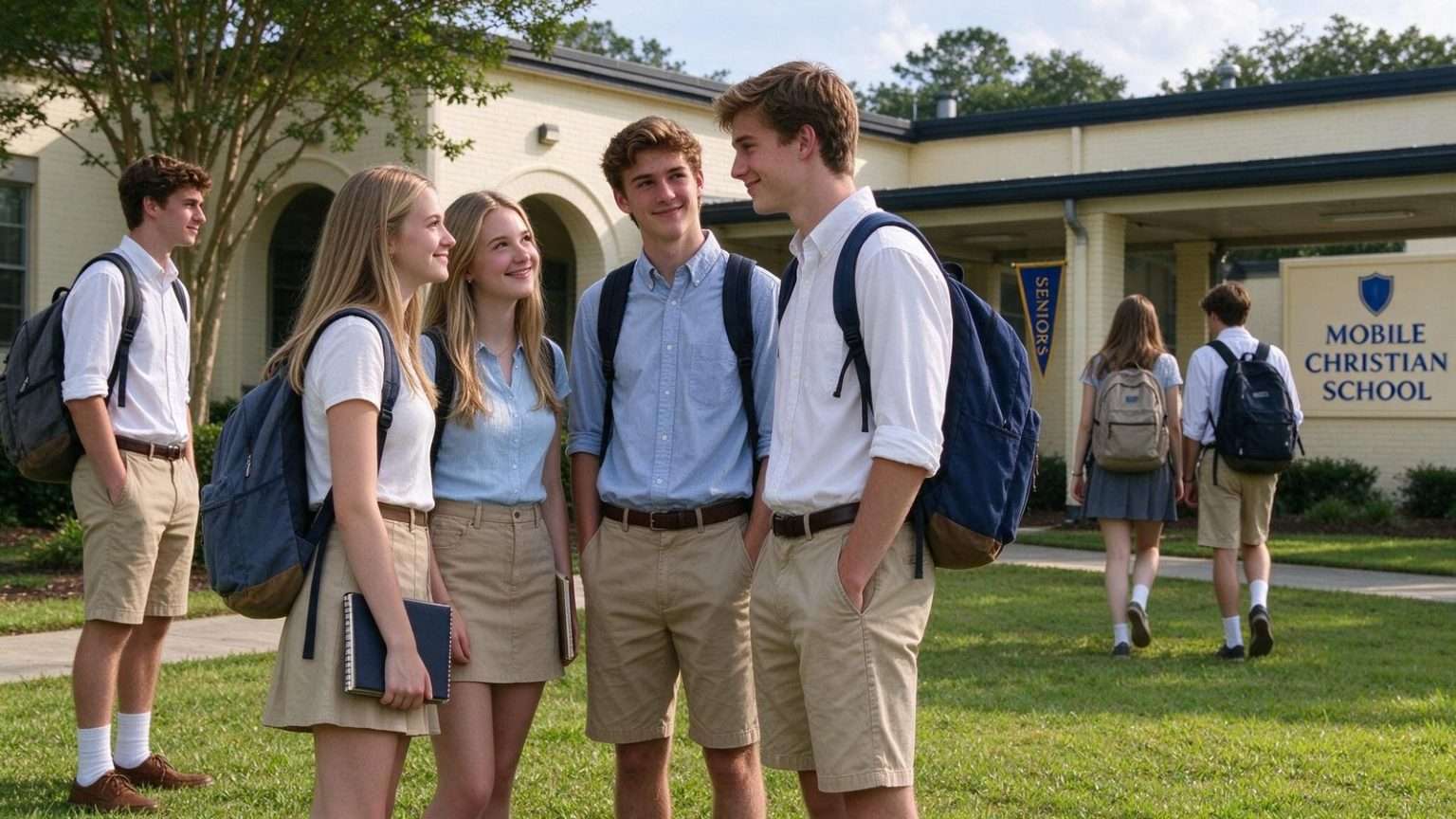
For the roughly 50 seniors at Mobile Christian School in west Mobile, this year’s first day carried a different weight than the three that came before it. As the Class of 2015 settled into homeroom, several students paused to reflect on what it means to begin the last chapter of their high school years, from the excitement of pep rallies to the anxiety of college applications. The first-day mood on campus mixed the familiar rhythms of any August start with the awareness that, for this class, every school event this year would be the last of its kind.
Mobile Christian, which serves roughly 680 students from early childhood through twelfth grade, has grown its academic offerings in recent years, including a dual-enrollment partnership with Faulkner University that allows students in grades 10 through 12 to earn college credit in history and English while still completing high school coursework. Some students can rack up as much as 18 hours of transferable college credit before graduation, a head start that can shave a semester or more off a college career and trim tuition bills in the process.
For a school of Mobile Christian’s size, offering college-level coursework on its own campus also helps it compete for students against larger public high schools with extensive advanced placement catalogs. Administrators have framed the partnership as part of a steady build-out of academic programs, pairing college credit opportunities with the small class sizes and faith-based instruction that have historically defined the school’s appeal to Mobile-area families.
Anticipation, with a side of nerves
Several seniors interviewed as the year began described a mix of anticipation and nerves. For some, the appeal of finally being the oldest students on campus, leading pep rallies and setting the tone for underclassmen, ranked among the most exciting parts of senior year. The senior class sets the emotional temperature at a school of this size, and the incoming class knows it.
Others pointed to traditions like the senior class trip, often to Orlando’s theme parks, and the school’s beloved “senior drive-through,” in which graduating students parade personal vehicles across campus on the final day of school while the rest of the student body watches and cheers. The drive-through has become one of the school’s signature send-offs, a rolling farewell that younger students anticipate for years before their own turn comes.
Not every part of the year is something students are looking forward to, however. College applications loomed large as a source of stress for many of the seniors, along with the pressure of choosing a major and a school. For students at a faith-based school where class sizes are small and teachers know every senior by name, the stakes of those decisions feel personal, and counselors spend much of the fall shepherding applications and recommendation letters toward deadlines.
Advanced coursework, including AP calculus, was cited as a particular source of dread for at least one student balancing a heavy academic course load alongside extracurricular commitments. The combination of a senior year schedule stacked with college-level classes, application season, and leadership obligations is a familiar formula for burnout, and teachers at small schools often watch for the signs as the year progresses.
Life outside the classroom
Extracurricular involvement among the group ran the gamut from National Honor Society and Mu Alpha Theta math club to cross country, track, basketball and yearbook staff. The breadth of participation is typical of a private school campus, where the same students frequently populate multiple rosters and every team, club, and publication depends on upperclassmen to carry its load.
Several students held leadership roles in student government or class offices, while others found their niche photographing the yearbook or organizing Key Club service projects. Service organizations such as the Key Club, affiliated with the Kiwanis family, give students a structure for volunteering in the Mobile community, from food banks to campus cleanup days, and the hours accumulate toward requirements many colleges now look for in applicants.
Activities like these also feed the school’s tight-knit culture. In a student body of a few hundred, a basketball player is likely also a yearbook photographer, and a National Honor Society officer may share a homeroom with the entire student government. The seniors said those overlapping circles are part of what makes a final year at a small school feel like the end of something genuinely collective.
Athletics occupy a central place in that shared life, as they do at private schools across the Mobile area. Cross country and track programs draw runners who compete across south Alabama through the fall and spring, while basketball season gives the campus a weekly gathering point through the winter. Senior nights — the ceremonies that honor the class’s athletes and managers at their final home events — will dot the calendar from season to season, each one a reminder that the clock on this class’s run is winding down.
Plans after graduation
College plans varied widely across the class. Some students hoped to stay relatively close to home, eyeing regional schools in Alabama and Louisiana, while others already had their sights set on Faulkner University in Montgomery, a school with deep family ties for several of the seniors whose parents or older siblings had attended. Faulkner’s Christian identity gives it particular resonance for families at a school like Mobile Christian, where religious values are part of the daily curriculum, and the existing dual-enrollment relationship gives prospective Faulkner students a preview of campus expectations.
Prospective majors ranged from political science and history to computer science and the physical sciences, with at least one student expressing interest in eventually becoming a teacher and coach. That latter ambition has a long lineage at schools across Alabama, where generations of graduates have returned to the classroom and the field, sometimes at their own alma maters, to run programs and teach the next wave of students.
The range of intended fields mirrors the state’s own employment picture, which has seen growing demand in computer science and health sciences even as education, law, and public service remain steady draws for Mobile-area graduates. Whatever the destination, the seniors agreed that the dual-enrollment credits some of them will carry out the door give every plan a small head start.
Advice for the freshmen
Asked what advice they would offer incoming freshmen, the seniors were consistent on one point above all others: don’t procrastinate. Several urged younger students to stay on top of assignments, learn their class schedules early, and not be afraid to join clubs or try out for a team, arguing that involvement outside the classroom often shapes the high school experience as much as academics do.
The counsel carries the weight of experience. Students who fall behind early in high school can find their grade point averages — and their college options — constrained long before senior year arrives, and the seniors said the best adjustments they made came from finding their groups and activities in the first weeks rather than the last. They also recommended getting to know teachers right away, noting that at a school this size the faculty can tell quickly when a student is struggling and will step in before small problems grow into transcript problems.
Teachers and administrators at small Christian schools often make the same pitch, but the seniors’ version lands differently with younger students. The message comes from the classmates they sit beside every day, and it will be repeated at pep rallies, in the hallways, and on the practice field throughout the year.
The year ahead
As the school year unfolds, the Class of 2015 will spend the coming months balancing college applications, standardized tests, and a full slate of extracurricular activities before their own turn comes to drive through campus one final time next spring. Between now and then come the milestone weeks every senior class measures its year by — homecoming, the last basketball season, the final exams, the senior trip to Orlando, and graduation rehearsal.
For the school, the class’s departure will mark another turn in a student body of roughly 680, where each graduating class is both a group of individuals and the caretaker of traditions the next class inherits. The pep rally leadership, the yearbook spreads, and the student government offices they leave behind will pass to juniors who spent this year watching how the Class of 2015 handled the role.
The seniors, for their part, say the final first day put the year in perspective. There are applications to finish and an AP calculus exam to survive, but also a drive-through to anticipate, and the knowledge that when it comes, the whole school will line the route to cheer them out the gate and into whatever comes next.