Citronelle Teen Reported Missing Near Robert Walker Road Is Located
Citronelle police say 16-year-old Jamie Ott, reported missing June 22 off Robert Walker Road, has been located.
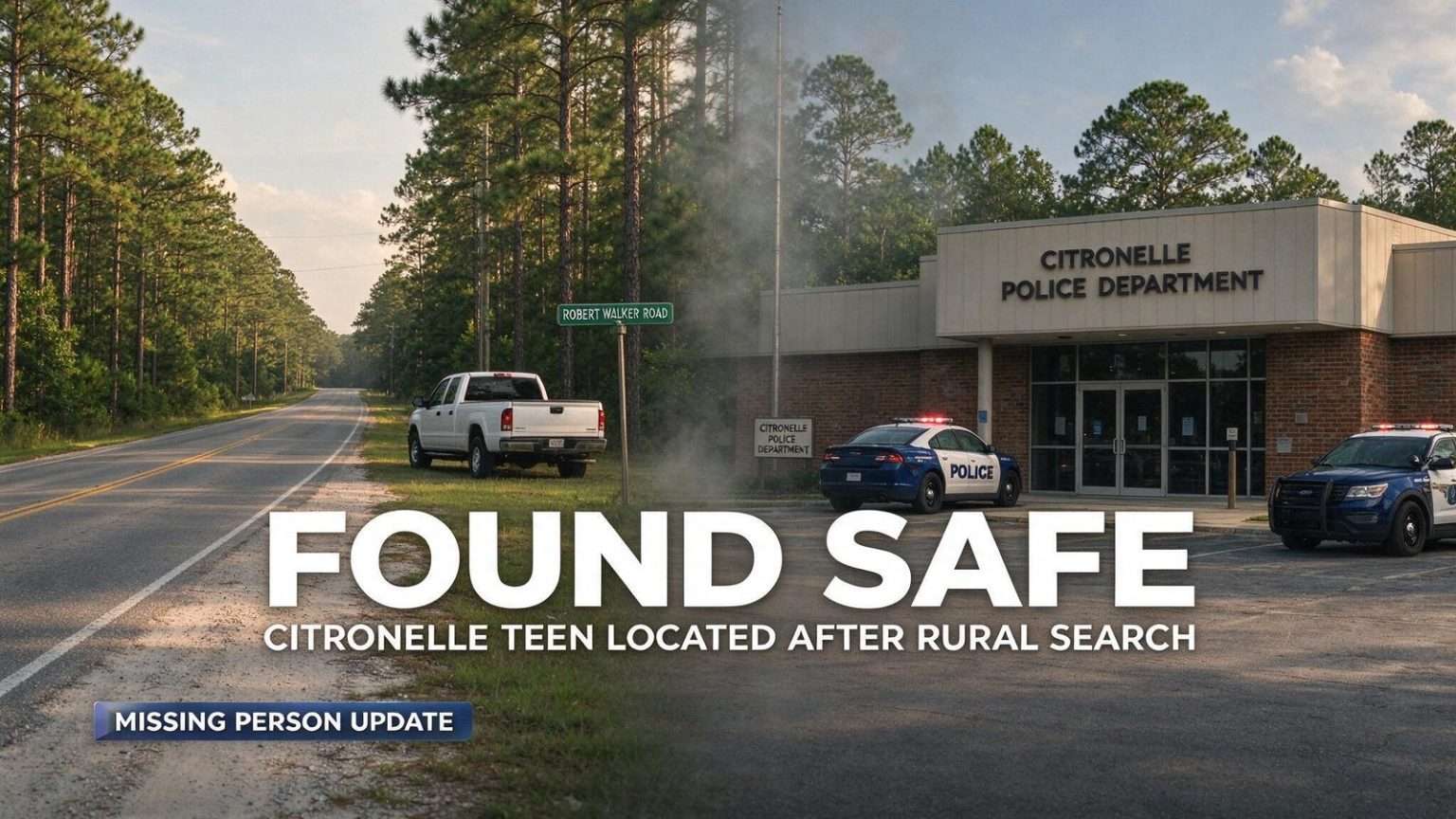
A Citronelle teenager who had been reported missing has been located, according to the Citronelle Police Department, closing out a search that began after the 16-year-old left an area off Robert Walker Road in late June.
In an update, police officials said the missing juvenile — identified as 16-year-old Jamie Ott — has been found safe. The department thanked the public for its assistance, a nod to the role that tips, shared social media posts, and watchful residents play in cases like this one.
How the case began
Ott was reported missing after leaving an area off Robert Walker Road on June 22, in the rolling pine country at the northern edge of Mobile County. When she failed to return and could not be located, the report to police set in motion the standard sequence that follows a missing juvenile case in a small Alabama city — an initial investigation, interviews with family and friends, a canvass of the areas where she was known to go, and a public appeal for information.
Authorities described Ott as 5-foot-7 and about 230 pounds, with hazel eyes and brown curly hair, and said she was last seen wearing a blue long-sleeve shirt and white shorts. Those details — physical description and clothing — form the core of any missing person bulletin, the information officers rely on when a possible sighting is called in and the public relies on when it shares the case online.
Police said she may have been traveling in a white pickup truck, though her direction of travel was unknown. That uncertainty — a vehicle, but no route — widened the search area from a single rural road to essentially anywhere a truck could carry her, and it is one of the reasons small police departments lean so heavily on regional cooperation and public alerts.
She had been entered into the National Crime Information Center as a missing person, the step that turns a local case into a national one. From the moment of that entry, any law enforcement officer in the country who ran a check on Ott — during a traffic stop, a welfare check, or any other encounter — would see that she was a missing juvenile and would know to contact the Citronelle Police Department.
Citronelle and its police department
Citronelle sits in the far northern reaches of Mobile County, a city of roughly 4,000 people about 40 miles north of downtown Mobile, surrounded by the forests and rural land that give the area its character. Its police department is a small agency, the kind that handles the full range of calls in a compact city — traffic, disputes, burglaries — without the specialized units that larger departments maintain.
Robert Walker Road runs through the rural outskirts of the Citronelle area, where properties are large, neighbors are spread out, and a person on foot or in a vehicle can pass out of sight quickly. A missing person case that begins in that geography covers ground differently than one in an urban neighborhood: there are fewer cameras, fewer passers-by, and fewer of the casual witnesses that generate tips in a city.
Small departments compensate with the tools available to every agency in the country. The NCIC entry is the first; the second is publicity, through local media and social media, which in recent years has become the most powerful force multiplier a small department has. A shared post reaches thousands of people within hours, and the tips that follow — a sighting, a recalled detail, a name — often resolve the case faster than any canvass could.
The June timing of the disappearance added urgency to the search in ways familiar to anyone who works these cases in south Alabama. A teenager out in late June faces the region’s summer heat, afternoon thunderstorms, and long rural distances between homes and businesses, and searchers weigh all of it — hydration, exposure, and the odds of a person on foot covering ground in 90-degree weather. When a possible vehicle enters the picture, as it did here, those calculations change, but the first days of any rural missing person search carry a clock that investigators take seriously.
How missing juvenile cases work
The handling of a missing juvenile differs in important ways from a missing adult case, and the differences worked in Ott’s favor. Police do not wait a set period before taking a juvenile report — the idea that a child must be missing 24 or 48 hours before police act is a myth that agencies work hard to debunk, because the first hours matter most. A report of a missing 16-year-old is treated as a priority from the moment it comes in.
Once the report is taken, officers gather the details that make recovery possible: a physical description, clothing, last known location, the people she was with, her phone activity if available, and any vehicle involved. The NCIC entry follows, and with it the possibility that a traffic stop hundreds of miles away brings the case to an end.
Agencies also coordinate regionally. A teen missing from rural north Mobile County could surface in Mobile, in Washington County, or across the state line, and Alabama’s law enforcement network moves information between departments through the NCIC system and direct communication between investigators. The Citronelle department’s request for public assistance extended that network to everyone who saw the case online.
Public appeals in missing juvenile cases are built on specificity, which is why the bulletins read the way they do — exact height and weight, eye and hair color, clothing, and the possible vehicle. Every precise detail multiplies the chance that someone recognizes the person described, and the description of a white pickup truck gave the public something concrete to watch for in a way that a vague account never would.
The role of the public
The department’s thanks to the public after Ott was found safe reflected the reality of small-agency policing: in a community the size of Citronelle, the police are outnumbered by the residents a thousand to one, and a successful missing person case is almost always a collaboration between the two.
Residents who share a missing person bulletin, watch for the described vehicle, and call in sightings perform the work that no police department can perform alone. In rural areas, where a stranger in a passing truck might be noticed by a property owner long before any officer would pass the same spot, that citizen surveillance can be the difference between a case that resolves in days and one that lingers for weeks.
The balance police ask of the public is a familiar one: watch and report, but don’t approach. A missing teenager sighted by a citizen is a matter for officers, both for the safety of the teen and for the integrity of the investigation, and agencies consistently pair their bulletins with that instruction.
Found safe — and what that means
When police officials announced that Ott had been found safe, the announcement marked the outcome every missing person case hopes for. “Found safe” is the standard phrasing agencies use to close the loop with the public — it tells the community that the teen has been located and is out of danger, without exposing the details of where she was found, why she left, or what the weeks between June 22 and her recovery involved.
Those details are usually kept private, and deliberately so. Juvenile cases are confidential by design: the young person’s identity, circumstances, and any issues underlying the disappearance are matters for family, investigators, and where necessary the juvenile court, not the public record. A department’s public statement in a resolved case typically confirms only the outcome — located, safe — and closes the appeal.
That confidentiality serves the teen’s recovery as much as her privacy. Teenagers who go missing — whether they left willingly, were lured away, or became lost — reenter a world that will remember the bulletin with their photo, and the less public attention follows the resolution, the better the chance of a normal return to school and daily life.
For the family, the resolution ends an ordeal that few experiences match — the days of not knowing, the phone calls, the flyers and posts and waiting. Police departments that handle these cases describe the family’s role as central to the search, providing the details about habits, friends, and movements that officers turn into leads.
A reminder for north Mobile County
The case’s resolution carries a quiet lesson for the communities around Citronelle: the system worked as it should. A report was taken promptly, the teen was entered into the national database, the public was given the details it needed, and the combined effort brought a 16-year-old home safe.
It is a pattern small agencies across Alabama repeat every year, in cases that end like this one and in the far rarer cases that do not. The difference between the two often comes down to speed and publicity — how fast the bulletin went out, how widely it spread, and whether the person who saw something picked up the phone.
The Citronelle Police Department’s message at the end of the case was brief: the missing juvenile has been found safe, and the public’s assistance made the difference. For the residents of Citronelle and the communities along Robert Walker Road, it was the closing note to a search that had touched the whole town — and a reminder that in a small city, looking out for one another is not a slogan but the way missing person cases get solved.