

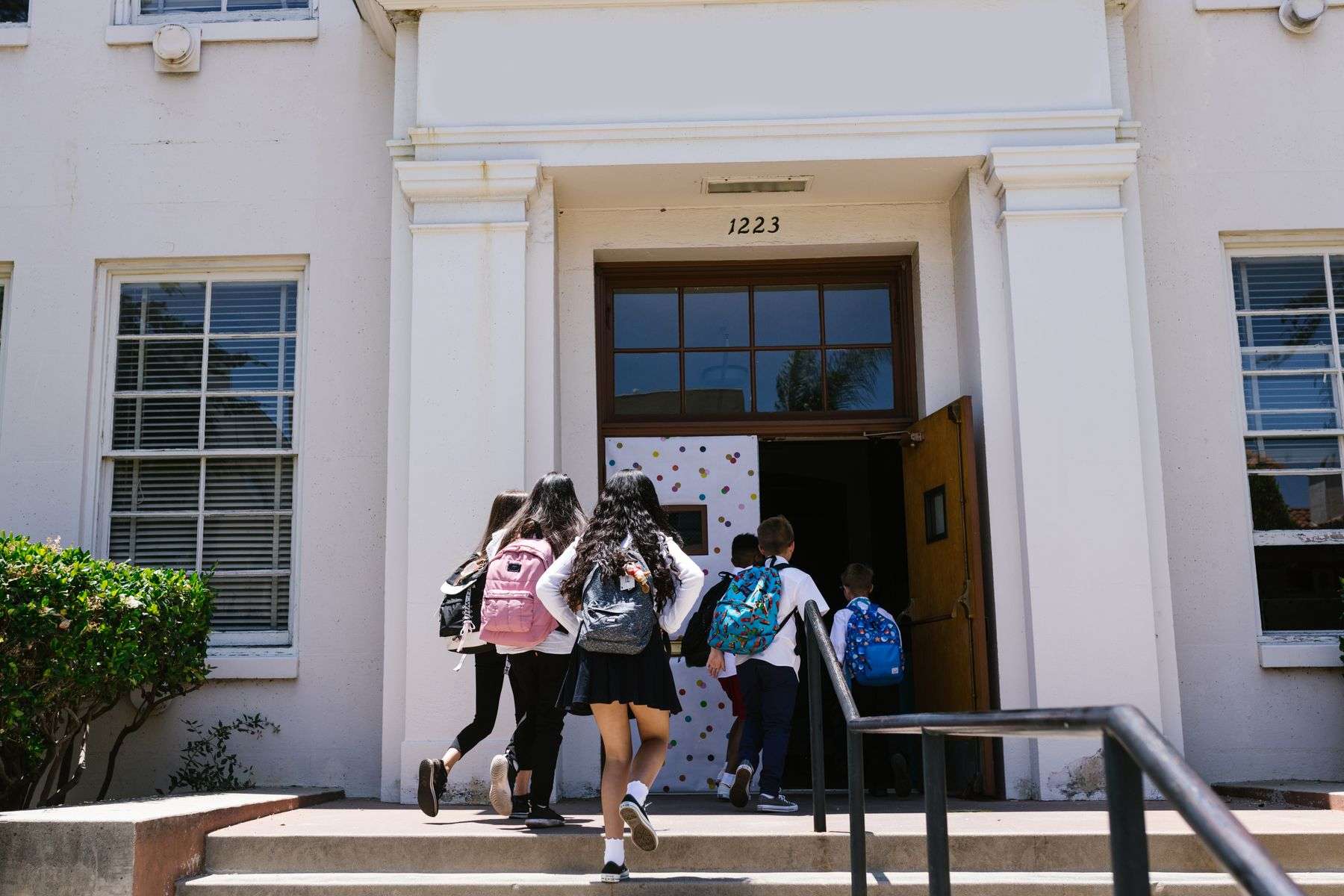
The Clarke County Board of Education approved a batch of personnel changes and got an update on preparations for the 2026-27 school year during its July 16 meeting in Grove Hill.
Board members reviewed plans for back-to-school events, went over preliminary results from statewide student testing and signed off on new hires, resignations, contract renewals and a staff transfer — the usual summer business of a small rural district gearing up for its most important month.
Clarke County’s schools serve communities spread across one of Alabama’s larger counties geographically, from Jackson along the Tombigbee River to Grove Hill, the county seat, and Thomasville to the north. With a student population numbering in the low thousands, the district is the kind where the superintendent knows the principals by first name and where a single school’s back-to-school dinner is a community event — but the logistics are no smaller than anywhere else: bus routes that run long distances, maintenance across multiple campuses, and staffing decisions that affect every classroom.
Back-to-school calendar takes shape
A teacher institute is set for Aug. 3 at 8:30 a.m. at Jackson High School, gathering the district’s teachers under one roof ahead of students’ return.
The next day, the community takes its turn. The Jackson Area Chamber of Commerce and area businesses will host a back-to-school breakfast for Jackson teachers at 8:30 a.m., while Grove Hill Baptist Church will serve lunch to Grove Hill teachers at noon. The events are a long-standing tradition in small Alabama districts, where churches, chambers and local businesses close the distance between the schools and the communities they serve — and where a free breakfast or lunch for teachers doubles as a show of support heading into a new year.
Superintendent Ashlie Flowers encouraged board members to take part in the back-to-school events and asked parents to keep an eye out for school registration dates, following both their child’s school Facebook page and the district’s new Facebook page for updates.
The social media push reflects how rural districts now communicate. Families spread across a county the size of Clarke’s may live far from any school office, and a district Facebook page can push registration deadlines, supply lists and schedule changes to phones faster than any printed calendar. The district’s new page joins individual school pages that many parents already follow.
Flowers said summer maintenance work across the district remains on track to wrap up before or shortly after students return, and she thanked staff who spent the summer on professional development, campus projects and getting ready for the new year.
“I am excited about what is in store for our students this year,” Flowers said.
Summer maintenance is a quiet but essential part of any school year’s start. Deep cleaning, repairs, painting, and capital projects that cannot be done while classes are in session all crowd into the ten or so weeks between the last day of school and the first, and a rural district’s maintenance crew works across every campus at once. Finishing on schedule — or close to it — determines whether teachers walk into ready classrooms or into work zones during institute week.
Testing results offer a preview
Flowers also told the board the district has received preliminary results from the 2025-26 Alabama Comprehensive Assessment Program.
Principals and district administrators are set to meet July 28 to go over the data and map out strategies for the coming year.
“We have seen some bright spots and have identified areas of improvement for next year,” she said.
The Alabama Comprehensive Assessment Program, the statewide summative test given each spring, measures student performance in English language arts, mathematics and science against the state’s academic standards. Districts receive preliminary results in the summer so that school leaders can dig into them before the new year begins — identifying which grades and subjects need attention, which interventions worked, and where professional development should be aimed. The July 28 meeting is where those decisions get made in Clarke County, with every principal at the table and the school year’s instructional priorities set from the data.
The timing also matters for parents. When the state’s public reporting of results follows in the fall, families will be looking at the same numbers administrators reviewed in July, and a district that has already built its improvement plan can explain what it is doing about them.
Statewide connections
Board members were also briefed on the Alabama Association of School Boards’ district meeting, scheduled for Sept. 14 in Saraland, and received the organization’s 2026-27 calendar of conferences and training sessions.
The Alabama Association of School Boards provides training, advocacy and policy support to the state’s local boards of education, and its regional meetings are where board members from southwest Alabama hear updates on school law, finance and legislative developments. Attendance counts toward the training hours Alabama board members are expected to complete, and the Saraland meeting puts Clarke County’s board within an easy drive of the Mobile-area host district.
The association’s year-round calendar of conferences and training sessions gives board members structured professional development — from new-member orientation to sessions on budgeting, personnel law and superintendent evaluation. In a small district where board members are part-timers balancing day jobs, those training opportunities are the main channel for keeping up with the rules that govern Alabama school systems.
Saraland itself is a useful host city for the region’s school leaders. The Mobile County suburb carved out its own city school system in 2008 and has since become one of the fastest-growing districts in the state, a case study in how a community’s investment in its schools drives growth. Hosting a regional meeting there gives rural boards from counties like Clarke, Monroe, Wilcox and Washington a look at a district that has made a name for itself through academic gains and steady construction.
For Clarke County’s board, the September meeting also falls at a strategic point in the school year — early enough that what members learn can shape budget discussions and policy decisions for the rest of the year, but late enough that the demands of opening school are behind them. Board members who attend bring back not just training credit but contacts: fellow board members from districts facing the same rural challenges of declining enrollment, aging buildings and the search for teachers that every small Alabama system shares.
The Alabama Association of School Boards provides training, advocacy and policy support to the state’s local boards of education, and its regional meetings are where board members from southwest Alabama hear updates on school law, finance and legislative developments. Attendance counts toward the training hours Alabama board members are expected to complete, and the Saraland meeting puts Clarke County’s board within an easy drive of the Mobile-area host district.
The association’s year-round calendar of conferences and training sessions gives board members structured professional development — from new-member orientation to sessions on budgeting, personnel law and superintendent evaluation. In a small district where board members are part-timers balancing day jobs, those training opportunities are the main channel for keeping up with the rules that govern Alabama school systems.
Personnel actions
On the personnel side, the board approved catastrophic sick leave for maintenance bookkeeper Candy Fuller and a contract amendment for a district employee, along with the meeting’s routine list of new hires, resignations, contract renewals and a staff transfer.
Catastrophic sick leave is a benefit Alabama school employees can draw on in serious medical situations, with fellow employees able to donate leave days to a colleague facing an extended illness. Boards act on those requests as they arrive, and the vote for Fuller reflected the district’s personnel policy in a moment of need for one of its own.
The summer personnel list carries more weight in a small district than the routine wording suggests. Every hire fills a classroom or a support role that students count on; every resignation creates a vacancy that must be posted, interviewed and filled before teachers report. Contract renewals lock in experienced staff for another year, and a transfer can shift veteran employees to where they are needed most. For a district the size of Clarke County’s, a handful of personnel decisions can reshape a school’s faculty for the year.
Looking toward the first day
With the July meeting behind it, the district’s countdown moves to the Aug. 3 teacher institute at Jackson High School and the community events that follow, then to registration deadlines and, finally, the first day of class. The board’s summer work — maintenance updates, testing analysis, personnel and the calendar of training ahead — forms the scaffolding for the 2026-27 year that Flowers said she was excited to see students begin.
Parents with questions about registration or school-year schedules are directed to their child’s school Facebook page or the district’s new districtwide page, where updates will be posted as the year begins.