

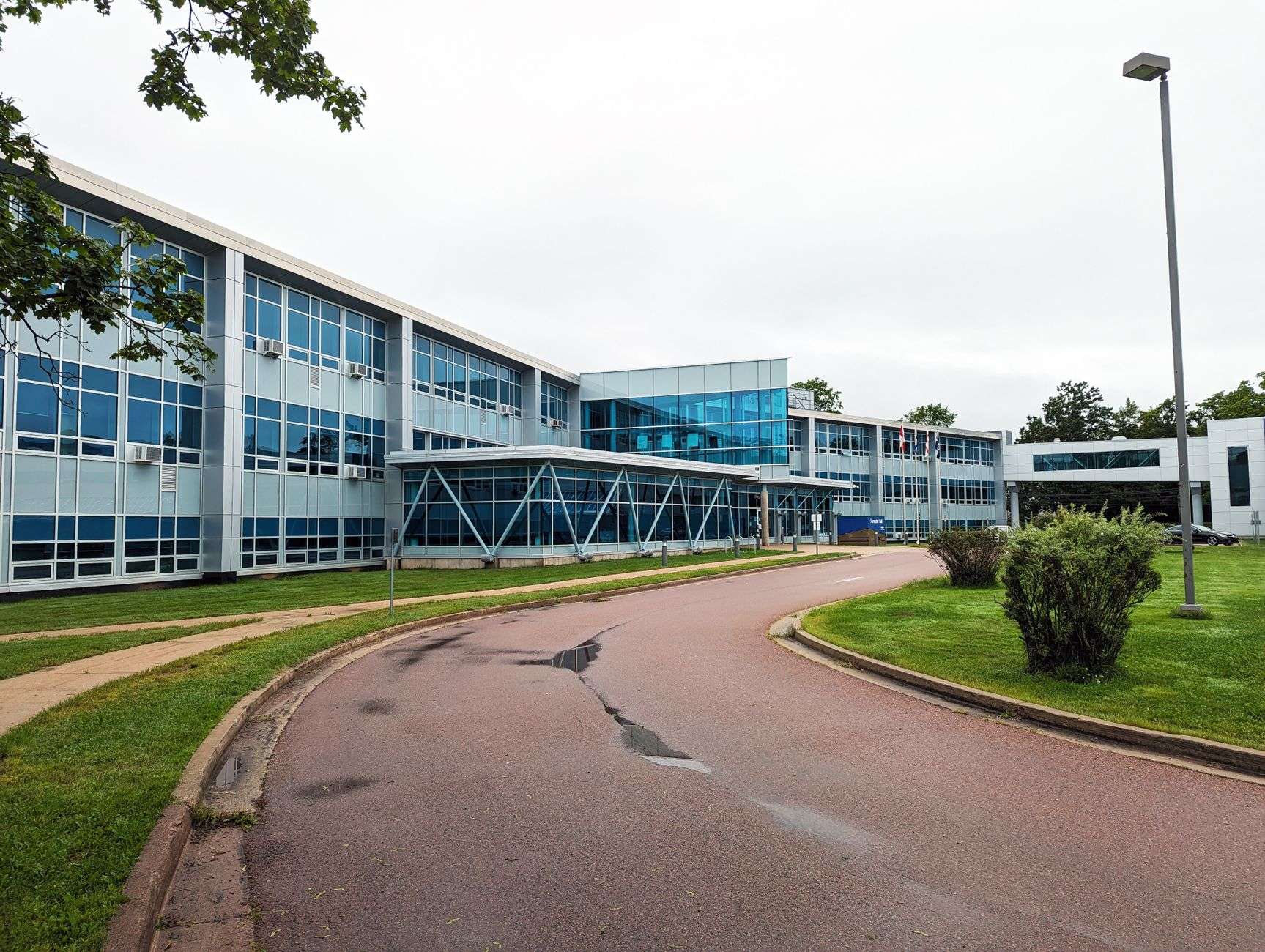
GROVE HILL, Ala. — A new roof over the main building at Jackson High School sits at the top of a long list of repairs and upgrades the Clarke County Board of Education has laid out in its 2027 capital plan, a document that maps where the school system hopes to put money into its buildings, grounds and athletic facilities in the coming year.
The plan ranks more than 20 projects in priority order. They range from roofing and drainage work to heating and air conditioning replacements, secure school entrances, gym floors, cafeteria renovations, ballfield lighting and stadium improvements. According to the board, the money to pay for the work is expected to come from a mix of local funds, AT&T and an energy savings contract, while a sizable group of projects on the list does not yet have a funding source identified.
The $1.5 million roof replacement at Jackson High is one of the board’s highest priorities. Everything else on the list follows in the order the board ranked it.
The Full Priority List
After the Jackson High roof, the board’s 2027 capital plan lists the following projects, in priority order, with their estimated costs and expected funding sources:
- Gillmore Elementary School gym flooring — $100,000, local funds
- Regular flooring at multiple schools — $100,000, local funds
- Jackson High drainage improvements — $300,000, local funds
- Gillmore Elementary extended sidewalks and canopy — $50,000, local funds
- Jackson High gym flooring — $200,000, local funds
- Jackson Intermediate School secure vestibule and entrance — $16,500, local funds
- Wilson Hall Middle School secure vestibule and entrance — $20,000, local funds
- Jackson High secure vestibule and office renovation — $10,000, funding to be announced
- Jackson High gym HVAC — $1 million, energy savings contract
- Jackson Middle School bathroom renovations — $1.2 million, energy savings contract
- Jackson Middle gym Schneider controls — $60,000, energy savings contract
- Clarke County High School Schneider controls — $300,000, energy savings contract
- Jackson Middle HVAC — $750,000, energy savings contract
- Clarke County High gym HVAC — $150,000, energy savings contract
- Grove Hill Elementary School Building B HVAC — $1 million, energy savings contract
- Grove Hill Elementary Building A HVAC — $750,000, energy savings contract
- Jackson High cafeteria renovation — $1.15 million, funding to be announced
- Grove Hill Elementary cafeteria renovation — $1 million, funding to be announced
- Parking lot resurfacing at multiple schools — $250,000, funding to be announced
- Baseball and softball lighting at Clarke County High and Jackson High — $300,000, funding to be announced
- Legion Field stadium upgrades and press box — $1.5 million, funding to be announced
- Clarke County High auditorium renovation — $1.5 million, funding to be announced
Adding Up the Numbers
Taken together, the figures in the plan add up to roughly $13.2 million in identified needs, including the Jackson High roof. How that total breaks down by funding source says a lot about what is likely to move first and what may have to wait.
The seven projects marked for local funding are, for the most part, smaller jobs. Combined, they come to $786,500. They include both gym floors, the general flooring work, the drainage project at Jackson High, the sidewalk and canopy extension at Gillmore Elementary and two of the secure entrance projects.
The eight projects tied to the energy savings contract are much larger in dollar terms, totaling about $5.21 million. Nearly all of them involve heating, ventilation and air conditioning equipment or building controls, along with the $1.2 million bathroom renovation at Jackson Middle.
The remaining seven projects, with funding listed as to be announced, total about $5.71 million. That group includes the two cafeteria renovations, parking lot resurfacing, ballfield lighting, the Legion Field upgrades and the Clarke County High auditorium, plus a $10,000 vestibule and office project at Jackson High. The funding source for the $1.5 million roof was not broken out in the project list, and the plan as described does not specify which projects the AT&T money will support.
What an Energy Savings Contract Is
The single largest share of the identified work is tied to an energy savings contract, a financing tool that Alabama law makes available to school systems and other public bodies.
Under the state’s Guaranteed Energy Cost Savings Contracts law, found in Title 41, Chapter 16, Article 7 of the Code of Alabama, a governmental unit can seek proposals from qualified providers and hire one to install equipment designed to cut energy or operating costs. The key feature is the guarantee: the provider must put in writing that the energy savings, operational savings or both will meet or exceed the cost of the improvements. If the savings fall short in a given year, the provider must reimburse the government for the difference.
The law allows the improvements to be paid for over time, with the savings from lower utility and operating costs helping offset what the equipment costs to install. A contract cannot run longer than 20 years or the average useful life of the energy-saving measures, whichever is shorter. Public bodies may also require the provider to post a payment and performance bond.
That structure explains why the projects assigned to the energy savings contract in Clarke County are concentrated in HVAC replacements and building controls. Older heating and cooling systems are often among the biggest energy users in a school building, and replacing them is the kind of upgrade that can produce measurable utility savings.
Two items on the list call for “Schneider controls” — $60,000 at the Jackson Middle gym and $300,000 at Clarke County High. The plan’s wording points to building automation controls, the systems that manage when and how heating, cooling and ventilation equipment runs in a building.
School by School
Clarke County Schools operates campuses in two communities, Jackson and Grove Hill. According to federal education data, Jackson is home to Jackson High School (grades 9–12), Jackson Middle School (grades 6–8), Jackson Intermediate School (grades 3–5) and Joe M. Gillmore Elementary School (pre-K through grade 2). Grove Hill is home to Clarke County High School (grades 9–12), Wilson Hall Middle School (grades 5–8) and Grove Hill Elementary School (pre-K through grade 4). Thomasville’s schools are part of a separate city school system and do not appear in the plan.
Viewed campus by campus, the plan’s needs fall like this:
- Jackson High School: the $1.5 million main building roof, $300,000 in drainage improvements, $200,000 for gym flooring, a $10,000 secure vestibule and office renovation, $1 million for gym HVAC and a $1.15 million cafeteria renovation — about $4.16 million in all, plus a share of the $300,000 ballfield lighting project.
- Jackson Middle School: $1.2 million in bathroom renovations, $750,000 for HVAC and $60,000 for gym controls, all through the energy savings contract — about $2.01 million.
- Grove Hill Elementary School: $1 million for Building B HVAC, $750,000 for Building A HVAC and a $1 million cafeteria renovation — about $2.75 million.
- Clarke County High School: $300,000 for building controls, $150,000 for gym HVAC and a $1.5 million auditorium renovation — about $1.95 million, plus a share of the ballfield lighting.
- Gillmore Elementary School: $100,000 for gym flooring and $50,000 for extended sidewalks and a canopy.
- Jackson Intermediate School and Wilson Hall Middle School: secure vestibule and entrance projects of $16,500 and $20,000, respectively.
The plan also includes $1.5 million for stadium upgrades and a press box at Legion Field, along with district-wide lines for flooring and parking lot resurfacing.
Security Entrances Rank High
Three of the projects involve secure vestibules or entrances, and two of them — at Jackson Intermediate and Wilson Hall Middle — are among the locally funded items ranked in the top half of the list.
A secure vestibule is generally an enclosed entry area that lets office staff see and speak with visitors before they are allowed into the rest of the building. Such entrances have become a common feature of school safety upgrades across the country, and they are relatively inexpensive compared with the larger mechanical projects in the plan. In Clarke County’s case, the two locally funded vestibules together cost $36,500.
The Jackson High vestibule is paired with an office renovation and carries a $10,000 estimate, but its funding source has not yet been determined.
Security has been a running theme for the district. When the board adopted its fiscal year 2027 budget earlier this month, officials said recent security work had included replacing locks, improving communications equipment and maintaining cameras and other security systems at schools, and that additional funding received for cybersecurity had gone toward firewalls, antivirus and malware protection.
The Budget Backdrop
The capital plan arrives on the heels of that budget. On Sept. 10, the Clarke County Board of Education approved a $34 million budget for fiscal year 2027, with Superintendent Ashlie Flowers and other officials describing the challenge of balancing the books while keeping staff and services in place.
Personnel accounts for approximately 85% of the district’s spending, officials said at the time, which leaves a comparatively small portion of the operating budget for everything else, from utilities and maintenance to transportation and technology. That reality helps explain why a plan like this one leans on sources outside the regular operating budget, including the energy savings contract and AT&T, and why a number of the costlier projects are still listed with funding to be announced.
Officials also pointed during the budget discussion to other cost pressures facing the system, including the growing needs of special education students and the wear that roughly 500 miles of dirt roads puts on school buses. A new bus costs about $175,000, officials said, with state funding covering only a fraction of that amount.
Enrollment has also shifted at some campuses. Wilson Hall grew from 119 students to 179, according to information presented to the board during the budget process — one of the schools slated for a secure entrance in the new capital plan.
What Comes Next
A capital plan is a planning document rather than a set of signed contracts. It gives the board an ordered list of needs, rough price tags and anticipated funding sources, and it lets the public see where the school system intends to put its money when dollars become available.
Projects with identified local or energy savings contract funding are the most likely candidates to move forward during the year. Those listed as funding to be announced — including the cafeteria renovations at Jackson High and Grove Hill Elementary, the Clarke County High auditorium and the Legion Field improvements — will depend on the district finding money to pay for them.
Any construction work the board pursues would still be subject to Alabama’s public bidding and contracting requirements, and energy savings contracts in particular must go through the request-for-proposals process spelled out in state law before a provider can be hired.
For families in Jackson and Grove Hill, the list offers a clear picture of what the board considers most pressing: keeping the roof over Jackson High’s main building sound, fixing drainage and worn floors, tightening building entrances and replacing aging heating and cooling equipment in several schools.