Coast Guard Report Finds Fatal 2015 Dauphin Island Regatta Disaster Was Preventable
The Coast Guard's report on the 2015 Dauphin Island Regatta finds missed warnings, human error and missing life jackets led to six deaths.
Four years after a sudden storm line turned a festive sailing race into Mobile Bay’s deadliest regatta, the U.S. Coast Guard has released its full investigation — and it concludes the disaster came down to weather that went unheeded, human error and missing safety equipment.
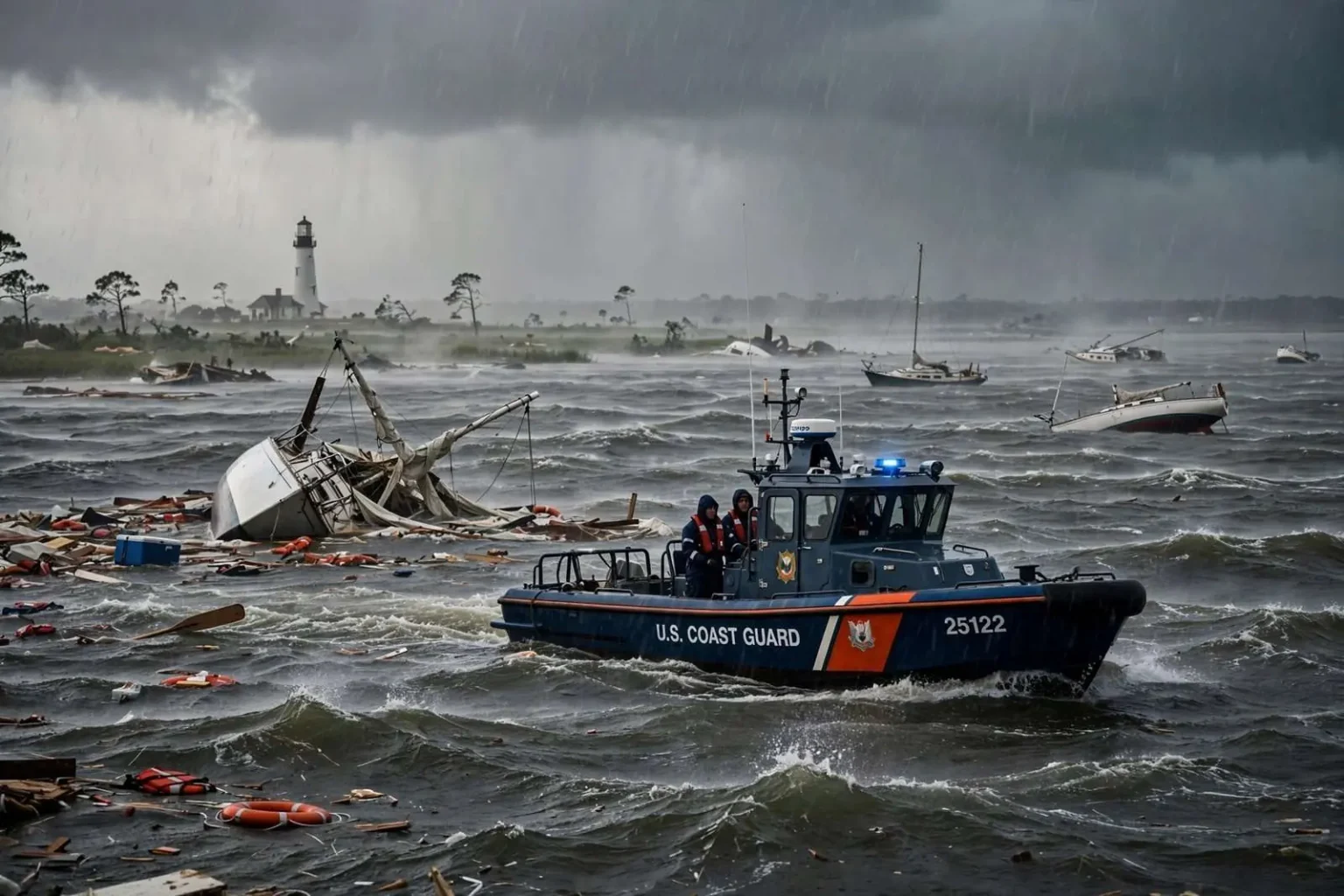
Six sailors died and 40 others had to be rescued when eight sailboats sank during the 57th Annual Dauphin Island Regatta on April 25, 2015. A line of thunderstorms pushed across the bay around 3:30 p.m. with winds topping 70 mph, catching dozens of boats with sails still up in eight-to-ten-foot seas.
The regatta is a Gulf Coast institution, drawing hundreds of boats each spring for a race across Mobile Bay to Dauphin Island that mixes seasoned racers with casual cruisers and families. The 2015 edition was supposed to be a celebration — the 57th running of a tradition generations of sailors along the northern Gulf grew up with. Instead it became the deadliest event in the race’s long history, and one of the worst sailing disasters in American waters.
Three key factors
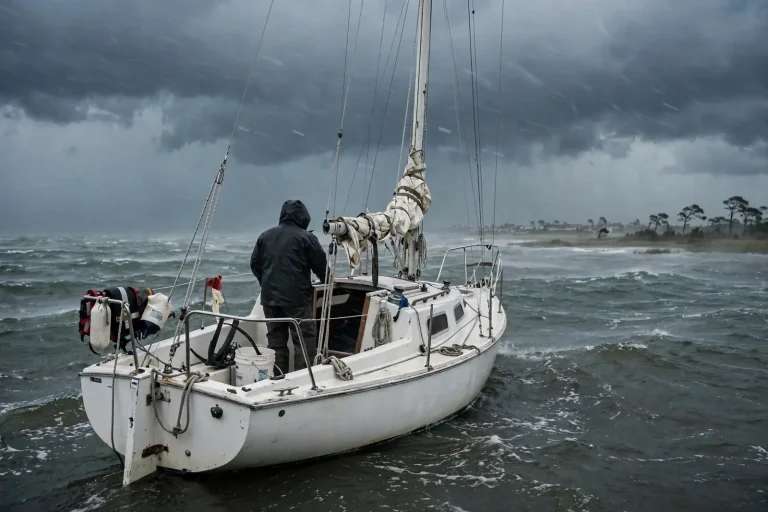
Investigators identified environmental conditions first: hurricane-force gusts, punishing swells, driving rain that cut visibility, and capsizings that forced crews into the water. On open water with sails full, a wind shift of that magnitude leaves crews seconds to react — boats knock down, mastheads dig into the bay, and crews go overboard in waves that make any recovery difficult.
Human error followed. Participants failed to monitor marine weather broadcasts, and the race committee failed to cancel or warn racers even after learning of the severe storms. In an era when marine forecasts and weather alerts are available continuously by radio and phone, investigators found the storm’s approach was visible well before it arrived — it just never reached the people on the water in time to matter.
Finally, many sailors either weren’t wearing or couldn’t reach the personal flotation devices required aboard; none of the victims recovered were wearing one. Life jackets stored below deck are of little use to a crew pitched into eight-foot seas in seconds, and the finding became the emotional center of the report’s recommendations.
Warnings that never reached the water
The report details a chain of missed chances. Shortly before 2 p.m., the Coast Guard patrol commander called organizers to warn that a strong front was moving from Pascagoula toward Mobile Bay. Organizers assumed it would track north of the fleet and never passed the alert over the race radio channel — a broadcast that investigators say may have given racers an hour or more of warning. An hour is a lifetime on the water: enough time to douse sails, turn toward shelter, put on flotation gear and prepare crews for what was coming.
A separate miscommunication had already delayed the start by an hour and fifteen minutes; had the race begun on time, far fewer boats would have been on the water when the storm hit. The irony is bitter — the delay scattered the fleet into the worst possible position, compounding the failure to communicate the forecast rather than mitigating it.
Investigators also found the Fairhope Yacht Club had no members certified as race officers through US Sailing at the time. US Sailing’s race officer training exists precisely to standardize the decisions a race committee faces — when to postpone, when to shorten a course, when to abandon — and its absence on the committee meant the critical calls of that afternoon were made without a trained framework behind them.
The report noted a culture of overconfidence among veterans of the race. Experienced sailors had crossed Mobile Bay in squalls for decades, and that history bred an assumption that the bay’s worst weather was survivable. Investigators found that assumption passed down through crews, discouraging the weather vigilance and caution that formal safety culture requires.
Outdated crew lists left rescuers unsure who was even missing after the storm. In the chaos that followed the blow — capsized boats, swimmers clinging to debris, rescuers working through the evening — emergency responders had to reconstruct the fleet from incomplete records, slowing the accounting for sailors who never made it ashore.
Recommendations
The Coast Guard recommended US Sailing amend its racing rules to require crewmembers to wear PFDs, keep VHF radios on a lanyard within the skipper’s immediate reach, conduct pre-race safety checks, and require updated crew lists before every start. Each recommendation maps to a specific failure the investigators documented on April 25, 2015.
The PFD requirement is the most consequential. Racing rules have historically required life jackets to be carried, not worn — a distinction that assumes sailors will have time to put them on when conditions turn. The regatta’s victims proved the assumption false: when a 70-mph gust can capsize a boat instantly, the only flotation that matters is the one already on the body. Mandatory wearing requirements have spread through offshore racing after similar disasters, and the Coast Guard’s recommendation would extend that standard to inshore events like the regatta.
The VHF recommendation addresses the same seconds-scale problem. A handheld radio on a lanyard, within the skipper’s reach, means a crew in the water or on a swamped deck can call for help instead of watching their communications sink with the boat. Radios stored in a cabin below are as useless as life jackets in a locker.
Pre-race safety checks and updated crew lists are administrative fixes, but the investigation found their absence had direct consequences. A crew list handed to rescuers before a start tells them exactly how many people to account for when boats capsize, converting a chaotic search into a checklist. Safety checks — inspecting jacklines, testing radios, confirming PFD locations — institutionalize the vigilance that the report found missing on the 2015 fleet.
The report stressed that responsibility for participant safety “rests solely with the event sponsor” — a pointed reminder that race committees, not the Coast Guard patrolling the course, control the decisions that determine whether a regatta ends in celebration or in loss. That line assigns the obligations plainly: it is the sponsoring club that must monitor weather, warn the fleet and cancel when the forecast turns, and no outside agency will make those calls for it.
A bay community reckons
The storm’s victims came from crews spread across the fleet’s hundreds of boats, and their deaths rippled through yacht clubs on both shores of Mobile Bay and across the Gulf Coast sailing community. Vigils, memorial races and scholarship funds followed in the years after the disaster, and the details in the Coast Guard’s report — the missed radio call, the unheeded warning, the life jackets left in lockers — confirmed what many sailors had already pieced together from their own accounts of that afternoon.
For Mobile Bay’s sailing community, the report’s release closes the investigative chapter of a tragedy that reshaped the regatta. The race returned after the 2015 disaster under revised safety protocols, but the six sailors lost that April afternoon remain the standard against which every subsequent safety decision on the bay is measured — and the Coast Guard’s recommendations now give the sport’s national rulemakers a clear mandate for the changes that might prevent the next one.
Mobile Bay itself played a role in the disaster’s severity. The bay is wide and shallow in places, with long fetches that let wind build steep, closely spaced seas quickly. A squall line crossing such water produces the kind of confused, breaking chop described by survivors — conditions in which a knocked-down sailboat can flood through cockpit drains and companionways faster than crews can react. Sailors who race the bay regularly know its spring squalls; what made April 25 different was the scale of the system and the size of the fleet caught under full sail.
The rescue response that afternoon and evening became its own story. Good Samaritan boaters, the Coast Guard, marine police and fire departments pulled 40 people from the water and from crippled boats across a search area that stretched with the drifting debris. Survivors described crews clinging to overturned hulls, life rings thrown from passing boats, and the sound of whistles carrying across the chop as rescuers converged. The recovery of the six sailors who died took longer, complicated by the outdated records that left responders uncertain who had been aboard which boat.
In the years between the regatta and the report’s release, the investigative process involved witness statements from dozens of participants, analysis of weather data, and review of the race committee’s communications — a comprehensive reconstruction intended to give the sailing community a complete account rather than the fragments of rumor that circulated in the disaster’s immediate aftermath.
The report’s findings about organizational preparedness extend beyond sailing. Event sponsors of every kind — regattas, fishing tournaments, fun runs — make the same judgment calls about weather, communication and record-keeping, and the Dauphin Island report has become a reference case in boating safety circles for what happens when those judgments default to tradition rather than training.
What remains for the bay’s sailing community is to absorb the report formally and act on it. The Coast Guard’s recommendations to US Sailing carry the weight of a federal investigation’s conclusions, and the clubs that run Gulf Coast racing — including the sponsors of the regatta itself — will now be measured against a documented standard that the 2015 fleet never had.