

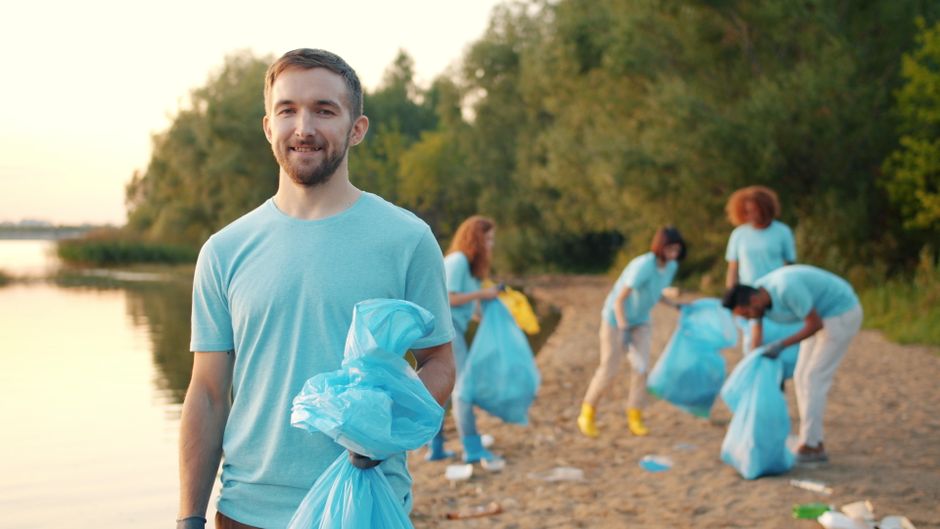
“Connect to Your Coast” is the motto of the Alabama Coastal Foundation, the Mobile-headquartered nonprofit that has spent three decades making Alabama’s coastline cleaner, safer and better understood. With only three full-time staff members, one part-timer and 14 paid contractors, the organization accomplishes what it does through a simple equation: every dollar it generates produces two hours of volunteer service, and more than 4,000 volunteers work on its programs each year.
Cooperation, Education, Participation
Executive Director Mark Berte sums up the mission in three tenets: cooperation, education and participation. The foundation was born in Fairhope in 1993, expanded to both sides of Mobile Bay in 2009, and became a statewide organization in 2012, covering Alabama’s entire coastline. Its Board of Directors and Advisory Council — civic and corporate leaders — are volunteers, as is 90 percent of the work, supported by a database of more than 10,000 people.
The foundation’s fingerprints are on programs most coastal residents know by name. When the cities of Gulf Shores and Orange Beach adopted the “Leave Only Footprints” campaign to keep beaches clear of gear and litter, ACF helped lead it — the campaign’s magnets have likely hung on the refrigerator of anyone who booked a Gulf-front rental in the past decade. The organization now leads the Share the Beach sea turtle conservation program, teaching beachgoers what to do when nesting season begins each May, complete with new magnets to spread the word.
Safety and education run through everything. Coastal IQ, the foundation’s free online education program, teaches residents and visitors about riptides, heavy surf, jellyfish and other hazards that can ruin a vacation. Over three decades, the organization has worked with local governments and tourism groups on riptide awareness that has saved lives. Its oyster shell recycling program — the first implemented on the Alabama coast — partners with local restaurants to collect shells, improving habitat while saving businesses money.
Sea Turtles, Lights and the Underwater Forest
Share the Beach, the sea turtle program, illustrates how the foundation works at the intersection of people and wildlife. Sea turtles distracted by flashlights, condo lights and beach-house lights may not come ashore to nest, taking themselves out of the ecosystem. The foundation helped write and implement a residential lighting retrofit solution, advises developers before construction on turtle-safe lighting, and promotes the red-beam flashlights that don’t disturb the turtles’ natural behavior during nesting season.
The foundation’s reach extends underwater. The ancient forest uncovered off Fort Morgan after Hurricane Ivan — a magnet for scuba divers from around the world — has been protected in part through the foundation’s support of the lead organization watching over it, a story told in Ben Raines’ documentary released several years ago. On land, ACF works with more than 30 groups each year on initiatives that range from cleanups to tree and sea oat plantings, and brings together nonprofits, government and the private sector under Berte’s guiding rule: “Anything that needs a push.”
The Director Who Came From Fundraising
Berte, a Birmingham native, has been coming to Alabama’s beaches since childhood — he remembers counting the seconds between offshore lightning and thunder in Gulf Shores to gauge the storm’s distance. He and his wife Leigh Ann moved to Mobile 18 years ago when she joined Spring Hill College as an English professor, and he explored the coast he’d never fully seen, from the Mobile-Tensaw Delta outward.
His path to the foundation ran through its former executive director, Bethany Kraft, who was leaving the post and encouraged him to apply. He had nonprofit management and fundraising experience but no science background. Her pitch: hire people with the science background — what the organization needed was his rapport with people and strong interest in the work. He has held the job ever since.
A Boy Scout saying he first heard at Camp Sumatanga, the Methodist youth camp, remains his mantra: “Let no one say, and say to your shame, that this was a place of beauty before you came.”
Where to Plug In
Getting involved is as easy as showing up. Volunteer-driven programs run year-round: clean-ups, plantings, oyster shell recycling, and educational seminars blended with fun events like the Good Life Bicycle rides and Cocktails for the Coast, held after Election Day. Outreach nights hosted by craft breweries across the coastal area keep volunteers engaged year-round, and the foundation’s Connect to Your Coast series brings staff members to communities across the state — the final free stop of one season landing at Back Forty Brewing in Birmingham on a Thursday evening in December, open to anyone from 4 to 8 p.m.
The reach grows year by year, and even the seasonal visitors — the snowbirds — get in on the act. For Berte, the goal is to attract everyone who feels something special about the coast, whatever their perspective, and channel it into protecting the place they love. The Alabama Coastal Foundation remains one of the best entry points for doing exactly that.