
Dauphin Island Mayor Urges Residents and Visitors to Start Storm Preparations
Dauphin Island Mayor Jeff Collier urged residents and visitors to begin storm preparations as a tropical threat organized in the Gulf in 2020.
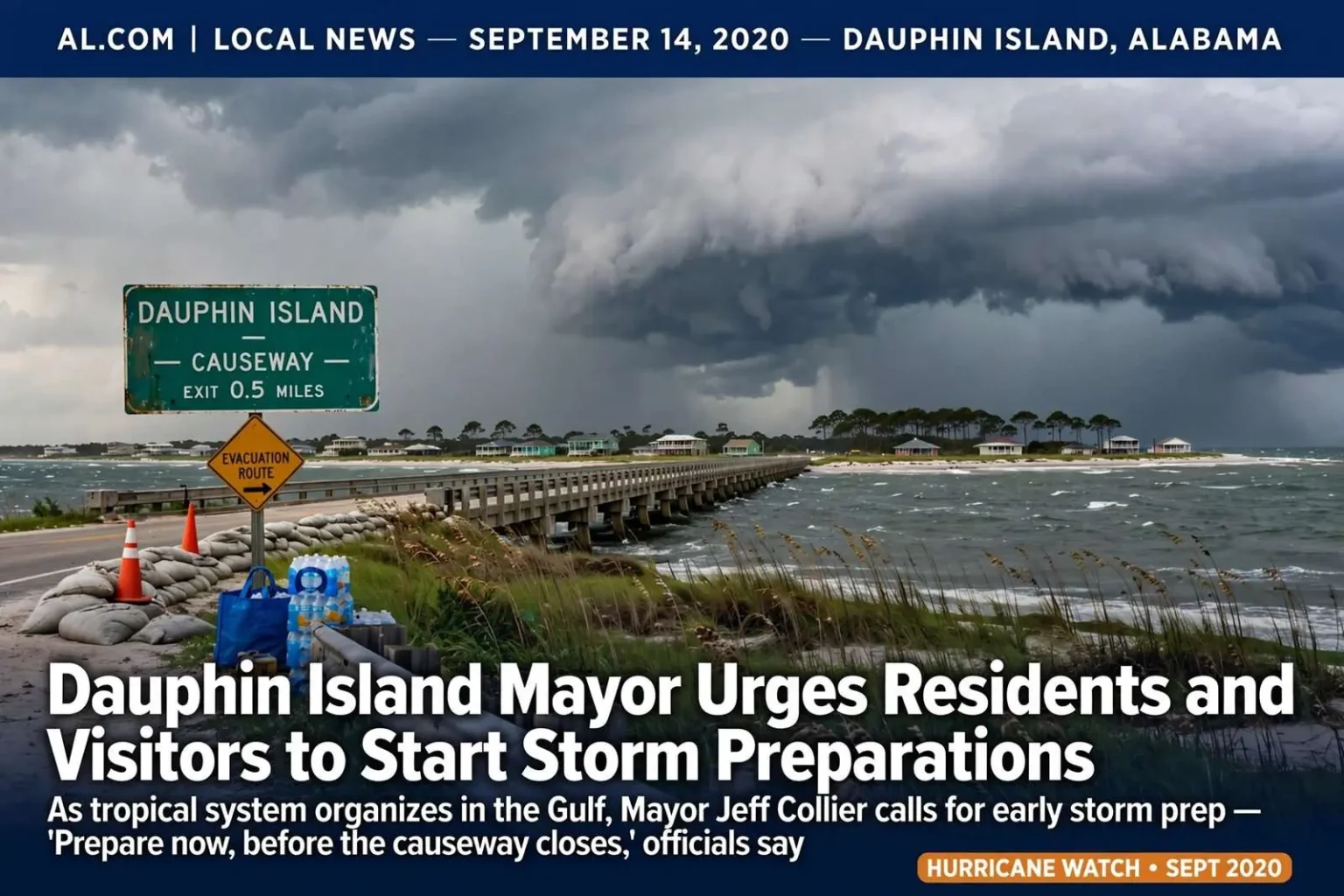
With a tropical system taking aim at the Gulf Coast, Dauphin Island Mayor Jeff Collier is urging both residents and visitors to begin their storm preparations now rather than wait for warnings to be issued. Collier’s message, posted as the disturbance organized in the Gulf of Mexico in mid-September 2020 — the system that would become Hurricane Sally — encouraged people on the low-lying barrier island to review supplies, secure property and stay tuned to official forecasts.
The advice reflects a calendar that runs differently on a barrier island than it does on the mainland. By the time a tropical storm warning is posted, the window for unhurried preparation on Dauphin Island has often closed: the causeway and bridge that connect the town to the mainland can be closed by wind and water, and the island’s single road link means an evacuation decision must come early or not at all.
Barrier islands like Dauphin Island are routinely among the first Alabama communities told to take action when tropical weather threatens the northern Gulf. Town officials have consistently asked visitors to factor evacuation timelines into their plans during hurricane season, a request that reflects hard experience: rental guests who arrive midweek for a beach vacation are often the least prepared people on the island when a storm organizes offshore.
Collier, who has led the town through multiple hurricane recoveries, has built his public messaging around the same principle every season: prepare as if the storm is coming, then update as the forecasts resolve. In mid-September 2020, that principle was about to be tested by one of the slowest and most damaging hurricanes the Gulf Coast had seen in years.
Why Dauphin Island moves first
The geography explains the urgency. Dauphin Island is a low barrier island guarding the entrance to Mobile Bay, much of it only a few feet above sea level. Its east end holds the historic town and the ferry landing; its west end stretches in a thin line of beach houses toward the Little Dauphin Island bridge. Water flows around and over such islands long before residents on the mainland feel a storm’s effects.
When the National Hurricane Center issues advisories for a Gulf system, emergency managers in Mobile County begin their cascade of decisions with the island: when to urge visitors to leave, when to recommend evacuation of residents, when to close the roads. Each step arrives earlier on Dauphin Island than anywhere else in the county because the island’s exposure is total — surge from the Gulf on one side, bay water pushed from the other, and one causeway connecting three thousand residents to the mainland.
The town’s officials have learned to speak before the forecasts are certain. Waiting for a hurricane warning to prepare a barrier island means preparing in the rain, in traffic, with fuel lines and crowded bridges. Collier’s standing message — that the time to check supplies, fuel vehicles, secure outdoor property and plan departure is when a system first enters the picture, not when it acquires a name — is the distillation of every recovery the town has lived through.
The system that would become Sally
The disturbance organizing in the Gulf in mid-September 2020 was still an unnamed swirl of thunderstorms when Collier posted his message, but its track and the conditions around it gave Gulf Coast residents reason to take it seriously. The system had already drenched south Florida as a tropical depression, and forecast models broadly agreed it would sit in the warm Gulf waters and strengthen as it drifted toward the northern coast.
Over the following days, the disturbance organized into Tropical Storm Sally, and then into a hurricane that crawled toward the coast at a pace of just a few miles per hour. Sally made landfall near Gulf Shores on September 16 as a Category 2 storm, and its slow movement turned its wind field into a sustained push of ocean water and a firehose of rain — more than two feet of rain fell in parts of the Pensacola area, and surge pushed deep into the bays on either side of Mobile Bay’s mouth.
For Dauphin Island, Sally’s arrival validated the early-preparation message. The island’s west end saw water over roads and beaches reshaped, and residents who had secured property and planned ahead were able to ride out the storm or leave without the desperation that late preparations produce. The communities that fared worst along the coast were often the ones where the water arrived faster than the decisions did.
What preparation looks like on the island
The checklist Collier urged on residents and visitors follows the pattern every Gulf Coast emergency manager recommends, adjusted for island life. Reviewing supplies means several days of water, food that needs no cooking, medications, flashlights, batteries and fuel — enough to be self-sufficient if power stays out and the road stays closed. Securing property means bringing in furniture and grills from porches, protecting windows, and moving valuables off ground floors that surge has claimed in past storms.
Staying tuned to official forecasts is its own discipline. Island residents track the National Hurricane Center’s advisories, the county emergency management agency’s alerts and the town’s own notifications, filtering out the rumor and alarm that flood social media during every storm threat. Official sources carry the evacuation decisions, and on Dauphin Island those decisions arrive early by design.
For visitors, the town’s standing request is simpler: know your departure options before you need them. Rental guests are asked to watch the forecast through their entire stay, to keep vehicles fueled, and to leave when officials recommend it rather than waiting out a storm to protect a vacation. The causeway and the bridge that connect the island to the mainland close when winds reach unsafe levels, and a visitor who waits too long makes the road dangerous for everyone else.
Barrier islands and the season ahead
The 2020 season was one for the record books, with so many named storms that forecasters exhausted the standard list of names. For Gulf Coast communities, the year’s message was that activity can stack up quickly in a single season, and that a town cannot afford to reset its readiness after every storm passes. Dauphin Island’s officials treat each storm threat as if it will be the one, because eventually one of them will be.
The island’s own history shapes that posture. Hurricanes from Frederic in 1979 through Ivan, Katrina and the storms that followed have each left their signature on the island — houses destroyed, sand shifted, roads overwashed. Rebuilding after each one has made the town both more resilient and more aware of its exposure, and its leaders have become some of the Gulf Coast’s most consistent voices on the costs of waiting.
Collier’s mid-September message closed with the essentials that apply to every storm and every season: prepare now, watch the forecasts, and make decisions early. The days that followed proved the point — Sally gave the coast less time than its slow speed suggested, and the communities that moved first, starting with the barrier islands, were the ones that moved safely.
The takeaway for Gulf Coast residents
The episode of September 2020 remains a standard reference point for emergency managers across south Alabama. A storm that did not exist as a name when preparations began became, within days, one of the most damaging hurricanes in the region’s modern history. The lesson is not that every disturbance deserves panic — most do not — but that the cost of preparing early is a few hours of errands, while the cost of preparing late is measured in safety and property.
For Dauphin Island, the standing guidance endures: residents keep their plans current through the season, visitors book with the forecast in mind, and everyone listens to town officials when they say the time is now. The island’s beauty is inseparable from its exposure, and the people who love it have learned that the preparation message is not alarm — it is the price of living well on a barrier island.
How the island’s warning system works
Dauphin Island’s preparedness rests on a chain of official channels that residents learn quickly. The National Hurricane Center’s advisories establish the storm’s track and intensity forecast; Mobile County’s emergency management agency translates those forecasts into evacuation recommendations and shelter openings; and the town’s own government communicates directly with residents through its notification systems and the mayor’s public messages. Each layer shortens the distance between a forecast and a decision.
The town also coordinates with the agencies that control the physical links to the mainland. The Alabama Department of Transportation closes the bridges when sustained winds make them unsafe, and law enforcement manages the traffic that follows an evacuation order. Residents who have lived through the process know the choreography: fuel first, then secure the house, then decide whether to stay on the island’s higher ground or drive inland — a decision that must respect the bridge closures that come with rising wind.
Officials repeat one point more than any other: the forecast cone is not a promise. Storms wobble, accelerate and strengthen in ways that shift the impact zone by a county or two in a single advisory cycle. That uncertainty is precisely why the mayor’s message asked residents to prepare as though the island were in the storm’s path, because for a barrier island it usually is.
A season that kept testing the coast
Sally was not the only storm to trouble the northern Gulf in 2020, and its slow landfall came after a summer of watchfulness that had already worn on coastal residents. Each system that entered the Gulf that season set off the same sequence in Dauphin Island — advisories, preparation, decisions — and each one that turned away from the coast reaffirmed the town’s habit of moving early without embarrassment.
The cumulative effect of such a season is fatigue as much as damage, and emergency managers acknowledge it. Communities that prepare repeatedly for storms that never arrive are tempted to skip the checklist the next time. The record shows why they should not: the storms that do make landfall — Frederic, Ivan, Katrina, Sally — produce their worst outcomes among the unprepared, and the interval between false alarms and the real thing is never predictable.
Collier’s message in mid-September 2020 asked for exactly that discipline: to treat an organizing disturbance with the seriousness that the island’s geography demands. Sally’s arrival days later settled any argument about whether the request had been premature — and left the town’s standing advice to residents and visitors exactly where it has always been: prepare first, watch closely, and never wait for the warning siren on a barrier island.


