
Dauphin Island Preps Again as New Disturbance Brews in the Gulf
Dauphin Island moves equipment off West End Beach and readies contractors as a Gulf disturbance threatens rain along the Alabama coast.
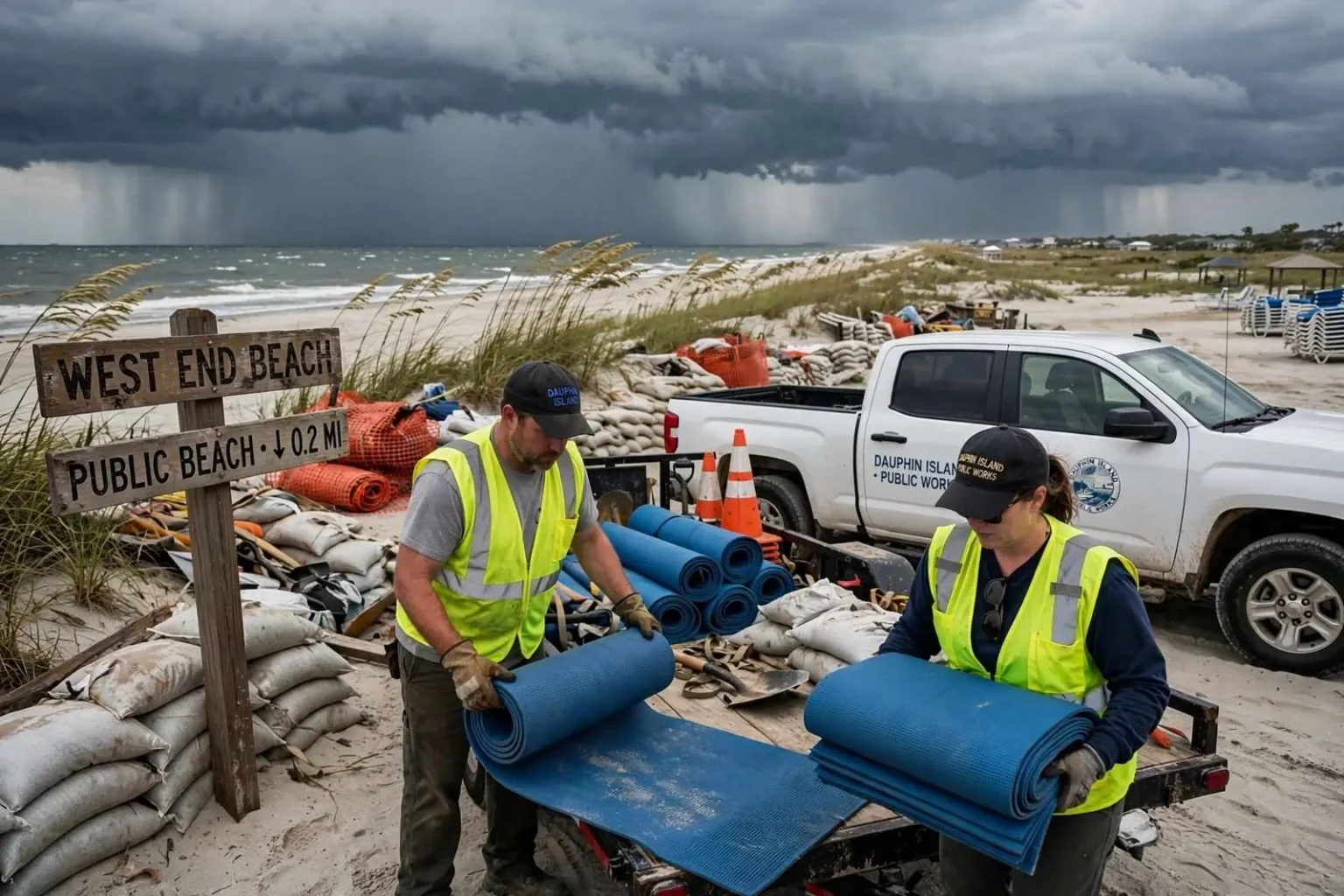
DAUPHIN ISLAND, Ala. — Less than a year after being battered by three named storms, Dauphin Island is once again keeping a wary eye on the Gulf of Mexico as a disturbance organizes over the basin and threatens to bring heavy rain to the Alabama coast. The barrier island, which has spent decades learning to live with the Gulf’s moods, is doing what it has done before: preparing early, watching the forecasts, and hoping the system stays disorganized.
The island spent much of 2020 cleaning up after Tropical Storm Cristobal, Hurricane Sally and Hurricane Zeta — a trio of storms that each left their mark on the narrow strip of sand at the mouth of Mobile Bay. Mayor Jeff Collier said the town had nearly finished that work when the new threat appeared, a timing that made the mere sight of a swirling disturbance on the radar maps feel unwelcome in the extreme.
“We’ve just about gotten all of that behind us now. There are still some things that haven’t been done. Obviously we would like to see anything other than another possible storm heading our way,” Collier said.
A Year of Recovery, Almost Complete
The 2020 storm season tested the island as few years have. Tropical Storm Cristobal arrived early in the season, pushing water over low-lying roads and reminding residents that even a system that never strengthens to hurricane status can flood an island whose highest ground barely rises above the tides. Hurricane Sally followed in September, arriving slowly and dumping prolonged rain and storm surge on the central Gulf Coast, and Hurricane Zeta closed out the season in October with another round of wind and water damage.
The island’s geography explains the caution. Dauphin Island sits at the mouth of Mobile Bay, directly in the path of systems entering the northern Gulf, and its elevation profile — long stretches just a few feet above sea level — means even modest storms push water across roads and into yards. The island is also its own little ecosystem of homes, a campground, public beaches, an aquarium, and a ferry landing, all of which need the same attention before bad weather: secure, cover, move, or accept the risk.
Each storm required its own cleanup — sand pushed across roads, debris in the water and on the beaches, damage to homes, public facilities, and the infrastructure that keeps the island connected to the mainland. Town crews worked through the months that followed, and by the time this new disturbance formed, Collier said the town had just about gotten all of that work behind it, with only some remaining items still undone.
That near-completion is why the new system drew such a wary reception. An island that has just finished its storm homework watches each new disturbance with the particular dread of a community that knows exactly what an active season costs — in money, in time, and in the patience it takes to rebuild the same stretches of beach again and again.
Crews Move Early
The town’s response began before the system had even earned a name. West End Beach had just reopened in May after months of storm-related cleanup, but town crews have already started pulling equipment back from vulnerable areas — a move that reflects the particular calculus of barrier island life, where leaving anything exposed near the water is an invitation to lose it.
Beach mats and other items have been moved off the West End, and the town has put its contractor on standby in case sand has to be moved or water pumped out after the system passes. The standby arrangement matters: after a storm, the first days are about clearing roads and pumping floodwater, and a town that already has its contractor lined up starts that work immediately rather than waiting for agreements to be signed.
The preparations follow a sequence the town has refined over years of Gulf seasons. Equipment first, because machines and materials stored near the water are both expensive to replace and dangerous in a surge — floating debris in a storm does damage of its own. Then come the contractor arrangements, the standby status that turns post-storm cleanup from an administrative scramble into a phone call. Finally comes the monitoring, as town officials track each forecast cycle and adjust their posture to match the probability of impact.
The West End is the part of the island where these preparations carry the most weight. The western end of Dauphin Island narrows as it stretches toward the Gulf, bearing the brunt of surge and wave action in almost every storm that approaches from the south. Beach amenities left in place there have a way of becoming debris, so the sight of town crews hauling mats and equipment back from the shoreline is a familiar marker of the season — a signal to residents that the town is treating the forecast seriously.
The early moves also protect the town’s budget. Storm cleanup is expensive, and every beach mat or piece of equipment that survives a system because it was moved in advance is money the town does not have to spend replacing it. On an island that has run through three recovery efforts in a single year, guarding small line items from avoidable losses is not a trivial concern — it is part of how a small town keeps its storm finances from compounding.
No Cause for Alarm — Yet
Collier stressed there was no cause for alarm yet, noting the outcome could range from little impact to significant rain. A disturbance organizing over the Gulf can take many paths from there: some fall apart under wind shear, some curve away from the coast, and some strengthen into named systems with days of warning ahead of them. The town’s preparations are designed to make sense across that entire range of outcomes — cheap and easy if the system fizzles, valuable if it does not.
Officials are simply asking residents and visitors to stay weather-aware while the disturbance tracks toward the northern Gulf. That phrase — stay weather-aware — is the standard request of Gulf Coast emergency management in the uncertain early days of a system: pay attention to forecasts, know where you would go if conditions worsened, and don’t make plans that depend on the weather behaving.
Watching the Forecast From the Sand
The visit season adds another layer to the island’s preparations. Summer weekends bring campers, beachgoers, and vacation rental guests to the island, and a town that asks visitors to stay weather-aware is balancing hospitality against safety. The ferry landing and the public beach draw day-trippers who may not follow Gulf weather as closely as residents do, which is why town officials phrase their public guidance plainly: enjoy the island, but watch the forecast.
Visitors on the island said they were watching the forecast but planned to enjoy the beach while conditions allowed. It is the practical calculus of a Gulf Coast vacation in storm season: the days before a system arrives are often beautiful, with the disturbance still hundreds of miles away, and the beaches remain open and inviting right up until the weather turns. Families kept one eye on the radar and the other on the water, enjoying the sand while the sand was there to enjoy.
That balance — vigilance without panic — is a settled habit on an island that empties and refills with the approach of every storm. Regulars to Dauphin Island know the drill: watch the National Hurricane Center’s updates, secure what you brought, and be ready to leave if officials say the time has come. The bridge to the mainland is the island’s only road link, and leaving early is always easier than leaving late.
A Community That Knows the Routine
For the island’s year-round residents, the new disturbance is less a novelty than a rhythm they have lived through many times. Dauphin Island’s history is a catalog of storms survived and rebuilt from, and the town’s institutions — its mayor, its small staff of town employees, its volunteer networks — are built around the cycle of preparation, impact, and recovery that the Gulf imposes on every barrier island community.
The difference this time is timing. Coming on the heels of Cristobal, Sally, and Zeta, with recovery work only recently finished, the system arrives at a moment when the town’s reserves — financial, physical, and emotional — have just barely been restored. Collier’s words captured that sentiment plainly: after a year of putting the island back together, anything other than another possible storm heading their way would be welcome.
South Alabama News will continue to track the disturbance as it develops and update coverage as the forecast for the Alabama coast becomes clearer.


