
Dauphin Island Residents Brace for Tropical Storm Sally’s Effects
Dauphin Island residents and police prepared for Tropical Storm Sally's saltwater flooding in September 2020, focusing on the west end and visitors.
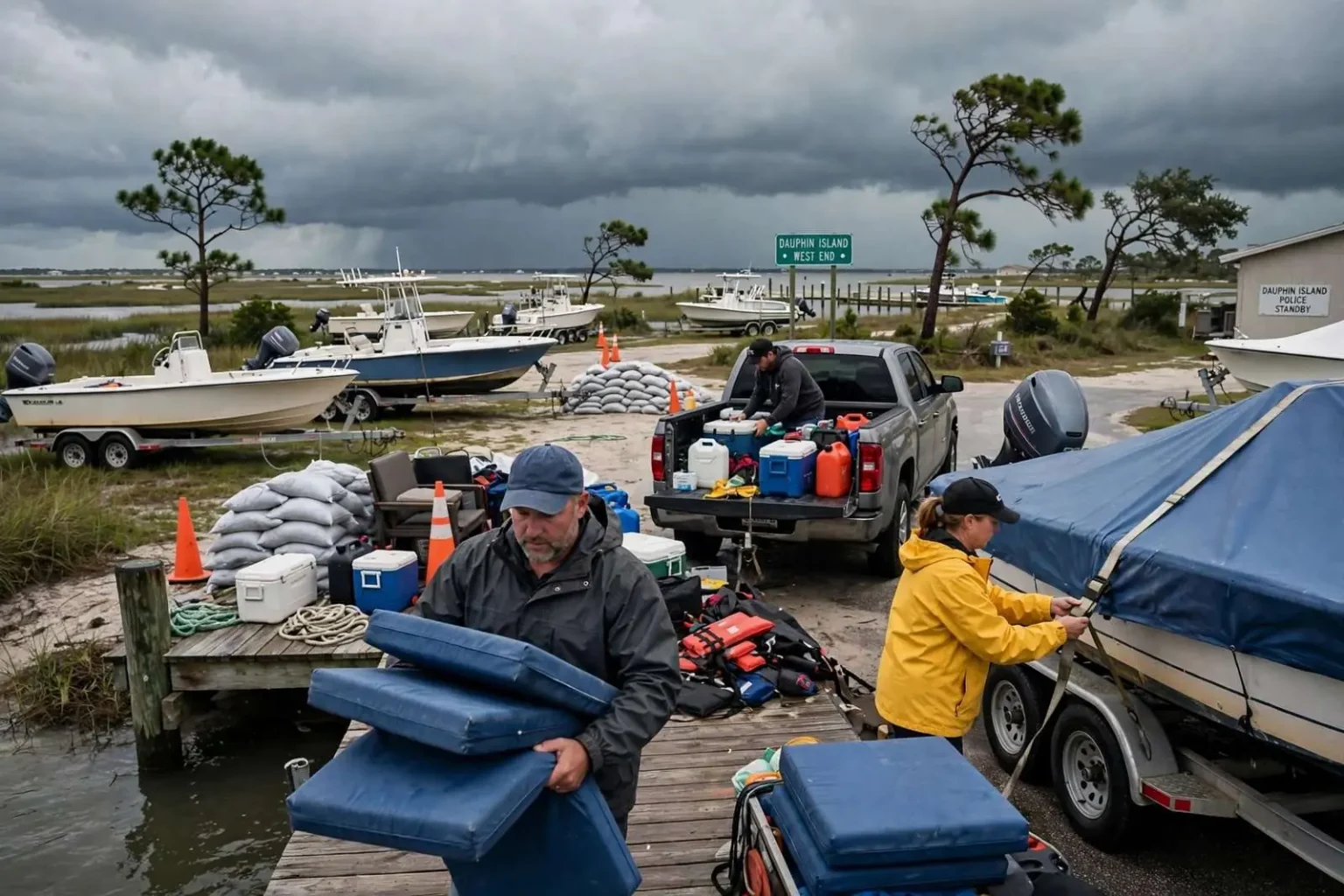
DAUPHIN ISLAND, Ala. — As Tropical Storm Sally organized in the Gulf of Mexico, Dauphin Island residents were back in familiar territory — making storm preparations even as they braced for what forecasters expected to be a significant hit. On a barrier island that sits barely above the tide line at its west end, preparation is not an abstraction; it is a routine of moving cushions off docks, hauling boats, checking generators and watching the water with a practiced eye. With Sally still finding her strength in the central Gulf, islanders had already started the drills they have repeated for decades.
“We’ve been putting up our cushions and stuff off of the dock,” one resident said. “I mean we’re used to it, so we react the same to every storm — just ready for the wind and in case the water rises.” The matter-of-fact tone captured the island’s peculiar relationship with hurricane season. Dauphin Island sits at the mouth of Mobile Bay, the first land many Gulf storms touch after crossing the warm shelf waters, and its residents have come to treat each approaching system with the same checklist rather than the same panic.
That steadiness was tested just weeks earlier, when Hurricane Laura came ashore to the west and flooded parts of the island, an event still fresh in everyone’s mind as Sally spun north. Laura’s surge, pushed into the island even from a Louisiana landfall, was a reminder that Dauphin Island does not need a direct hit to take water — a fact that shapes how the town prepares for every system in the Gulf, whatever its projected track.
Mayor Jeff Collier said saltwater flooding was the primary concern, especially on the west end and other low-lying parts of the island. The geography explains the worry: the west end of Dauphin Island is a long, low spit of sand and marsh that hurricanes and even strong tropical systems have overwashed repeatedly through the years, while the higher east end around Fort Gaines and the historic tree line generally stays drier. Water, not wind, is what most often forces residents off the island.
The town’s response machinery was already moving before the storm’s center had a fixed destination. The Dauphin Island Police Department was placed on standby for road closures, ready to barricade low spots as soon as surge or rain pushed water across the roadway, and the town had already lined up its cleanup contractors for the work that follows every flooding event — clearing sand, debris and mud from the same streets that seem to collect them storm after storm.
An Island Defined by the Water Around It
Dauphin Island’s vulnerability is written into its shape. The island stretches about fourteen miles along the Gulf of Mexico, guarding the entrance to Mobile Bay, and is connected to the mainland by a single route: Highway 193 across the Dauphin Island Bridge over the Intracoastal Waterway and bay waters. When flooding cuts roads on the island or the bridge closes for high wind, there is no alternate way off — a fact that drives the town’s emphasis on leaving early rather than late.
That single-access geography is why Collier stressed that the island was encouraging people to move vehicles to higher ground in the island’s interior. Elevating cars and trucks ahead of saltwater flooding is one of the cheapest and most effective forms of storm protection on a barrier island, where a foot of surge in a driveway can total a vehicle that would have survived untouched a few blocks away or a few feet higher. Residents who have been through previous overwashes know the drill well: vehicles relocated, belongings lifted off floors, and outdoor furniture stored before the first squall lines arrive.
A particular focus in the days before Sally’s arrival was making sure visitors had a plan. The mayor had reached out to local real estate agents, who maintain direct lines to renters and guests, to communicate what was potentially coming and keep everyone informed as Sally approached. On an island whose population swells in summer with vacationers staying in beach houses and rental cottages, the real estate community functions as an informal emergency broadcast network — the fastest way to reach thousands of people who may not follow local weather closely and may be staying in the very low-lying areas most exposed to surge.
The approach worked in both directions: agents relayed the town’s warnings to their renters, and guests with questions about evacuating had a familiar local contact to answer them. For a town of Dauphin Island’s size, where the municipal staff is small and siren systems are impractical, that personal chain of communication has become one of the most reliable tools in the pre-storm kit.
A Town That Prepares by Repetition
The island’s storm history reads like a catalog of the Gulf’s worst hits. Hurricanes over the decades have stripped sand from the west end, toppled the island’s famous Audubon bird sanctuary trees, and repeatedly damaged the bridge that is its only lifeline. Yet the community rebuilds in place, and each storm passes along the same practical knowledge: secure the dock, raise the vehicles, fuel the vehicles and generators, and be ready to leave when the water — not the wind — says it is time.
Sally’s approach fit that pattern almost perfectly. The storm was never expected to be a major hurricane at landfall in the early forecasts, but its slow movement and broad wind field promised days of onshore flow pushing Gulf water into the bay — exactly the setup that floods the island’s lower streets even when the center stays well away. For west end residents, the question was never whether water would reach the roads, but how high and for how long.
Town officials kept the messaging simple in the days before landfall: stay informed, move what matters, and do not wait for an evacuation order that may come at an inconvenient hour. The police department’s standby status meant officers could close roads the moment they became dangerous, and the pre-arranged cleanup contractors meant recovery could begin as soon as the water receded rather than after the paperwork was done.
For the residents hauling cushions off docks and parking trucks on higher ground, the routine was as unremarkable as it was essential. “We’re used to it, so we react the same to every storm,” the resident said — a sentence that could serve as the island’s unofficial motto. The same steadiness carried Dauphin Island through Laura’s flooding weeks earlier, and as Sally gathered strength in the Gulf, it carried the town through its preparations once again, with the bridge at its back and the Gulf in full view.
What Saltwater Flooding Means for Island Homes
Saltwater is the most destructive kind of flooding a coastal home can take, and residents here know the difference between it and rainwater. Gulf water that pushes over the west end leaves behind sand, silt and corrosion that can ruin vehicles, appliances and flooring long after the water drains away, which is why the town’s cleanup contractors were lined up before the storm rather than after it. Homes elevated on pilings, a common sight across the island, ride out flooding that would reach the floor joists of houses built at grade, and many long-time residents measure storms by how close the water came to their steps.
The economics reinforce the preparation. Most island insurance policies carry substantial flood deductibles, and even minor overwash events can generate tens of thousands of dollars in repairs for owners of low-lying property. Moving vehicles to the island’s interior higher ground costs nothing, which is why the mayor’s office makes it a centerpiece of nearly every pre-storm advisory, along with securing loose items that saltwater floods and strong winds turn into debris.
Watching the Gulf, One Forecast at a Time
By the time Sally’s outer clouds began to influence local weather, the island had already done most of what can be done. Boats had been pulled from lifts or moved to protected water, dockside furniture was stored, real estate agents had passed the town’s warnings to their renters, and police were ready to close the low-lying roads the moment water crossed them. The cleanup contractors waited on standby, the way they have before every named storm in recent memory.
It is a way of life that outsiders sometimes mistake for fatalism, but on Dauphin Island it is closer to maintenance — the recurring work of living on a barrier island at the mouth of Mobile Bay. The cushions go up, the vehicles move inland, the bridge stays watched, and the town waits to see what the Gulf sends. As Sally approached, residents once again proved the island’s oldest rule: the storms will come, and the people who live here will be ready for the wind and the water long before either arrives.


