
Dauphin Island’s West End Beach Reopens Months After Hurricane Sally Wrecked It
West End Beach on Dauphin Island has reopened months after Hurricane Sally damage forced a $250,000 rebuild of the beach parking lot.
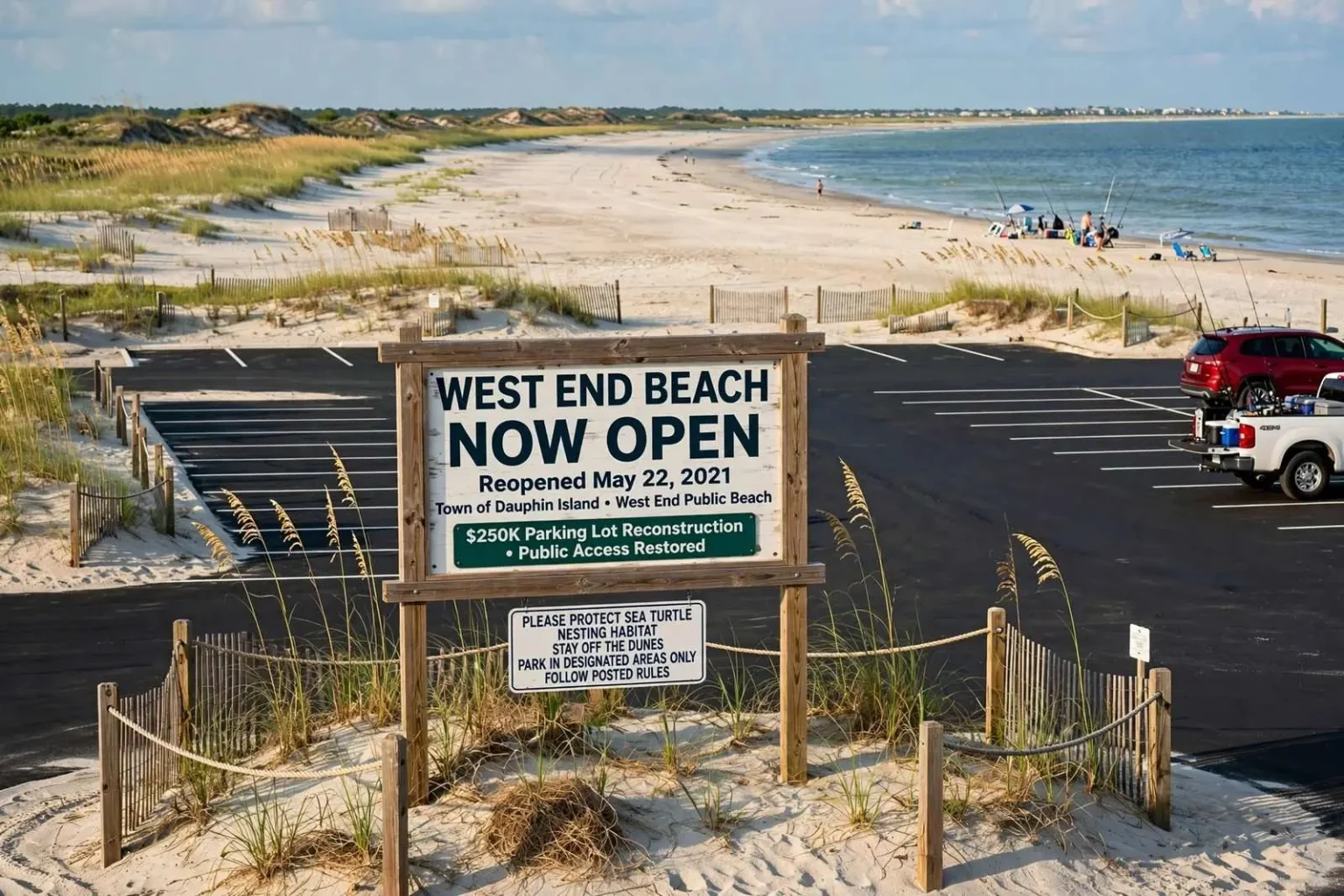
A major piece of public beach access is back on the Alabama coast. Dauphin Island’s West End Beach reopened to visitors, returning a popular stretch of sand to public use more than half a year after Hurricane Sally hammered the barrier island in September 2020.
Sally’s landfall left the west end of Dauphin Island heavily damaged, and the town restricted that section of the island to residents and renters for months while recovery work moved forward. The restrictions stayed in place through the fall, winter and early spring while crews cleared debris, repaired infrastructure and rebuilt facilities that the storm destroyed or damaged.
The biggest piece of the repair effort was the beach parking lot, which had to be completely rebuilt after the storm. Town officials estimated the reconstruction carried a price tag of roughly $250,000, a substantial expense for a small barrier island town with a modest budget and a tax base measured in hundreds of permanent households rather than thousands.
What Sally did to the island
Hurricane Sally came ashore near Gulf Shores on September 16, 2020, as a slow-moving Category 2 storm, and its crawl across the northern Gulf Coast made it one of the most damaging hurricanes in the region’s modern history. Slow forward speed meant prolonged onshore winds and an extraordinary storm surge, and communities from Mobile Bay westward took the worst of it. Dauphin Island, the barrier island guarding the mouth of Mobile Bay, took a direct dose of the surge, and the west end, the low-lying, sparsely developed spit that points toward the Little Sand Island channel, was hit especially hard.
Barrier islands are the coast’s sacrificial landscape: they absorb wave energy that would otherwise strike the mainland, and they rearrange themselves with every major storm. Sand overwashed roads and lots, dunes were flattened, and debris from damaged structures and stripped vegetation littered the beach. On Dauphin Island, where the west end also hosts the public beach, a campsite area and some of the town’s most storm-vulnerable real estate, the recovery question was not just whether to rebuild but how to restore access without inviting the next storm to do the same damage again.
For months after the storm, the town limited the west end to residents and renters. The restriction served two purposes: it kept sightseers out of an active recovery zone with hazards ranging from debris to damaged pavement, and it preserved limited parking and road capacity for the crews and residents doing the work. The town also reopened its other public amenities in stages as conditions allowed, but the West End Beach, one of the island’s signature public spaces, remained closed the longest.
The parking lot that anchored the reopening
The complete rebuilding of the beach parking lot was the linchpin of the reopening. Public beach access on Dauphin Island depends on vehicle access; the west end is miles from the island’s commercial core, and visitors arrive by car with coolers, umbrellas, fishing gear and, in season, everything a day on the Gulf requires. Without a lot, there is effectively no public beach, because shoulder parking on a fragile island road is neither safe nor permitted in the areas that recovered.
A $250,000 lot rebuild is a significant line item for Dauphin Island, a town whose permanent population is small and whose revenue depends heavily on tourism, property taxes and the fees collected from the visitors who drive onto the island every summer. Storm recovery costs land on top of ordinary expenses, and towns like Dauphin Island typically piece together funding from insurance, federal and state disaster assistance, and their own reserves. The lot’s completion, after months of work, signaled that the west end’s recovery had reached the point where the town could once again invite the public in.
The reopening restored full public access just as the summer beach season got underway on Mobile County’s barrier island. For a town whose economy leans on the flow of visitors, the timing mattered: Memorial Day and the weeks that follow represent a large share of annual tourism revenue, and a closed flagship beach through the early summer would have deepened the storm’s economic damage well beyond the cost of repairs.
Why West End Beach matters
Dauphin Island occupies a special place on the Alabama Gulf Coast. Connected to the mainland by the Gordon Persons Bridge over the Gulf Intracoastal Waterway, the island is less developed than the resort beaches of Baldwin County, and its public lands are a large part of its character. The Audubon Bird Sanctuary, historic Fort Gaines, the Estuarium at the Dauphin Island Sea Lab and the public beaches together draw birders, anglers, families and history enthusiasts in every season.
The West End Beach in particular is known for a quieter, more natural stretch of shoreline than visitors find east of the bridge. Sunset views over the Mississippi Sound, drive-on beach access for fishing, and the island’s famous sand dollars and shell hunting make the west end a destination for campers and day-trippers alike. The beach’s reopening returned not just a recreation site but a piece of the island’s identity that residents had watched sit behind storm fencing for most of a year.
The island’s west end has a long and complicated history with storms. Hurricanes from Camille through Frederic, Georges, Ivan, Katrina and now Sally have repeatedly damaged or severed the westernmost reaches of the island, and each recovery has renewed debate about rebuilding in the most exposed terrain. Dauphin Island’s leaders have balanced that debate against the reality that the west end is part of the town, home to property owners and central to the island’s appeal, and each storm cycle has ended with rebuilding rather than retreat.
The coast’s recovery from the 2020 season
Sally was the capstone of an exceptionally active 2020 hurricane season that ran through the alphabet and into the Greek letters. On the Alabama coast, Sally’s damage ran into the hundreds of millions of dollars: roads washed out, thousands of trees down, marinas wrecked, and months of power outages in the hardest-hit areas. The recovery stretched across years for some communities, and the pace varied sharply by jurisdiction and by what infrastructure had to be rebuilt.
Dauphin Island’s reopening of the West End Beach marked another milestone in the coast’s slow recovery from the 2020 hurricane season. Each restored amenity, a repaired pier, a cleared boat launch, a rebuilt parking lot, restores a piece of the region’s routine, and for coastal towns whose economies run on visitors, routine is the product. The town’s ability to restore full public access before the height of the summer season was a sign that the island’s recovery, while still unfinished in places, had reached the public-facing milestone that residents and returning visitors had been waiting for.
For visitors planning a trip, the reopening restored the island’s full set of public beach options. Town officials continued to remind beachgoers of the rules that govern the west end, including parking regulations and the protections for the dunes and sea turtle nesting habitat that the beach hosts each summer. Sea turtle nesting season on the Alabama coast runs from late spring through the fall, and the west end’s undeveloped shoreline is among the island’s most important nesting grounds, monitored by volunteers who mark and protect nests each season.
Half a year after Sally rearranged the shoreline, the west end was open again, the parking lot was new, and Dauphin Island was back in the business of hosting the public on the stretch of sand that defines its western horizon.
Visiting the west end after the reopening
The reopening came with the rhythms of a typical Dauphin Island summer returning to the west end. Day-trippers from Mobile, Baldwin County and beyond crossed the bridge with beach chairs and tackle boxes, campers resumed reserving the sites near the public beach, and anglers returned to the shore fishing that makes the west end a fixture of the Gulf Coast fishing calendar. The rebuilt parking lot filled on weekends as it had before the storm, and the town collected the entrance and parking fees that help fund beach operations and maintenance.
Visitors to the west end encounter a different beach experience than the one waiting across Mobile Bay in Gulf Shores or Orange Beach. There are no high-rise condos behind the dunes, no boardwalk arcades, and the nearest restaurant is back toward the island’s east end. What the west end offers instead is space: wide sand, fewer crowds, uninterrupted water views in three directions, and the sunsets over the Mississippi Sound that photographers time their evenings around. That character survived the storm, and its return was what residents celebrated most about the reopening.
The town continued to manage the west end carefully through the post-recovery period. Beach Town-related regulations, parking rules enforced by the town’s police department, and the seasonal protections for nesting shorebirds and sea turtles all remained in force, and recovery-period conditions in some adjacent areas meant visitors were asked to respect closures and stay off marked areas while vegetation and dune systems continued to recover.
Funding recovery on a small island town
The $250,000 parking lot project illustrates the arithmetic of disaster recovery for a town of Dauphin Island’s size. Small municipalities lack the in-house engineering staffs and contracting relationships of larger governments, so even routine capital projects move slowly, and storm-driven projects pile onto an agenda already full of road, sewer and waterfront maintenance. Federal disaster assistance programs reimburse much of the cost of restoring public facilities after a declared disaster, but the process runs on paperwork and timelines that can lag months or years behind the physical work.
Towns like Dauphin Island typically front the costs and seek reimbursement, which strains reserves in a good year and tests them severely in a storm year. The town’s budget depends on a mix of property tax, sales tax from island businesses, and the fees paid by beachgoers and campers, and those revenue streams all dipped while the west end was closed. Reopening the beach was thus not only a quality-of-life milestone but a fiscal one, restoring the fee collection that supports the beach’s own upkeep.
The storm also renewed long-running conversations about the island’s future vulnerability. Dauphin Island participates in federal beach and dune restoration programs and has repeatedly sought federal support for shoreline protection, with the town’s officials arguing that the barrier island shields the mainland and the Port of Mobile from storm surge. Every recovery project, including a rebuilt parking lot, is built against the knowledge that the next storm is a matter of when, not whether.
For now, the west end’s story is one of restoration. The beach that Sally buried is open, the lot that anchored public access is rebuilt, and the island that has absorbed blow after blow from the Gulf for generations was once again welcoming the public to its western shore as the summer of 2021 got underway.


