

There is an old joke about what professional golfers do on vacation. David Rainer lives a version of it: he is paid to hunt and fish. For more than three decades he has written about the outdoors in south Alabama — first as a newspaper outdoors editor, and since 2006 as the in-house writer for the Alabama Department of Conservation and Natural Resources, working from his home in Silverhill.
Retirement has crossed his mind, briefly. “When I mentioned retirement at some point, my wife, Robbie, asked me, ‘What will you do if you retire, hunt and fish?’ I said, ‘Yeah,’ and she said, ‘Well, you can do that now and get paid for it.'”
So he keeps at it, as a self-described “hybrid, an outdoor writer-slash-public relations manager” — writing a weekly column and press releases, drafting material for the commissioner, and sending it all out each Friday to more than 30,000 subscribers.
The Delta, up close
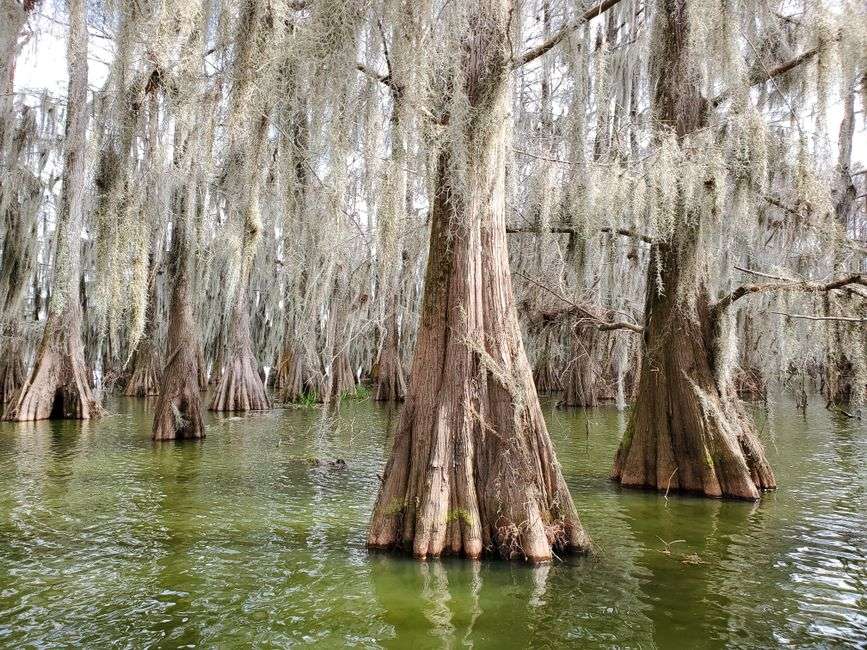
One of Rainer’s favorite places to showcase what he covers is minutes from his home office: the 5 Rivers Delta Resource Center, the 1,327-acre park at the eastern end of the Causeway that ranks among Baldwin County’s shiniest jewels. The rustic lodge-like visitors center and meeting rooms impress; so does the small theater screening “America’s Amazon.” But the real attraction is outside.
“There’s such a diversity of flora and fauna that it’s almost unbelievable,” Rainer says. “It’s one of few areas that has this much estuarine habitat. All of these rivers come together and form this humongous delta and eventually empty into Mobile Bay, providing a great spawning and rearing habitat for an abundance of different species.”
The five rivers that give the center its name are the Blakeley, the Tensaw, the Apalachee, the Mobile and the Spanish — with the Raft River, Chuckfee Bay, John’s Bay and the Middle River among the other waterways feeding the convergence. The Delta’s brackish mix of fresh and salt water is what makes fishing it special. “The bass are here most of the time, and you can catch some if you work the tides right and find those ambush points,” he says. “But in the fall, there’s a saltwater wedge that moves up, and that brings in speckled trout, redfish and flounder. There was a quarter-mile stretch on the Raft River that had grass beds, and I can’t tell you how many speckled trout I caught off that one quarter-mile stretch.”
Onshore, the Delta holds whitetail deer, squirrels, rabbits, wild pigs and waterfowl in season — a range of hunting that few coastal landscapes can match.
From newsprint to state government
Rainer’s outdoor writing began in Mississippi, where his father first introduced him to hunting and fishing in the towns of Union and later Okolona, and it matured during 14 years as outdoors editor for a Mobile newspaper — toward the end, he notes, of print journalism’s golden age. The newspaper, remarkably, provided him his own 21-foot bay boat to use freely for his work.
He knows the Delta’s waters because he has fished them for decades, and he knows the Black Belt, too — his favorite turkey ground lies upstate, with Wilcox County his pick for Alabama’s best trophy gobbler hunting. “There are a lot of turkeys up there, but there are a lot of turkey hunters up there too,” he says, “so you’ve got to be at the top of your game to fool one of those birds. We turkey hunters tend to talk about the ones we didn’t kill as much as the ones we did kill. We remember the ones who outsmarted us.”
Writing about parks, flounder and people
Whether the subject is a rebound in the flounder population, a wild-game cook-off or major expansions at state parks, Rainer’s work consistently spotlights the human element — the biologists, guides, park staff and families behind Alabama’s outdoor economy. It is detailed, informative and, above all, entertaining, which is why the department’s Friday distribution reaches more than 30,000 subscribers.
His own story nearly ended 11 months before his interview — his wife Robbie, an operating room nurse of 42 years, spotted worrying symptoms that led quickly to bypass surgery, quite possibly saving his life. Today he works from home in Silverhill, balancing the job he loves with time alongside Robbie, their two grown daughters, Ashley and Allyson, and their young grandson Ollie.
“I’ve been blessed, there’s no doubt about it,” David says. “You can’t get a better gig than covering the outdoors in Alabama for the last 32 years.”