

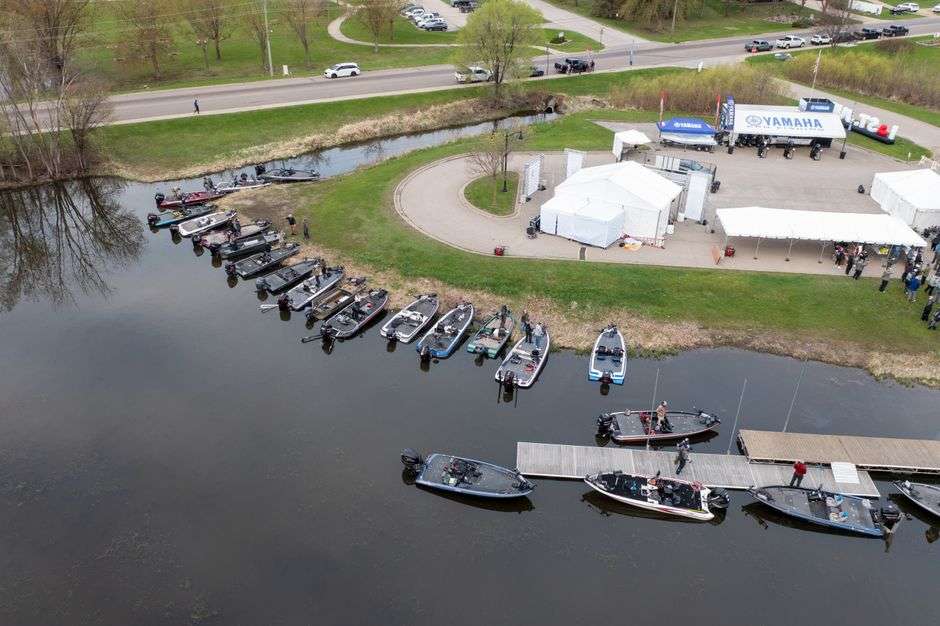
Every July, the Alabama Deep Sea Fishing Rodeo turns Dauphin Island into the busiest fishing town on the Gulf Coast. Thousands of anglers, tens of thousands of spectators, a leaderboard that changes by the hour — and, quietly, one of the most productive marine science operations on the northern Gulf, working through the night in a converted weigh station.
The scientists have a nickname for it: Fish Christmas. For the graduate students who camp out at the rodeo’s scales every summer, the event delivers a haul of fish samples so large and so varied that a year’s worth of research material arrives in a single weekend.
A Rodeo Run by Jaycees
The rodeo is one of three signature programs of the Mobile chapter of the Junior Chamber of Commerce — the Mobile Jaycees — alongside the Azalea Trail and the Greater Gulf State Fair. It is the largest fishing rodeo of its kind, drawing more than 3,000 anglers and crowds estimated at 75,000 spectators over its three-day run at the rodeo grounds on Dauphin Island.
The scale of the thing is easy to underestimate. Fishing boundaries stretch from Apalachicola, Florida, west to the Texas line. Species categories cover everything from speckled trout to billfish, boats and motors sit at the top of the prize table for the biggest winners, and a standing prize goes to the most unusual fish hauled to the scales — a category that over the years has produced species most attendees have never seen before.
Running it all is a volunteer leadership team that rotates through the ranks of the Jaycees. Among them is Richard Rutland, a Dauphin Island fishing guide who runs Cold-Blooded Fishing and has served the rodeo as a board member, as its president in 2016, and as rules committee chairman — the job of making sure nobody bends a rule when boats and bragging rights are on the line.
The Science at the Scales
What separates the Alabama Deep Sea Fishing Rodeo from nearly every other fishing tournament in the country is what happens after the fish are weighed. The rodeo works hand in hand with the University of South Alabama’s marine biology department and the Dauphin Island Sea Lab, and thousands of fish cross the scales each year into the hands of researchers.
Under marine scientists like Dr. Sean Powers of the Sea Lab, graduate students collect species, sizes, ages and tissue samples at a scale no research cruise could ever match. The data flows up to state and federal agencies, where it helps set harvest limits and size regulations designed to keep populations healthy. For Ph.D. students earning their degrees on the island, the rodeo is, quite literally, a mecca of information.
Conservation Gets a Weigh-In
The rodeo’s conservation-minded turn has accelerated in recent years, much of it pushed from within. In 2015, Rutland spearheaded a live-well weigh-in experiment: speckled trout, redfish and tripletail were weighed live, displayed in a large tank for the crowds, then released back into their home waters. What had been a purely harvest-driven spectacle suddenly had a catch-and-release showcase at its center.
Flounder — a species whose Gulf populations had slumped — became another focus. Researchers surgically implant small acoustic tags in flounder brought to the scales, then release them so biologists at the Dauphin Island Sea Lab can track their movements and habits. The work has contributed to a rebound in flounder numbers in the years since, a quiet example of a fishing tournament helping to rebuild the very resource it depends on.
Why It’s Worth the Trip
For all the science, the rodeo remains a family event at heart. The leaderboard updates continuously as anglers bring their catch in from the Gulf, and the crowd around the scales treats every new fish like a plot twist — the family holding first place in a category watching, anxiously, as a bigger fish swings into view.
There is food, there are vendors, and there is the simple spectacle of seeing what a few thousand boats can pull out of the Gulf in three days. Between the tournament itself, the research operation working behind the scales and the release programs swimming back out to the bay, the Alabama Deep Sea Fishing Rodeo manages to be three things at once: a competition, a festival, and one of the most unusual scientific instruments on the Gulf Coast.
Fish Christmas, indeed — except here, the scientists get the presents, and the fish get to go home.