

A Legacy of Corruption: Decades of Mismanagement at Prichard’s Water Works and Sewer Board
How a pattern of self-dealing, financial mismanagement, and institutional failure stretching back more than thirty years left one of Alabama’s poorest cities with crumbling pipes, soaring bills, and a multi-million-dollar federal fraud case
Introduction
In the struggling city of Prichard, Alabama—one of the poorest communities in a poor state—residents have long endured unreliable water service, sky-high bills, sewage backups, and crumbling infrastructure. But behind the failing pipes and boil-water notices lies a deeper rot: a pattern of public corruption, misspending of taxpayer and ratepayer money, and self-dealing at the Water Works and Sewer Board of the City of Prichard that spans decades.
Federal and state authorities have now brought multiple arrests and indictments in the most recent multi-million-dollar fraud scheme, yet the history of ethics violations, questionable travel expenses, financial mismanagement, and institutional failure stretches back at least to the 1990s—and according to court-appointed overseers and longtime observers, reflects more than five decades of challenges.
The 2022 Raid and the Unraveling of a Multi-Million-Dollar Scheme
The latest chapter erupted into public view with a dramatic multi-agency raid in February 2022. FBI agents and Mobile County deputies stormed the Prichard Water Board headquarters, carting out boxes of records and computer equipment. They later searched the home of the utility’s former operations manager. What investigators uncovered was a brazen scheme that prosecutors say bilked the system of at least $2.4 million—and by some accounts closer to $2.5 million—between roughly 2018 and 2022.
In April 2025, a federal grand jury in Mobile returned a 32-count indictment charging seven people in connection with the fraud. Named were:
- Nia Bradley (also referred to as Nia Malika Bradley), 50, of Mobile — the former operations manager
- Randy Burden, 47, of Prichard — a former public service supervisor
- Steve Jones, 61, of Mobile
- Larry Knight, 35, of Mobile
- Dejuan Lamar, 47, of Mobile
- Ayanna Payton, 47, of Eight Mile
- Stephanie Hunn, 49, of Mobile
Two individuals had already pleaded guilty by the time the indictment was unsealed; others later indicated intent to plead. Charges included conspiracy to commit mail, bank, and wire fraud; conspiracy to defraud the United States; money laundering conspiracy; wire fraud; bank fraud; and filing a false tax return. Defendants face potential sentences of decades in prison.
How the Scheme Worked
According to the U.S. Attorney’s Office for the Southern District of Alabama, the scheme involved falsified payment authorizations, bogus contractor invoices, and kickbacks:
- Bradley and Burden allegedly funneled roughly $960,000 through a business they owned and operated, B&B Enterprise.
- Outside contractors received large payments for little or no legitimate work; one business alone was alleged to have received more than $700,000.
- Prosecutors described a conspiracy that reached employees and at least one board member level.
Bradley later pleaded guilty to multiple counts, admitting involvement in schemes that diverted millions, with some co-conspirators—including unnamed former board members identified in plea materials as receiving cuts—remaining uncharged at the time of public reporting.
State charges had already been filed years earlier. Mobile County prosecutors arrested Bradley the day after the 2022 raid and secured a state grand jury indictment by late 2022 against her, her husband Anthony Bradley, and two subordinates on charges including theft and fraudulent use of a credit card.
“Guccigate”
Local reporting and court filings described personal spending on luxury goods—Gucci, Louis Vuitton—first-class travel, five-star hotels, streaming services, gift cards, and other items charged to utility credit cards, a scandal quickly dubbed “Guccigate” by the local press.
A System Already in Financial Distress
The scale of the theft was particularly galling because the utility was already in deep financial distress. In 2019, the board had secured a roughly $55–56 million bond issue intended for critical infrastructure repairs, electronic metering, and other upgrades.
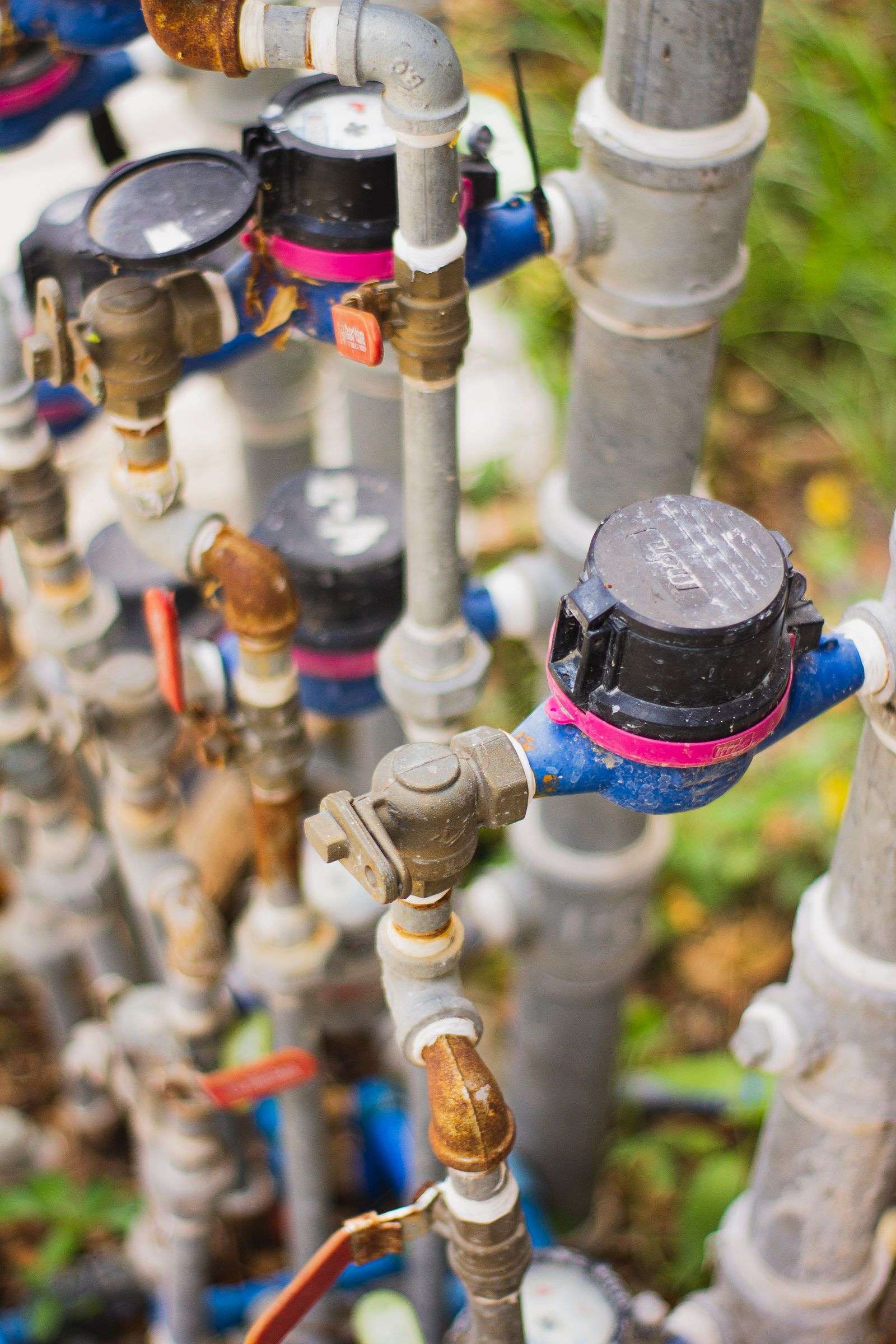
Instead of fixing a system in which roughly 70 percent of water pipes and a large share of sewer lines were in need of replacement (estimates of needed investment have ranged from hundreds of millions of dollars), significant sums were diverted. The utility later defaulted on the bond obligations.
In 2023, a Mobile County Circuit Court judge, acting on a lawsuit by the bond trustee (Synovus Bank), declared the system in default and appointed a receiver, John S. Young Jr., to take operational and financial control. Young, who had previously overseen troubled utilities including Jefferson County’s sewer system during its historic debt crisis, has publicly described inheriting more than five decades of financial and operational challenges, cash shortages, incomplete audits that blocked access to state and federal funding, and a system in the worst condition of any he has managed.
This was not an isolated episode of greed. A clear through-line of problems exists.
Timeline of Key Events
Late 1980s–early 1990s Carvine P. Langham served as a member of the City of Prichard Water & Sewer Board. She received substantial travel expense advances from the board for seminars and meetings across the United States. The board estimated expenses by location but required no receipts or verification of how the money was spent. Langham and her husband reported the advances as income and claimed corresponding travel deductions on tax returns. The Alabama Department of Revenue later disallowed most of the claimed expenses for tax years 1989–1992 after an audit. A Mobile County grand jury indicted Langham on ethics charges related to overpayment of travel expenses. District Attorney records compiled for the ethics investigation showed significant discrepancies between amounts paid by the board and documented actual costs. Langham and fellow board member John Forister were convicted of violating the state ethics law. Appellate proceedings in 1994 addressed procedural issues around the indictments but affirmed the convictions. A 1996 Alabama Tax Tribunal decision upheld the revenue assessments against the Langhams, noting the failure to keep records and the irony of their complaints about the District Attorney’s calculations.
1990s–2000s Prichard’s broader municipal finances collapsed. The city filed for bankruptcy in 1999 and again in 2009, at one point stopping pension payments. The water and sewer system suffered from aging infrastructure, unmapped leaks, and chronic underinvestment. Engineers were already documenting severe pipe and pressure problems by the early 2000s.
2014 Water service had become so unreliable that state legislators advanced a ballot measure to dissolve the Prichard Water Board and transfer assets to the larger, more stable Mobile Area Water and Sewer System (MAWSS). County voters approved the plan by 52 percent. The Prichard board responded by signing a management contract with Severn Trent Water that critics labeled a “poison pill,” imposing tens of millions in potential additional costs on any takeover. MAWSS backed away. Nia Bradley began her association with the utility as a contractor through Severn Trent and later became operations manager.
2018–2022 The period of the major federal fraud scheme. Investigators later determined that falsified contractor invoices, kickbacks, and personal credit-card abuse drained at least $2.4 million. Board chairman Russell Heidelberg later stated he had raised concerns about financial irregularities as early as 2018 with the attorney general and ethics commission, with little apparent immediate action.
February 2022 Multi-agency raid on the water board offices and subsequent search of Bradley’s residence. Bradley arrested the following day on state charges.
November 2022 Mobile County grand jury returns state indictments against Bradley, her husband, and two subordinates for embezzlement and related offenses. The local District Attorney describes the case as involving millions in misspent funds.
2023 Utility defaults on the $55 million bond. Bond trustee sues. Circuit Judge Michael Youngpeter places the system under receivership in November, citing fiscal irresponsibility and the need for professional management. Receiver Young begins efforts to stabilize operations, attract grant funding, and confront decades of deferred maintenance.
April 2025 Federal indictment unsealed charging seven defendants in the multi-million-dollar contractor and kickback scheme. Two have already pleaded guilty; others later signal intent to plead. Prosecutors emphasize that the fraud reached board-member level.
2025–2026 Bradley pleads guilty in federal court to conspiracy, fraud, money-laundering, and tax counts. Sentencing scheduled. Additional defendants move toward pleas. Plea materials publicly acknowledge participation by unindicted former board members who allegedly received portions of the proceeds. The receiver continues to warn that without sustained external grants, monthly residential bills could exceed $200. Infrastructure needs remain massive; public health and economic development in Prichard and neighboring Chickasaw continue to suffer. Chickasaw officials have repeatedly sought to exit the system and establish independent service, without success.
The Human Cost
The human cost is measured in more than dollars. Prichard residents—many living on fixed or low incomes in a city where median household income hovers near $36,000 and poverty rates exceed 30 percent—have faced erratic service, unexplained bill spikes (sometimes ten times normal amounts), sewage overflows, and a profound erosion of trust.
Neighboring Chickasaw, which depends on Prichard’s system, has watched its growth constrained by the same unreliability. Lawsuits by ratepayers, bondholders, and others have piled up. Calls to dissolve the board, elect its members, or place it under stricter state oversight have circulated for years with limited success.
Court-appointed receiver John Young has been blunt: the problems are not new. Infrastructure received “very little investment in the past few decades.” Financial controls were inadequate. Audits lagged. Cash was depleted. When outside money finally arrived via the bond issue, much of it was vulnerable to the very people charged with safeguarding it.
Conclusion: A Pattern Decades in the Making
The 1990s ethics convictions of board members for travel-expense abuses, the repeated municipal bankruptcies, the 2014 near-dissolution of the utility, the “Guccigate” credit-card excesses, the contractor kickback scheme that netted millions, the bond default, and the ongoing federal and state prosecutions form a continuous narrative. Public officials and employees entrusted with providing the most basic necessity of modern life—clean, reliable water—instead treated the system as a personal piggy bank or a vehicle for self-enrichment while the pipes corroded and residents paid the price.
Accountability has been slow and incomplete. Some board members allegedly involved in the recent schemes remain uncharged. Earlier warnings went unheeded. Structural reforms—whether full dissolution, merger with a stronger utility, elected governance, or permanent professional receivership—remain contested. In the meantime, the people of Prichard continue to live with the consequences of decades of misspent money, weak oversight, and repeated scandals.
The arrests and indictments of recent years are necessary. They are not sufficient. Until the culture of entitlement and the institutional failures that enabled it are rooted out, the next scandal is only a matter of time. Ratepayers who can least afford it have already paid far too much.