New Fairhope Airport Roads Will Carry Names of Fallen Tuskegee Airmen
The Fairhope Airport Authority has approved naming four new airport roads after Tuskegee Airmen who were killed while serving as military pilots in World War II.
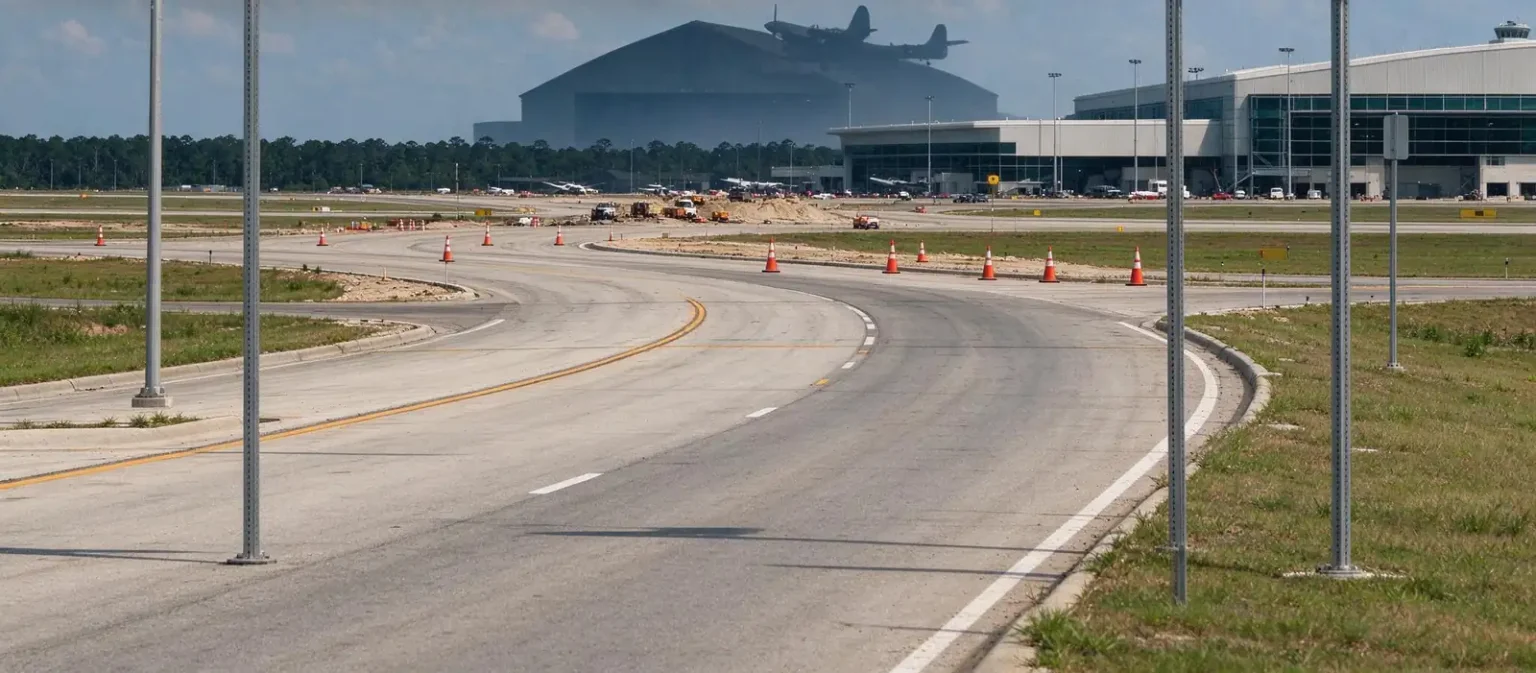
FAIRHOPE, Ala. — Four new streets taking shape at Fairhope Airport will bear the names of Tuskegee Airmen who died serving as military pilots in World War II, a tribute the Fairhope Airport Authority approved as the airfield continues to grow.
Sherman Windham White Jr., Leon Roberts, John Henry Prowell and Edward Laird are the four men who will be remembered. Each gave his life flying for the United States during the war, and the new Fairhope airport streets will keep their names in front of pilots, employees, visitors and neighbors for years to come.
How the Names Were Chosen
The idea began with a practical need. As development and construction continue around the airport, several newly built roadways needed names, and the City of Fairhope asked the airport authority to name four of them.
A member of the authority’s board proposed using the opportunity to recognize four Tuskegee Airmen who died in service to the nation. Board members then voted unanimously in favor of the recommendation.
The authority’s board leadership said the new names give the airport a meaningful way to recognize the four men at the same time it is opening up new areas for development. Leaders described themselves as pleased to be able to honor the airmen as that expansion moves ahead.
The Four Airmen Being Honored
The airport authority has identified the four men whose names will appear on the streets:
- Sherman Windham White Jr.
- Leon Roberts
- John Henry Prowell
- Edward Laird
All four served as military pilots and lost their lives during World War II. Naming streets after them places their service on the everyday map of Baldwin County, where people who drive, work and fly from the airport will encounter their names regularly.
Information on exactly which street will carry each name, and when new street signs will be installed, had not been detailed as of Thursday.
Who Were the Tuskegee Airmen?
The Tuskegee Airmen were the first African American military aviators in the history of the U.S. armed forces, along with the navigators, bombardiers, mechanics, instructors and support personnel who made their flying possible. The name comes from Tuskegee, Alabama, in Macon County, where the Army Air Forces trained Black pilots beginning in 1941.
At the time, the U.S. military was segregated, and many in positions of authority doubted that Black Americans could be trained to fly combat aircraft. The program at Tuskegee was created under pressure from civil rights advocates and the Black press, and its graduates set out to prove those doubters wrong.
Training in Alabama
Cadets received primary flight training at Moton Field, an airfield operated in partnership with the Tuskegee Institute, now Tuskegee University. They then moved on to more advanced instruction at Tuskegee Army Air Field nearby. Nearly 1,000 pilots earned their wings through the program during the war years, and thousands more men and women served in support roles.
Service Overseas
The first Black flying unit, the 99th Pursuit Squadron, later known as the 99th Fighter Squadron, deployed to North Africa in 1943 and went on to fly missions over the Mediterranean and Italy. The 99th later joined the 332nd Fighter Group, which became well known for escorting American bombers over Europe. Pilots of the 332nd painted the tails of their aircraft red, earning the nickname Red Tails.
The airmen flew hundreds of combat missions and earned numerous decorations, including Distinguished Flying Crosses. Their service came at a cost: Tuskegee-trained aviators were killed in combat, in training and in accidents during the war, among them the four men now being remembered in Fairhope.
A Legacy That Changed the Military
The record of the Tuskegee Airmen is widely credited with helping make the case for ending segregation in the U.S. armed forces. In 1948, President Harry S. Truman signed Executive Order 9981, which called for equality of treatment and opportunity in the military, a key step toward integrating the services.
Recognition for the airmen continued to grow in the decades that followed. In 2007, Congress awarded the Tuskegee Airmen the Congressional Gold Medal, one of the nation’s highest civilian honors, recognizing them collectively for their service. The Tuskegee Airmen National Historic Site, located at Moton Field and managed by the National Park Service, preserves the place where their training began and tells their story to visitors from around the world.
For Alabama, the Tuskegee Airmen are a source of particular pride, since their journey into aviation history began in the state. Communities across Alabama and the country have honored them with memorials, school names, highway designations and other tributes.
Alabama’s Deep Aviation Roots
The Tuskegee story is one chapter in a long aviation history in Alabama. In 1910, Wilbur and Orville Wright opened one of the nation’s earliest civilian flying schools in Montgomery, on land that later became part of Maxwell Air Force Base. Today the state is home to Army aviation training at Fort Rucker in the Wiregrass and to a major aerospace industry, including aircraft assembly in Mobile.
The Mobile Bay region played its own part in World War II. Brookley Field in Mobile served as a major Army Air Forces supply and maintenance depot, and the city’s shipyards expanded dramatically to build and repair vessels for the war effort, drawing thousands of workers to the area. Recognizing wartime aviators at a Baldwin County airfield connects that regional history with the national story of the Tuskegee Airmen.
A Growing Airport
The new street names arrive during a period of change at Fairhope Airport, which is identified by the code CQF. The public-use airport is located roughly four miles to the southeast of downtown, on the Eastern Shore of Mobile Bay.
Crews recently reinforced the 6,200-foot runway at CQF so it can handle some of the largest corporate jets. That kind of improvement allows heavier aircraft to use the field and can make the airport more attractive to business travelers, aviation companies and other tenants.
Ongoing construction and development around the airport have created new areas that need roads, which is how the four streets came about. As those areas fill in, the honored names will become part of the addresses and directions associated with the airport’s future.
The Fairhope Airport Authority
The Fairhope Airport Authority oversees the airport’s operations and development. Its board makes decisions about the airport’s property, improvements and policies, including matters such as naming new roads within the airport grounds, as it did in this case at the city’s request.
Remembering at Thanksgiving
The decision comes as many families gather for Thanksgiving, a holiday that often brings reflection on the service members who never returned home from war. Organizations such as the American Battle Monuments Commission care for the overseas cemeteries and memorials where many World War II service members who died abroad are buried or listed among the missing, and they maintain searchable records that allow families and researchers to learn about individuals who died in the war. Local veterans organizations across Baldwin County also hold observances throughout the year to honor the fallen.
Why Street Names Matter
Naming public places after people is one of the most lasting ways communities preserve history. Unlike a ceremony or a plaque that visitors must seek out, a street name becomes part of daily life. It appears on maps, mailing addresses, emergency dispatch systems and navigation apps, and it prompts curious residents and visitors to ask who the person was.
Choosing names connected to aviation history for streets at an airport adds another layer of meaning. Pilots and aviation workers traveling those roads will be reminded of aviators who flew during one of the most consequential periods in the history of American air power, and who did so while facing discrimination at home.
Learning More
Residents who want to learn more about the Tuskegee Airmen have several options:
- Visiting the Tuskegee Airmen National Historic Site at Moton Field in Tuskegee, a drive of roughly three hours from the Fairhope area
- Exploring online exhibits and educational materials from the National Park Service
- Checking the collections of the Smithsonian’s National Air and Space Museum and the National Museum of African American History and Culture, both of which feature material on the airmen
- Asking local libraries about books and documentaries on the airmen’s history
With the board’s approval complete, the four names are set to become a permanent part of Fairhope Airport as development continues, giving the community a daily reminder of the four airmen who did not come home from the war.