

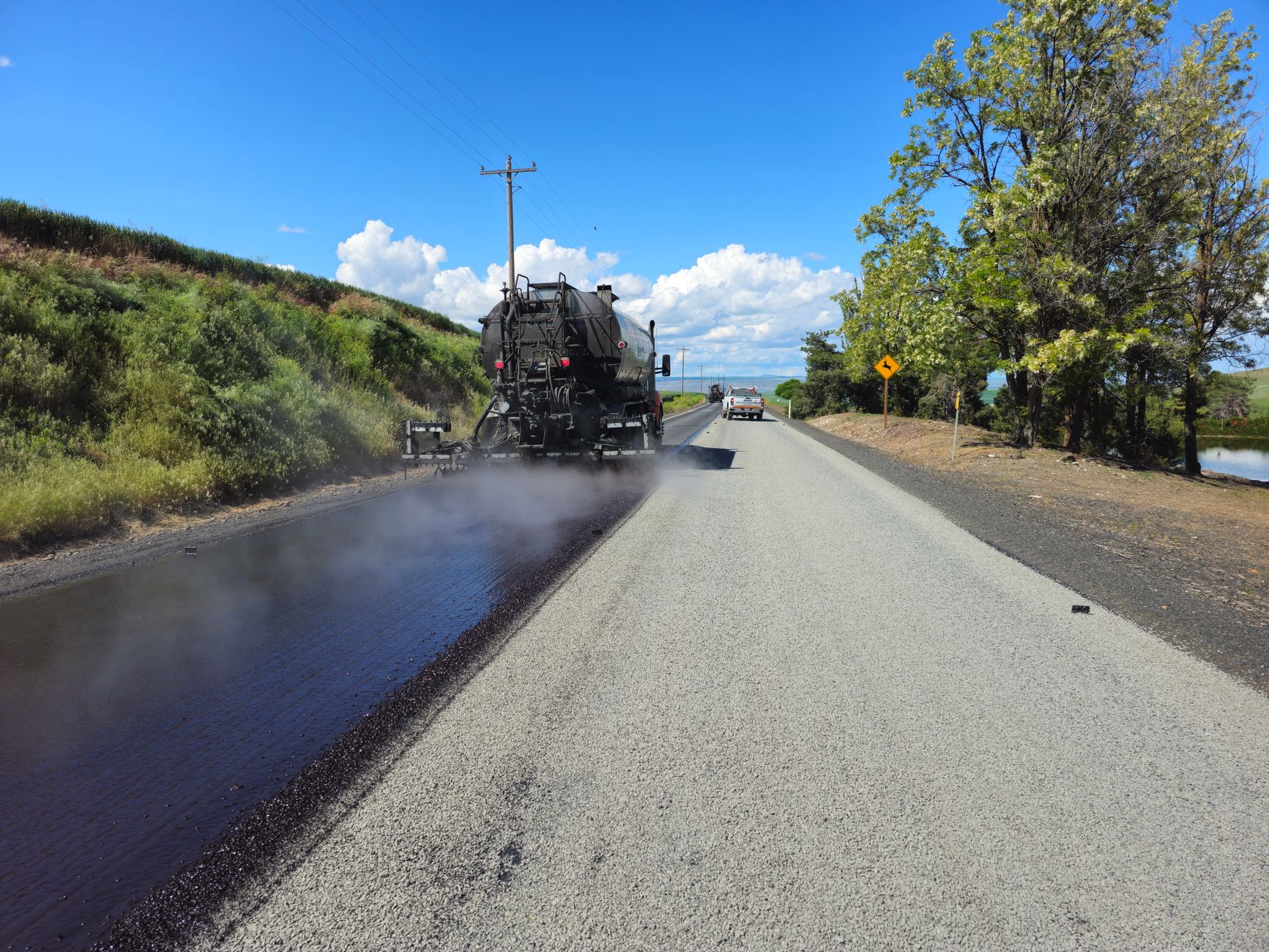
FAIRHOPE, Ala. — Two Baldwin County communities are among the winners in the last round of 2026 Rebuild Alabama grants. Gov. Kay Ivey announced Wednesday, Sept. 30, that the state is awarding more than $3.8 million to cities and counties for 13 local road projects, including resurfacing work in Fairhope and the town of Perdido Beach.
The awards mark the third and final round of funding this year from the Alabama Department of Transportation’s Annual Grant Program, which was created by the Rebuild Alabama Act. Together with two earlier rounds that awarded more than $11 million, the program’s total for fiscal year 2026 reaches $15 million.
The Baldwin County projects
Both Baldwin County grants will pay for resurfacing work:
- Fairhope: Resurfacing County Road 13 from Morphy Avenue to Mosely Road, a 1.25-mile stretch, with $350,000 in state funds and $100,000 in local funds.
- Perdido Beach: Resurfacing Pensacola Avenue from Cedar Street to Baldwin Street, and State Street from Escambia Avenue to Tuscaloosa Drive, covering 0.97 mile, with $259,697.50 in state funds and $9,697.50 in local funds.
The Fairhope project covers a stretch of County Road 13 between two east-west streets, Morphy Avenue and Mosely Road. In Perdido Beach, a small town on the shores of Perdido Bay in south Baldwin County, the grant will cover nearly all of the cost of repaving two neighborhood streets.
Under the program’s rules, all funded projects must move forward within a year of receiving the money, so residents in both communities can expect to see work begin within that window.
What the governor said
Ivey said the grants are part of her administration’s long-running focus on infrastructure.
“Good roads make for more jobs, smoother travel and happier Alabamians. That is why improving our infrastructure has remained a top priority of my Administration,” Ivey said.
“Through Rebuild Alabama, we are putting dollars where rubber meets the road and delivering real results in all 67 counties,” she added. “Long after the construction crews pack up, these investments will keep Alabama rolling, moving and growing for generations to come.”
How the Rebuild Alabama grant program works
The Rebuild Alabama Act passed the Legislature and was signed into law in 2019. The measure raised the state’s fuel tax by 10 cents per gallon, phased in over three years, to pay for road and bridge improvements across Alabama.
The law requires ALDOT to set up an annual grant program that reserves at least $10 million from the state’s share of gas tax revenue for local projects. ALDOT currently funds the Annual Grant Program at $15 million a year, above the legal minimum.
The program is aimed at local roads that cities and counties maintain themselves, many of which compete for limited local dollars. Since the act took effect, the Annual Grant Program has awarded more than $85.7 million for local projects across the state.
A statewide list
The third-round grants will pay for road resurfacing and widening projects in 11 counties. Cities and counties are contributing more than $1.3 million in local matching money for 11 of the 13 projects. In total, the round includes $3,894,011.67 in state funds and $1,321,002.46 in local funds.
The full list of projects funded in this round:
- Fairhope, Baldwin County: County Road 13 from Morphy Avenue to Mosely Road, 1.25 miles; $350,000 state, $100,000 local.
- Perdido Beach, Baldwin County: Pensacola Avenue and State Street, 0.97 mile; $259,697.50 state, $9,697.50 local.
- Sheffield, Colbert County: East 31st Street, East 30th Street, East 18th Avenue, East 19th Avenue, East 20th Avenue and East 21st Avenue, 1.55 miles; $350,000 state, $137,271.40 local.
- Attalla, Etowah County: Circle Drive from Meadow Street to a dead end, and New High School Street from Main Street to Old Highway 20, 0.71 mile; $350,000 state, $277,000 local.
- Malvern, Geneva County: All 11 existing streets in town, 2.12 miles; $350,000 state, $175,000 local.
- Hale County: Widening and resurfacing County Road 29 from Alabama Highway 25 to Alabama Highway 69, 4.6 miles; $350,000 state, $216,422.41 local.
- Jackson County: Full-depth reclamation on County Road 18 from Alabama Highway 40 to County Road 124, 1.25 miles; $344,819.90 state, $94,819.89 local.
- Brighton, Jefferson County: Six roads within the city limits, 1 mile; $125,000 state, no local funds.
- Lipscomb, Jefferson County: Six roads within the city limits, 1.34 miles; $110,000 state, no local funds.
- Benton, Lowndes County: All streets in town, about 2 miles; $292,970 state, $42,970 local.
- Marshall County: Murphy Hill Road, also known as County Road 41, from South Sauty Road to Mt. Moriah Road, 2.2 miles; $350,000 state, $105,377 local.
- Alexander City, Tallapoosa County: Widening and resurfacing Lamberth Road from Elkahatchee Road to State Route 63, 1.12 miles; $311,524.27 state, $61,524.26 local.
- Walker County: Browns Bridge Road, Blackwood Road, Kings Mill Road and Tubbs Hill Road, 3 miles; $350,000 state, $100,920 local.
Most awards in this round topped out at $350,000 in state money. Several of the state’s smallest towns, including Malvern and Benton, will use their grants to resurface every street within their limits.
What full-depth reclamation means
One project on the list, in Jackson County, uses a technique called full-depth reclamation. Instead of simply laying new asphalt on top of a worn road, crews grind up the existing pavement and part of the base beneath it, mix and stabilize that material, and reuse it as a new foundation before paving. The method is often used on roads whose problems go deeper than the surface.
What comes next
With the third round awarded, the 2026 grant cycle is complete. Local governments that receive funding have one year to move their projects forward. Cities and counties interested in future rounds can find program guidelines and application information through the Alabama Department of Transportation.
For Fairhope and Perdido Beach drivers, the immediate takeaway is simple: smoother pavement is on the way on County Road 13, Pensacola Avenue and State Street, with the state covering most of the cost.