

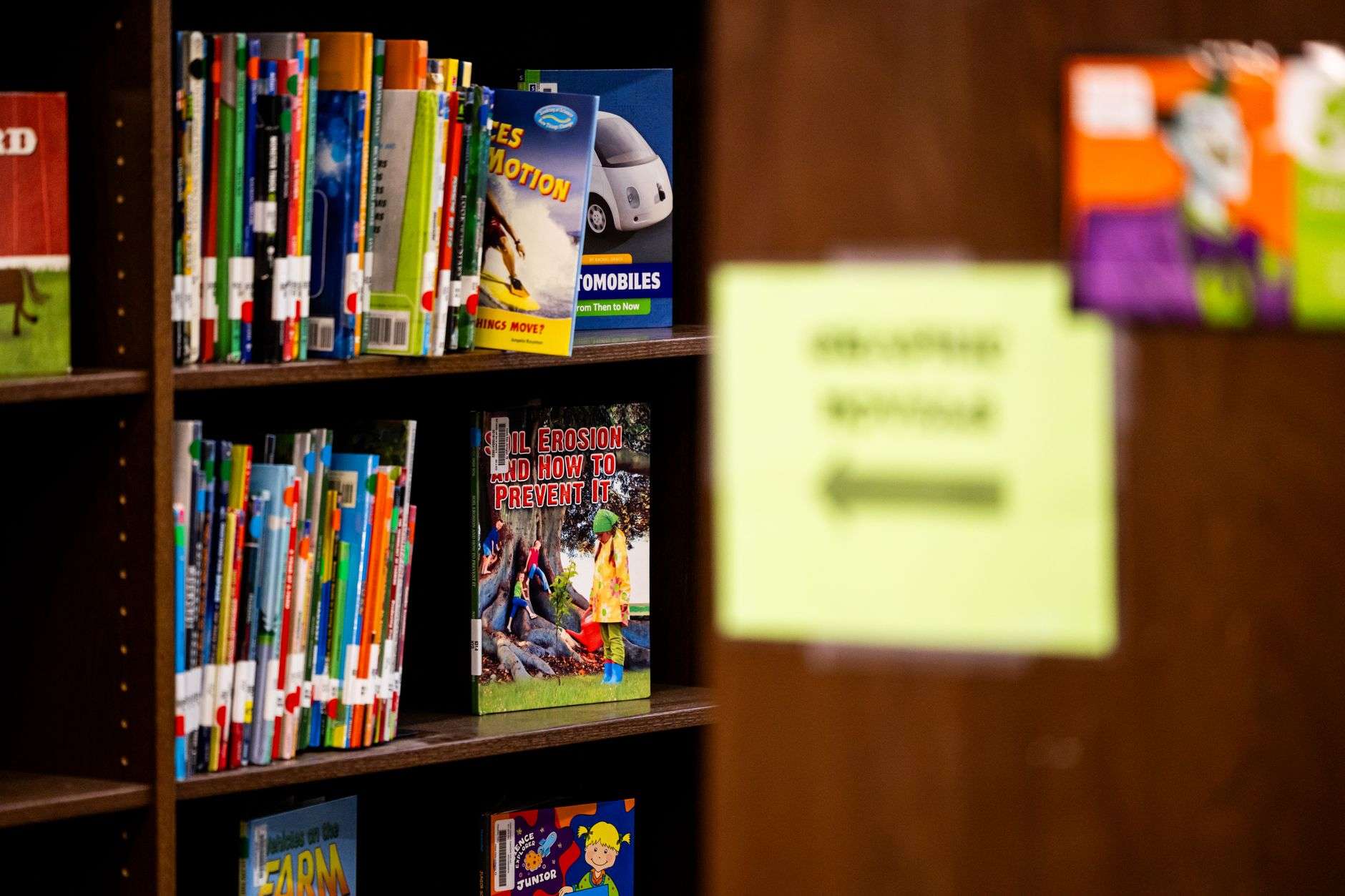
FAIRHOPE, Ala. — A book about gender identity shelved in the children’s section at Fairhope Public Library has drawn renewed attention as the library continues to operate without state funding it lost following an earlier dispute over materials.
The Book
According to the library’s online kids’ catalog, “It Feels Good to be Yourself: A Book About Gender Identity” by Theresa Thorn is classified as juvenile non-fiction.
The picture book introduces readers to several children and explains the concept of gender identity as distinct from biological sex. One character, Ruthie, is described as a transgender girl: “That means when she was born, everyone thought she was a boy. Until she grew a little older — old enough to tell everyone that she’s actually a girl.”
Another character, Alex, is described as identifying as both a boy and a girl. The book defines non-binary as “a helpful word that can describe a kid who doesn’t feel exactly like a boy or a girl.”
Children reading the book are also introduced to the terms intersex, gender identity, gender expression and cisgender.
The Library’s Response
Fairhope Public Library board chairman Randal Wright confirmed the book’s placement.
“Yes, the book ‘It Feels Good to be Yourself’ is classified as a juvenile non-fiction book shelved in the Juvenile (7-12) area in the Youth Area of the library,” Wright said.
Asked whether the library had received requests to reconsider the material and whether it had responded to concerns about the content, Wright declined to answer further.
“We have no comments in regard to the additional list of questions,” Wright said.
The Funding Dispute
The Alabama Public Library Service ended funding to the library — more than $40,000 per year — after controversy over several books the agency deemed inappropriate for children.
APLS administers state aid to Alabama’s public libraries, and in recent years has adopted requirements related to the placement of materials in youth sections. Libraries that do not meet those requirements can lose eligibility for state funds, which is what occurred in Fairhope.
For a municipal library, state aid at that level typically funds materials purchases, programming and technology rather than core operations. Losing it does not close a library, but it constrains what the library can add to its collection and offer its patrons.
Last Year’s Review
The Fairhope Library board reviewed materials in the children’s section last year and moved some titles to the adult section.
Among the books relocated was “Let’s Talk About It: The Teen’s Guide to Sex, Relationships, and Being a Human,” a graphic novel that includes explicit illustrations and sexual content.
Wright said at the time that she did not believe any books should be moved, and that parents should make those decisions.
That position — that placement decisions belong to families rather than to the library or the state — is the crux of the broader disagreement. Supporters of the library’s approach argue that public libraries serve a whole community with varied views, that parents retain the ability to supervise what their own children check out, and that removing or relocating material restricts access for families who want it.
Those seeking changes argue that a public institution’s youth sections carry an implicit endorsement, that children browse unsupervised, and that placement standards for material on sexuality and gender are a reasonable exercise of the state’s role in funding libraries.
A Statewide Context
The Fairhope dispute is one instance of a debate that has played out in multiple Alabama communities and in APLS policy over the past several years, involving library boards, municipal officials, the state agency and organized groups on both sides.
Fairhope Public Library remains open and operating. Its catalog, including youth section classifications, is publicly searchable online.