

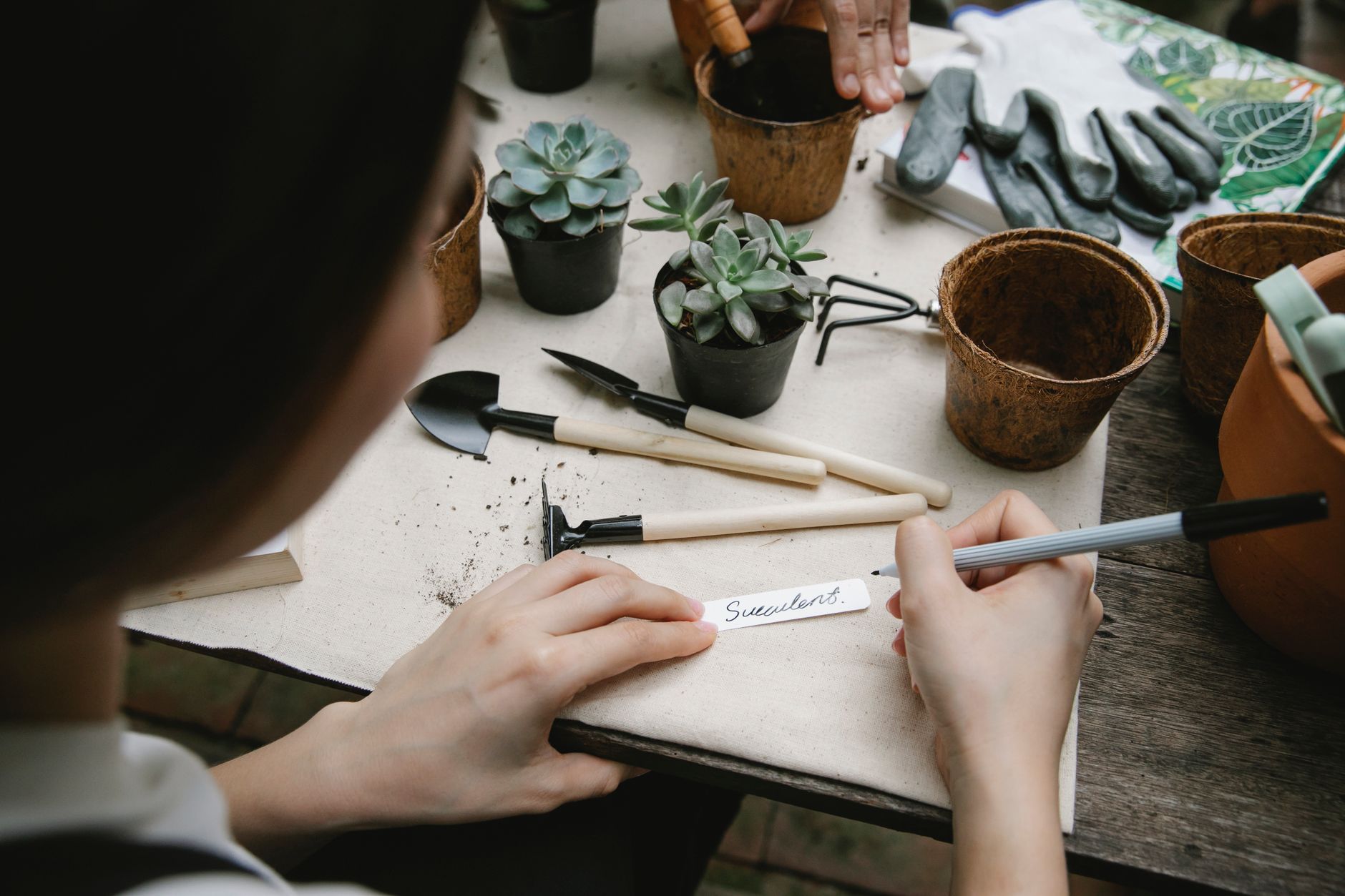
On a fall morning in Daphne, roughly 90 gardeners filled the courtyard of the Daphne Senior Center with rows of potted plants, rooted cuttings, seed packets and bare-root starts laid out across the concrete. They came for a plant swap, a gathering where nothing is bought or sold and the only currency is a willingness to share, and among them was one of the best-known voices in Southern gardening, Mississippi horticulturist Felder Rushing.
The October 2024 event was organized by Grace Skidmore, a horticulturist whose career has taken her from Walt Disney World to the grounds of the Grand Hotel in Point Clear and the deserts of the United Arab Emirates. For the plant lovers who turned out, it offered free plants, expert advice and the chance to meet a gardening celebrity. For Skidmore, it was part of a growing effort to bring the pass-along tradition to Mobile Bay communities.
How the Plant Swap Works
The rules are simple and surprisingly suspenseful. Participants bring plants, cuttings, seeds and starts to share. When their birth month is called, each person picks one plant. A second round follows in the same order. After that, it is a free-for-all.
Before picking begins, attendees stroll the rows, scouting what they hope to take home. That can be nerve-racking, because some of the most coveted plants may appear only once or twice. One participant whose birth month came last stood guard by the plant she wanted most, a young buckeye that looked like little more than a stick in a pot, hoping no one else would recognize what it could become. No one did, and it went home with her. After the second round, the remaining plants disappeared in a rush, and within minutes the courtyard was empty of greenery.
She also came home with a Rose of Sharon, a hydrangea and a black willow, while a Dancing Lady Ginger she had never seen before was claimed in an earlier round. Beyond the plants themselves, swaps offer something just as valuable: conversations with experienced gardeners and the chance to discover plants many people have never heard of.
Felder Rushing: The Gestalt Gardener
Rushing is something of a celebrity in horticultural circles. A horticulture specialist based in Jackson, Mississippi, he has written 18 books and thousands of newspaper and magazine articles, and he hosts The Gestalt Gardener, a gardening call-in show on Mississippi Public Broadcasting. Gardeners across the United States know him for his down-to-earth advice, his humor and his championing of practical, unfussy Southern gardens.
He is also closely associated with the idea of pass-along plants. His book Passalong Plants, co-written with garden writer Steve Bender, celebrates the shrubs, vines, bulbs and perennials that Southern gardeners have traded over fences and at church suppers for generations, often plants that are rarely sold in nurseries but survive because people keep sharing them. The concept brings together gardeners who may have little in common except a love of growing things.
Skidmore says Rushing loves attending plant swaps and comes to the Mobile Plant Swap at least twice a year. When he heard about the Daphne event, his response was immediate: “I’m coming.” He reminded the crowd that they were there to share unusual plants grown by unusual people.
Grace Skidmore’s Journey From Disney to the Grand Hotel
Skidmore holds undergraduate and graduate degrees from Penn State, and her career has been as varied as the plants on a swap table. Her husband, Bruce, is a hotelier, and in 39 years of marriage the couple have lived in 19 different places.
They spent 10 years at Walt Disney World, where Skidmore was hired as a gardener. “Everybody has to start at a low level and pay your dues, but in less than a year, I was promoted to the Horticultural Think Tank,” she said. “There were 4 of us who trained a staff of 900 gardeners.”
After befriending some of Disney’s Imagineers, the company’s creative engineers, she worked as a landscape project consultant on the transformation of 580 acres of cattle pasture into Disney’s Animal Kingdom theme park, which opened in 1998. She was also a contributing writer for the book Disney’s Gardening with Mickey.
In 2005, she became director of horticulture at the Grand Hotel in Point Clear, tasked with restoring the resort’s grounds and gardens after Hurricane Katrina devastated them. She had six weeks to complete the makeover and approached the redesign as if it were her own backyard, only on a massive scale.
Later, she joined a landscape architecture firm in Malibu, California, and helped create another animal park in Al Ain, a city in the United Arab Emirates with deep ancestral ties to the country’s ruling families. “We had 2000 acres of desert to transform into a mixed-use development with a zoo, retail shops, and dining; a project I am very proud of,” she said.
A Friendship Built on Radio and Recognition
Skidmore got to know Rushing’s voice long before she met him. While driving back and forth between Montgomery and Little Rock, Arkansas, she listened to his 9 a.m. broadcast and enjoyed his practical advice on garden management. Both were members of the American Horticultural Society, and as a fan of his work, she decided to nominate him for the society’s Horticulturist of the Year honor, an award she likens to the Oscars of horticulture.
She called to tell him she was his nominator, and the two became phone friends. Through Rushing, she embraced the pass-along concept wholeheartedly. “Free Plants, I’m all in!” she said. The Daphne gathering was the second plant swap she had hosted. At the time, the next Mobile Plant Swap was scheduled for Oct. 26, 2024, from 10 a.m. to noon at Central Presbyterian Church in Mobile, and Skidmore said she hoped to bring a swap to Fairhope as well.
A Southern Tradition Rooted on the Eastern Shore
Trading plants is hardly new in the South. Long before garden centers lined the highways, rural families shared cuttings of roses, daylilies, crinums, figs and camellias with neighbors and relatives, and many old homesteads across Alabama still hold plants that were passed down through several generations. Gardeners often know exactly who gave them a particular iris or ginger lily, and the plant becomes a living keepsake of that person.
Daphne is a fitting place to carry that custom forward. The city sits on the bluffs above the eastern shore of Mobile Bay, and it has grown quickly into one of the largest communities in Baldwin County. Its mild climate, rich soils and long growing season have made gardening a popular pastime for longtime residents and newcomers alike, and the Eastern Shore’s senior centers, libraries and churches regularly host events where gardeners can meet one another.
Why Fall Is Prime Time for Gulf Coast Gardeners
A fall plant swap makes particular sense along the Gulf Coast. The region’s mild winters and long growing season mean autumn is one of the best times to plant many trees, shrubs and perennials. Cooler temperatures ease stress on new transplants, while soil stays warm enough for roots to establish before spring growth begins. Many experienced local gardeners say fall is the best time of year to plant trees and shrubs on the coast.
The plants that changed hands in Daphne illustrate the range that thrives here:
- Buckeye. The red buckeye, a native small tree or large shrub of the Southeast, produces showy spikes of red flowers in early spring that attract hummingbirds.
- Rose of Sharon. A hardy, summer-blooming hibiscus relative long popular in Southern yards for its abundant flowers.
- Hydrangea. A staple of Gulf Coast gardens, prized for big blooms in shady spots, with colors in some types influenced by soil acidity.
- Black willow. A native tree that grows along streams, ponds and wet areas and is well suited to damp, low-lying ground.
- Dancing Lady Ginger. A tropical ginger with delicate, dangling blooms that suits the warm, humid South.
How to Join a Plant Swap
Plant swaps are easy to join and free to attend. For newcomers, a few general tips can help:
- Bring healthy plants. Share pest-free, well-rooted plants and cuttings, and avoid invasive species that could spread into natural areas.
- Label everything. A simple tag with the plant’s name, light needs and mature size helps new owners succeed.
- Pot it up. Recycled nursery pots, yogurt cups or even plastic bags with damp soil work well for divisions and cuttings.
- Arrive early and scout. Walk the rows before picking starts so you know what you want when your turn comes.
- Ask questions. Swaps draw experienced growers who are usually happy to share advice.
- Check schedules. Dates and locations change, so follow local garden groups, libraries and churches for upcoming swaps in Mobile and Baldwin counties.
The appeal goes beyond free plants. Swaps create community, preserve heirloom varieties that might otherwise disappear and give gardeners a reason to take cuttings of their favorite plants and share the joy of growing them. As one participant put it, she came home with a black willow without knowing what it was, which is exactly the kind of discovery that keeps gardeners coming back for the next one.